
Firefighting Services Abu Dhabi: How to Choose the Right Commercial Firefighting Contractor
Every commercial facility in Abu Dhabi must secure Abu Dhabi Civil Defense (ADCD) approval and engage qualified commercial firefighting contractors UAE to guarantee system reliability and regulatory compliance. This guide outlines why ADCD-approved expertise matters, details essential certifications, compares core fire safety systems, presents a contractor-vetting checklist, and explains Civil Defense certification steps. Readers will discover how to select a compliant partner, evaluate technical credentials, and streamline certification for lasting fire protection.
Why Is Choosing an ADCD Approved Firefighting Contractor Essential in Abu Dhabi?
An ADCD-approved contractor holds official authorization to design, install, and maintain fire protection systems under the UAE Fire and Life Safety Code. This endorsement ensures contractors adhere to local regulations, safe practices, and approved equipment—minimizing legal and operational risks. Recognizing this requirement establishes the basis for scrutinizing specialist certifications in the next section.
Importance of ADCD Approval
ADCD approval is crucial for commercial facilities in Abu Dhabi, ensuring that fire protection systems meet local regulations and safety standards. This approval process helps minimize legal and operational risks by verifying compliance with national codes and inspection protocols.
This citation supports the article’s emphasis on the necessity of ADCD approval for fire safety compliance.
What Does Abu Dhabi Civil Defense (ADCD) Approval Mean for Fire Safety?
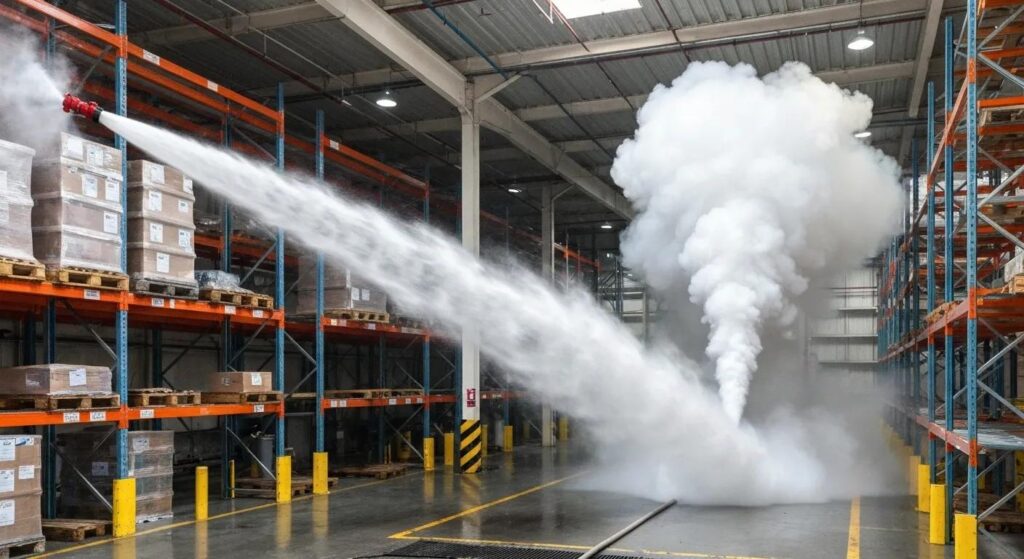
ADCD approval signifies that a contractor’s fire suppression, alarm, and detection services conform to mandatory safety standards. By verifying compliance with national codes and inspection protocols, this endorsement prevents faulty installations and accelerates permit issuance. Understanding this authority clarifies regulatory impacts on service delivery.
How Do ADCD Regulations Impact Firefighting Services and Contractor Selection?
ADCD regulations prescribe design criteria, installation methods, and inspection frequencies for every fire safety system. Contractors must submit detailed plans, use UL-listed or FM-approved equipment, and pass periodic audits. These requirements filter providers to those with documented procedures and quality controls, guiding the contractor selection process toward proven specialists.
What Are the Risks of Hiring Non-Approved Firefighting Contractors?
Engaging non-approved contractors can lead to system failures, voided insurance, hefty fines, and shutdown orders. Inferior installation practices may compromise detector sensitivity or suppression discharge, endangering assets and occupants. Avoiding unverified providers protects project timelines and reinforces fire safety integrity.
What Key Certifications and Expertise Should You Look for in Firefighting Contractors?
Evaluating certifications and technical credentials confirms a contractor’s ability to deliver reliable fire protection services. Look for international standards and practical experience that guarantee consistent performance and regulatory alignment. These benchmarks prepare readers to examine core system offerings next.
- National Fire Protection Association (NFPA) certification validates engineers’ proficiency in codes like NFPA 13 and NFPA 72.
- ISO 9001 accreditation demonstrates a quality management system covering design, installation, and maintenance processes.
- ADCD approval and annual renewal certificates ensure ongoing compliance with Abu Dhabi Civil Defense requirements.
- Liability insurance and bonding protect clients against installation defects and project delays.
- Positive client testimonials and case studies confirm track records in commercial and industrial settings.
These credentials establish trust and pave the way to compare specific fire protection systems in the upcoming section.
How Does NFPA Certification Ensure Quality Fire Protection Services?
NFPA certification verifies that contractors follow globally recognized codes for system design, component selection, and acceptance testing. This accreditation reduces installation errors and enhances system interoperability, promoting end-to-end reliability under high-risk conditions.
NFPA Certification and Quality Fire Protection
NFPA certification validates that contractors adhere to globally recognized codes for system design, component selection, and testing. This accreditation reduces installation errors and enhances system interoperability, promoting end-to-end reliability under high-risk conditions.
This citation reinforces the importance of NFPA certification in ensuring the quality and reliability of fire protection services.
Why Is Experience with Commercial Fire Protection Systems Critical?
Experience with high-rise towers, shopping malls, and industrial plants equips contractors to interpret complex layouts and hazard profiles. Skilled teams anticipate unique challenges—such as integration with building management systems—ensuring seamless system performance and coordinated emergency response.
What Role Do Insurance and Client Testimonials Play in Contractor Vetting?
Comprehensive liability insurance protects stakeholders against defects and downtime, while client testimonials provide insight into a contractor’s project management, responsiveness, and post-installation support. Both factors reinforce confidence in selecting a dependable service provider.
Which Fire Protection Systems and Services Should a Reliable Contractor Provide in Abu Dhabi?
A robust firefighting partner delivers end-to-end solutions—spanning alarms, suppression, maintenance, and emergency support. Recognizing these offerings ensures businesses secure all critical components under one expert roof, leading into detailed system comparisons.
What Are the Main Types of Fire Alarm Systems and Their Installation Requirements?
Fire alarm systems vary by detection logic and zoning control. The table below compares leading configurations, installation scopes, and benefits.
| System Type | Key Feature | Benefit |
|---|---|---|
| Conventional Alarm | Zone-based wiring | Cost-effective for small sites |
| Addressable Alarm | Individual device monitoring | Rapid fault localization |
| Voice Evacuation | Public address integration | Clear occupant instructions |
Each configuration demands licensed wiring, signal-line circuits, and ADCD sign-off procedures before commissioning, ensuring prompt incident response.
How Do Fire Suppression Systems Like Sprinklers and FM200 Work?
Fire suppression systems deploy mechanical or clean-agent methods to extinguish flames. The following table outlines their mechanisms and applications.
| Suppression System | Mechanism | Application |
|---|---|---|
| Wet-Pipe Sprinkler | Automatic water discharge | Warehouses, commercial floors |
| Deluge Sprinkler | Simultaneous nozzle activation | High-hazard industrial zones |
| FM200 Clean Agent | Gas flooding with banked storage | Data centers, server rooms |
Proper design, hydraulic calculations, and pressure testing are mandatory—and certified contractors must document each step for ADCD audit readiness.
What Maintenance and Emergency Support Services Are Essential?
- Annual inspection and testing of all detectors, control panels, and suppression piping.
- Twelve-month maintenance contracts with ADCD report submissions.
- 24/7 emergency repair teams equipped with spare parts for pumps, valves, and cylinders.
Importance of Maintenance and Emergency Support
Routine servicing and rapid incident response are essential for preserving system integrity and compliance. This includes annual inspections, maintenance contracts, and 24/7 emergency repair services to ensure uninterrupted protection.
This citation highlights the necessity of ongoing maintenance and emergency support services for maintaining fire safety systems.
Consistent upkeep guarantees uninterrupted protection and aligns with the next section’s evaluation checklist.
How to Verify and Evaluate Firefighting Contractors in Abu Dhabi: A Practical Checklist
A structured vetting process ensures selection of qualified contractors. This checklist guides decision-makers through essential verification steps before contract signing.
How to Confirm ADCD Approval and Valid Certifications?
To verify credentials:
- Request a copy of the current ADCD approval certificate and check expiration date.
- Confirm NFPA or ISO credentials via issuing body registries.
- Review insurance policies and bonding documentation.
Completing these checks ensures only compliant providers advance to the interview stage.
What Questions Should You Ask Firefighting Contractors Before Hiring?
Interrogate technical skills and project management aptitude:
- Which ADCD grades and system types do you specialize in?
- Can you provide recent project references in similar commercial settings?
- How do you handle emergency call-outs and post-installation support?
Answers reveal operational reliability and set expectations for service delivery.
How to Assess Contractor Experience with Industry-Specific Fire Safety Solutions?
Evaluate past projects across different sectors:
- Retail and hospitality installations requiring aesthetic integration
- Industrial facilities with high-pressure suppression needs
- Data centers demanding non-corrosive clean-agent systems
Sector-diverse portfolios indicate the contractor’s ability to adapt and innovate.
What Are the Steps to Obtain a Civil Defense Certificate for Fire Systems in Abu Dhabi?
Securing a Civil Defense Certificate confirms legal operation and system compliance. Refer to the detailed guide “How to Get a Civil Defense Certificate in Abu Dhabi?” for complete instructions on documentation and timelines, before exploring the core application process below.
How Does the Civil Defense Certificate Application Process Work?
The application follows these stages:
- Submit building plans, trade licenses, and system design schematics.
- Complete online form via the ADCD portal and pay prescribed fees.
- Schedule and pass on-site inspections by ADCD officers.
Adhering to each phase accelerates review and approval.
What Documentation and Inspections Are Required for Approval?
Required items include:
- Approved engineering drawings stamped by a licensed consultant.
- Product data sheets and equipment certification labels.
- Inspection reports for control panels, hydrants, and suppression lines.
Thorough documentation underpins a successful compliance audit.
How Does Choosing the Right Contractor Facilitate Faster Certification?
A contractor with ADCD expertise prepares precise plans, coordinates inspections, and rectifies deficiencies on-site. Their familiarity with procedural nuances minimizes revision requests, delivering a seamless path to certification.
Selecting an ADCD-approved and NFPA-certified partner ensures commercial firefighting contractors UAE deliver reliable, compliant fire protection. By verifying credentials, comparing core systems, applying a rigorous evaluation checklist, and following the Civil Defense certificate process, businesses can safeguard assets, avoid penalties, and maintain uninterrupted operations. Contact qualified specialists to assess your needs and secure complete fire safety solutions in Abu Dhabi.