
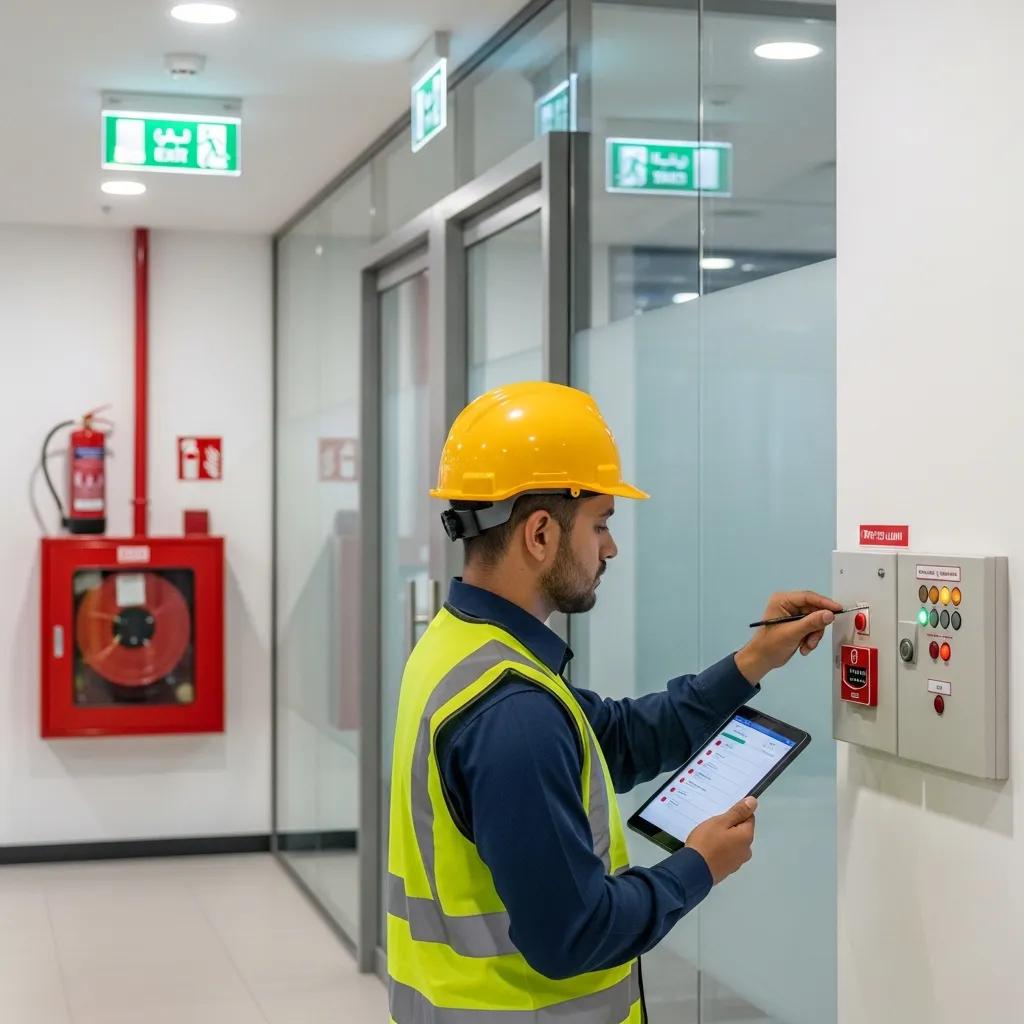
What You Need to Know About Fire Inspection Requirements in Abu Dhabi — Compliance and Safety
Abu Dhabi’s local fire inspection rules set the standards businesses must follow to keep people safe, secure fitness certificates, and avoid enforcement from Abu Dhabi Civil Defence (ADCD). This guide explains what ADCD inspects, why those checks matter for legal compliance and uninterrupted operations, and how inspection outcomes translate into corrective works and official records. You’ll find the core inspection items, suggested maintenance intervals for alarms, sprinklers, pumps and emergency lighting, plus the documentation and registration steps needed for ADCD approvals. We also cover Hassantuk monitoring, the role of certified contractors, and a step-by-step route to obtaining an ADCD fire safety fitness certificate. Practical checklists, system-to-attribute mappings, and common pitfalls help facility managers and safety officers prepare with confidence. Throughout, the guidance is focused on Abu Dhabi and includes service considerations to help organisations meet ADCD expectations and protect people and assets.
What Are the Key Fire Inspection Requirements Set by Abu Dhabi Civil Defence?
ADCD requires buildings to keep fire detection, alarm, suppression and evacuation systems fully operational and to retain accurate service records that prove compliance. Inspections concentrate on system performance, record-keeping, and evidence that installations follow the UAE Fire and Life Safety Code and relevant NFPA-aligned practices. Inspectors check detection coverage, control panel health, suppression readiness, emergency lighting and passive protections (doors, signage and compartmentation) to make sure occupants can evacuate safely. Keeping these systems up to standard lowers risk, shortens inspection cycles and speeds up fitness-certificate issuance when records and tests are in order.
The table below links common ADCD-required systems to the inspection attributes inspectors review and the typical frequency you should expect.
| نظام | Inspection Attribute | Typical Frequency |
|---|---|---|
| نظام إنذار الحريق | Control panel condition, detector sensitivity, event logs | Weekly/monthly checks; annual full test |
| Sprinkler & Suppression | Valve positions, flow test, nozzle condition | Monthly visual checks; annual full service |
| Fire Pumps & Hydrants | Pressure tests, controller operation, flow curves | Monthly/quarterly checks; annual performance test |
| الإضاءة الطارئة | Illumination levels, battery runtime, signage visibility | Monthly function tests; annual duration test |
This mapping highlights what inspectors prioritise and why routine checks plus annual verification are both necessary. Clear, dated records of these checks make ADCD audits faster and reduce the chance of reinspection.
How Does the Abu Dhabi Civil Defence Regulate Fire Safety Inspections?
ADCD enforces fire safety by licensing contractors, defining inspection reporting formats and applying penalties or remedial orders when standards aren’t met. Licensed contractors and certified technicians must produce service records and test certificates that show compliance during inspections. ADCD also requires submission of inspection results and related documentation as part of the fitness-certificate workflow; repeated non-compliance can trigger additional audits or operational limits. Knowing ADCD’s regulatory process helps owners prioritise which records to keep and which service tasks to schedule ahead of inspections. Good documentation and working with approved contractors reduce the risk of enforcement actions and smooth the approval path.
What Are the Main Components of a Commercial Fire Inspection Checklist?
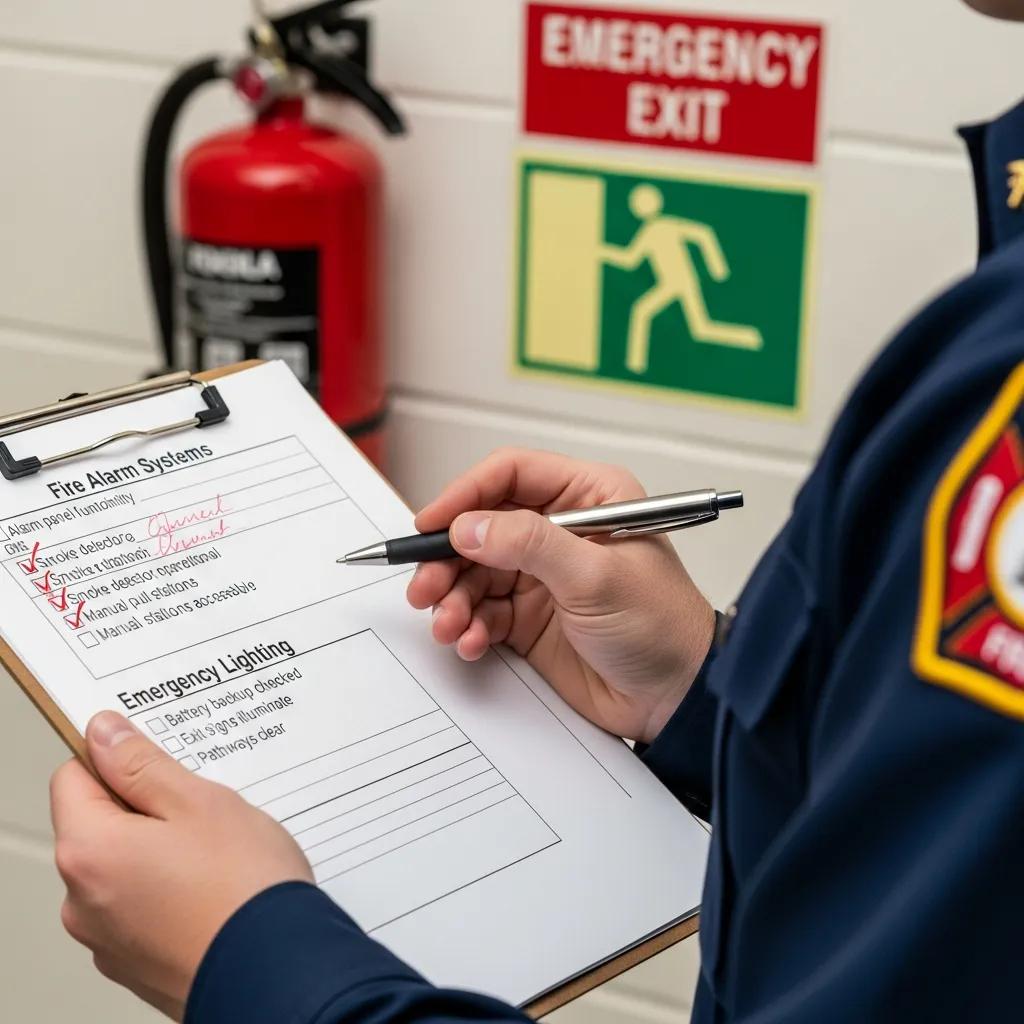
A commercial fire inspection checklist lists the active and passive systems that affect life safety and fire control and guides what inspectors will test and document during a visit. Common items include detectors and manual call points, fire alarm control panels and event logs, sprinkler heads and riser valves, fire pumps and hydrants, portable extinguishers, emergency lighting and exit signage, plus passive elements such as fire doors and compartmentation. Inspectors perform functional tests, flow tests and visual checks while cross-referencing maintenance logs and as‑built drawings to confirm system integrity. Below is a concise checklist and a short summary of typical inspection actions and pass/fail signs.
- Fire alarm detectors and control panels: functional tests and event-history review.
- Sprinkler systems: visual inspection and verification of riser/valve positions.
- Fire pumps and hydrants: pressure and flow-performance testing.
- Emergency lighting and exit signage: runtime tests and visibility checks under power loss.
- Portable extinguishers: pressure, tagging and accessibility checks.
These items form the backbone of an ADCD inspection and give clear targets for corrective maintenance before auditors arrive.
How Often Should Annual Fire System Maintenance Be Conducted in Abu Dhabi?
Maintenance in Abu Dhabi combines regular operational checks (daily/weekly) with monthly, quarterly and annual statutory services to keep systems reliable and compliant. Frequency depends on system type, building occupancy and risk profile — for example, control-panel and alarm-log reviews may be weekly or monthly, while sprinkler hydraulic tests and full pump performance tests are typically annual. Sticking to recommended intervals reduces failures and keeps documentation current for ADCD reviews and fitness-certificate renewals. The table below is a recommended interval guide to help safety managers plan AMCs and pre-inspection audits.
Use this interval guide to align maintenance planning with ADCD expectations and international standards where applicable.
| نظام | يصف | Recommended Interval |
|---|---|---|
| Alarm Control Panel | Event log review, battery check, functional test | Weekly/monthly |
| Smoke & Heat Detectors | Sensitivity check, cleaning, functional test | Monthly/annual |
| نظام الرش | Visual inspection, valve exercise, flow test | Monthly/annual |
| Fire Pump | Controller check, churn test, full flow test | Monthly/annual |
| الإضاءة الطارئة | Monthly function test, annual duration test | Monthly/annual |
| Portable Extinguishers | Visual tag, pressure check, annual servicing | Monthly/annual |
This interval plan balances daily operational checks with statutory services to reduce downtime and demonstrate continuous compliance. Scheduling AMCs around these intervals helps ensure tests occur on time and records are available for ADCD reviews.
To simplify adherence, Amples Fire & Safety LLC offers certified annual maintenance contracts (AMC) that schedule these checks, provide 24/7 fault response and carry out corrective works within ADCD timelines. A structured AMC reduces the administrative load of tracking tests and maintaining records.
What Are the Recommended Inspection Intervals for Fire Alarm and Fighting Systems?
Inspection intervals vary by component but follow a consistent pattern: frequent functional checks and periodic comprehensive tests to confirm performance. Control panels and batteries typically need weekly or monthly reviews and annual load tests; detectors require routine cleaning and annual sensitivity checks; sprinklers need monthly visual inspections and annual hydraulic testing; and fire pumps have regular churn tests with an annual full-flow test. Following these intervals lowers false alarms, prevents mechanical failure and helps ensure systems work during an emergency.
These practices support a proactive maintenance programme that reduces operational disruption and strengthens the case for ADCD fitness certification at inspection time.
Who Is Authorized to Perform Fire Safety Annual Maintenance in Abu Dhabi?
ADCD requires maintenance and certification to be performed by ADCD-approved or licensed contractors and by technicians with the relevant certifications and training. Approved providers must demonstrate familiarity with the UAE Fire and Life Safety Code and applicable international references like NFPA 72 and NFPA 25, and they must keep accurate service logs and test certificates. Using non‑certified providers risks failed inspections, rejected paperwork and enforcement actions; conversely, certified contractors make approval simpler because their competence is recognised. Facility managers should confirm contractor approvals before major work and retain records of contractor qualifications for ADCD inspections.
Working with ADCD-approved providers reduces friction during inspection cycles and supports timely fitness-certificate issuance.
How Can Businesses Prepare for a Local Fire Safety Inspection in Abu Dhabi?
Preparing for an ADCD inspection means assembling the right documentation, running pre-inspection system checks and fixing issues before the inspector arrives. Key preparation steps include compiling service and maintenance logs, as-built drawings, prior inspection reports and technician certificates, and ensuring alarm, suppression and emergency lighting systems are test-ready. Also confirm housekeeping and physical access so inspectors can carry out functional tests without obstruction. The three actions below help businesses prioritise tasks and present a complete compliance package.
- Gather and organise service records, test certificates and as-built drawings in a digital or printed folder for the inspector.
- Run a pre-audit with a certified contractor to identify and correct deficiencies before the ADCD visit.
- Ensure physical access to panels, valves, extinguishers and hydrants, and keep emergency routes and signage unobstructed.
Completing these steps before the inspection usually reduces corrective notices and speeds up approval.
What Documentation and Certifications Are Needed for ADCD Fire Approval?
ADCD expects a specific set of documents to process fire-safety approvals and fitness certificates: service and maintenance logs, as-built drawings, equipment certifications and evidence of contractor qualifications. Formats can vary, but inspectors look for continuity of maintenance, dated test results and technician sign-offs for major services. Common oversights include missing technician certifications, incomplete test details or as-built drawings that don’t match the installed systems. Preparing a complete documentation pack with correct formats and signatures cuts review time and lowers the chance of reinspection requests.
Having these documents organised in advance makes it easier to answer ADCD queries and demonstrate ongoing compliance during follow-up visits.
How to Ensure Your Fire Safety Systems Meet UAE Fire and Life Safety Code Standards?
Meeting the UAE Fire and Life Safety Code means systematically verifying detection coverage, suppression performance, emergency-lighting adequacy and passive protections against fire spread. Practical steps include cross-checking installed systems against approved design drawings, running sensitivity and flow tests in line with NFPA 72 and NFPA 25 benchmarks, and documenting any corrective upgrades. Third‑party audits or qualified in‑house assessments can reveal gaps and help prioritise remedial work. Regularly updating maintenance procedures to reflect code changes and retaining test records demonstrates code conformity and reduces the risk of ADCD non-compliance findings.
Proactive audits and code-aligned testing provide the evidence ADCD inspectors expect when assessing fitness for occupation.
What Are the Benefits of Choosing a Certified Fire Safety Company for Annual Maintenance?
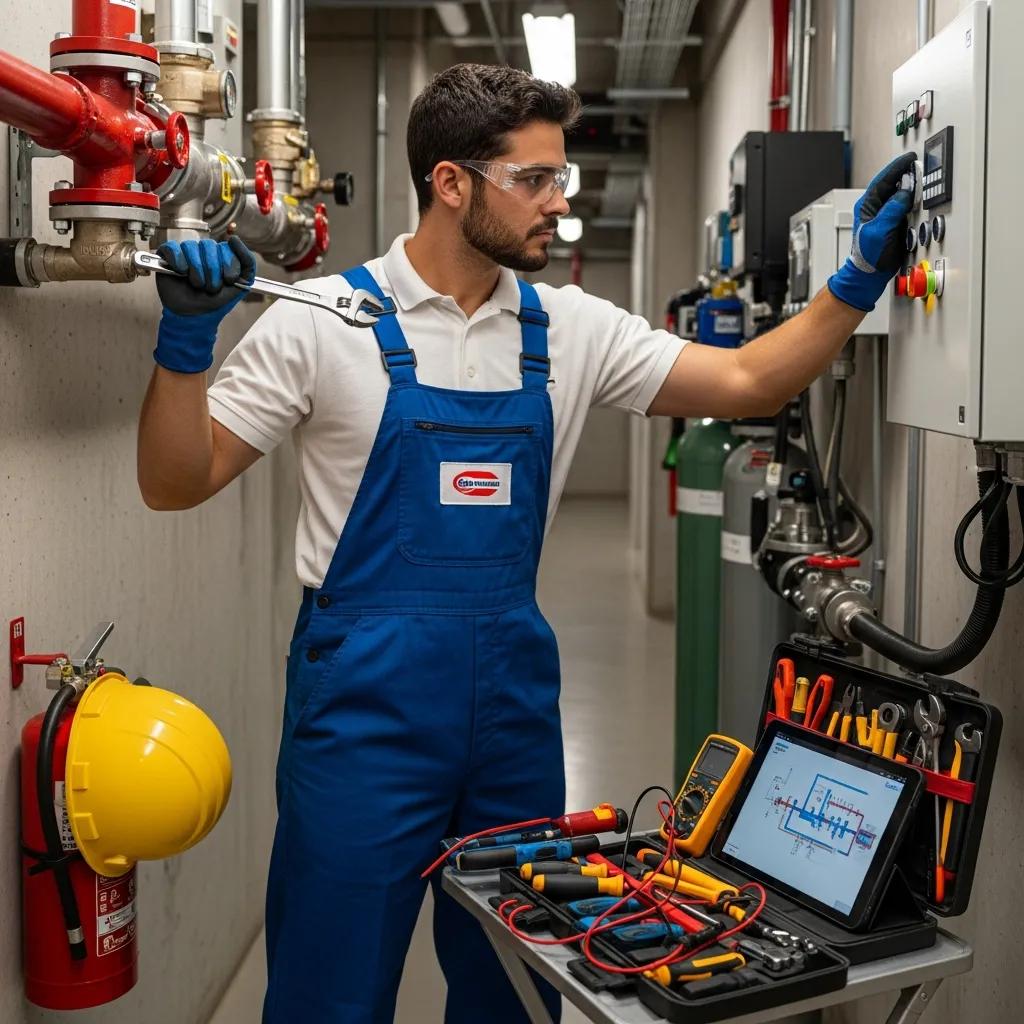
Hiring a certified fire safety company for annual maintenance gives you compliance assurance, faster fault resolution and documented evidence that supports ADCD approvals and fitness-certificate issuance. Certified providers combine technical know-how, ADCD-aware processes and standardised documentation that reduce inspection failures; preventive maintenance also cuts the chance of downtime and expensive emergency repairs. The table below compares common service features offered by certified providers and the practical benefits businesses typically see.
| Service | يصف | Benefit/Outcome |
|---|---|---|
| Annual Maintenance Contract (AMC) | Scheduled inspections and record keeping | Fewer inspection findings and smoother approvals |
| 24/7 Response | On-call technicians and emergency callouts | Quicker fault resolution and reduced downtime |
| ADCD Approval Assistance | Help with submission and documentation | Shorter approval timelines and fewer rejections |
| In-house Technical Team | Direct control of skills and scheduling | Consistent workmanship and immediate corrective action |
These service features translate into lower compliance risk and better operational continuity when managed by a certified provider.
Why Is Amples Fire & Safety LLC a Trusted ADCD-Approved Partner?
Amples Fire & Safety LLC is a specialist in fire, life safety and smart-building solutions across Abu Dhabi, Al Ain and the Western Region. We provide certified AMCs designed to keep systems aligned with ADCD requirements and emphasise 24/7 response and rapid fault rectification through our in-house technical team. We assist clients with ADCD approvals and fitness-certificate processes using ADCD-aware procedures that reduce timelines and administrative friction. Choosing a provider with local ADCD experience and responsive maintenance services helps businesses present a stronger compliance case during inspections.
How Does Proactive Maintenance Prevent Fire Incidents and Reduce Costs?
Proactive maintenance identifies failure modes early — for example, reduced detector sensitivity, corroded sprinkler heads or declining pump performance — so corrective action happens before an emergency. Regular testing cuts false alarms that disrupt operations and incur response costs, while preventive servicing extends equipment life and delays costly replacements. Sites that invest in scheduled AMC activities typically see fewer emergency repairs and lower insurance dispute exposure, delivering a measurable return on investment. Tracking trends in maintenance logs enables predictive planning and targeted upgrades that further reduce incident risk and long‑term repair spending.
Consistent preventive work and data-driven maintenance lower risk and deliver measurable savings across the life of fire-safety assets.
What Is the Hassantuk System and How Does It Affect Fire Safety Compliance?
Hassantuk is Abu Dhabi’s central monitoring and smart-building integration platform that captures alarm signals and event data from fire and life-safety systems, allowing authorities and service providers to monitor system health remotely. It records alarm types, timestamps and status updates so regulators can verify monitoring requirements and confirm alarms are actionable. For commercial buildings, Hassantuk registration and correct alarm integration are increasingly part of compliance expectations, so owners must ensure their systems transmit accurate events and logs. Knowing Hassantuk’s role helps owners plan integration testing and retain monitoring evidence for ADCD inspections.
Integrating with Hassantuk requires technical readiness and documented testing to show monitored events are transmitted reliably.
Unified Emergency Response Platform for Abu Dhabi Fire Safety
This research proposes a technology-enabled Unified Emergency Response Platform (UERP) to improve situational awareness and response during urban fire incidents. Traditional systems, including Hassantuk, are often reactive and focused on alarm verification, which can delay coordination. The study suggests an integrated framework using IoT sensors, AI, digital twins and predictive analytics to enable earlier detection, faster alarm validation and more efficient incident response. The framework covers three phases: early detection with IoT-enabled sensors and predictive models; AI-driven alarm validation to reduce false positives; and coordinated response supported by real-time dashboards and automated workflows.
How Does the Hassantuk System Monitor Fire and Smoke Alarms in Commercial Buildings?
Hassantuk receives event data from control panels and central monitoring stations, classifies alarm types and records response timelines and confirmations. A typical flow is detector activation, panel event logging, signal routing to a monitoring centre and notification to authorised responders — each step is time-stamped for audit purposes. Monitoring captures alarm origin, signal strength and confirmation of receipt by monitoring teams, which supports post-event analysis and regulatory review. Building owners and service providers must validate the signal path and test transmissions to Hassantuk to ensure reliable reporting during inspections.
Reliable monitoring lets ADCD and stakeholders verify that alarm signals are transmitted and acted on promptly.
What Are the Compliance Requirements for Hassantuk Registration and Maintenance?
Hassantuk registration typically requires submitting system details, ensuring compatible signalling protocols and completing integration tests that prove alarm events transmit successfully. Ongoing obligations include periodic checks of signal integrity, retaining monitoring logs and coordinated tests with the monitoring centre to confirm continued interoperability. Failure to register or maintain correct signalling can create monitoring gaps that hinder emergency response and affect fitness-certificate outcomes. Regular integration tests and documented maintenance tasks should be retained as evidence for ADCD reviews.
Completing registration and keeping test logs ensures Hassantuk integration supports overall fire-safety compliance.
How to Navigate the ADCD Fire Safety Certificate Approval Process Step-by-Step?
Getting an ADCD fire-safety fitness certificate follows a clear sequence of preparation, submission, inspection and follow-up. Start with a pre-inspection audit to identify corrective works, then submit documentation and schedule the ADCD inspection. During the inspection, auditors validate system operation and records; any non-conformances must be fixed and resubmitted for reinspection. Knowing each stage and common pitfalls reduces delays and improves the chance of first-pass approval. The steps below outline the standard flow for obtaining or renewing a fitness certificate.
- Run a pre-inspection audit with a certified contractor to identify corrective actions and compile documentation.
- Submit required documents and as-built drawings to ADCD and book the formal inspection.
- Attend the ADCD inspection, provide requested records and make any immediate rectifications if required.
- Address any non-conformances, resubmit evidence as needed, and receive the fitness certificate once approved.
Following this sequence carefully reduces administrative back-and-forth and helps secure timely approval.
What Are the Required Steps to Obtain a Fire Safety Fitness Certificate in Abu Dhabi?
Obtaining a fitness certificate means preparing a complete documentation package, scheduling inspections and resolving any deficiencies ADCD identifies. Key tasks include pre-inspection testing, gathering service logs and technician certifications, and ensuring systems operate per the approved design. Timelines depend on the scope of corrective works, but thorough preparation typically shortens the process. Clear role assignment between facility management and the certified contractor helps ensure accountability and smoother progress through ADCD stages.
What Common Pitfalls Should Businesses Avoid During ADCD Fire Safety Inspections?
Common inspection pitfalls include incomplete maintenance records, mismatches between installed systems and as-built drawings, using non‑certified contractors and neglected monitoring integrations such as missing Hassantuk registration. Another frequent issue is blocked access to equipment or poor housekeeping around critical components, which can trigger immediate non-conformances. To avoid these problems, keep logs up to date, verify contractor credentials, ensure physical access to systems and test monitoring pathways before inspections. Tackling these areas proactively reduces reinspection rates and speeds up fitness-certificate approval.
If you need help with AMCs, ADCD-approval preparation or 24/7 corrective response across Abu Dhabi, Al Ain and the Western Region, consider working with an ADCD-approved certified provider like Amples Fire & Safety LLC. We can assist with approval preparation and provide in-house technical teams to keep you compliant and inspection-ready.
الأسئلة الشائعة
What are the consequences of failing a fire safety inspection in Abu Dhabi?
Failing an ADCD inspection can result in fines, mandatory corrective works and operational restrictions. Businesses must address identified issues and pass a reinspection; failure to do so may disrupt operations and incur extra costs. In repeated or serious cases, ADCD action can include licence suspension or legal measures. Staying up to date with maintenance and documentation is the best way to avoid these outcomes.
How can businesses ensure their fire safety systems are up to date with the latest regulations?
To keep systems current, review them regularly against the UAE Fire and Life Safety Code and any updates. Use certified contractors for routine inspections and maintenance since they know the latest standards. Attend training or workshops offered by fire-safety bodies and update internal procedures to reflect regulatory changes. These steps keep your systems compliant and inspection-ready.
What role does employee training play in fire safety compliance?
Employee training is essential: well-trained staff respond faster and follow evacuation procedures correctly. Regular drills should cover fire prevention, evacuation routes and proper use of safety equipment. Demonstrating an active training programme also reflects positively during ADCD inspections and supports overall safety culture.
What should businesses do if they receive a notice of non-compliance from ADCD?
Act immediately: review the notice, assess the deficiencies and create a corrective action plan. Engage a certified contractor to carry out remediation if needed, document all repairs and request a follow-up inspection once issues are fixed. Prompt, well-documented action reduces the chance of further penalties.
How can technology enhance fire safety compliance in commercial buildings?
Technology improves compliance through automated monitoring (for example, Hassantuk), maintenance-tracking software and smart-building integrations that give real-time system status. These tools make records easier to manage, speed up incident response and reduce human error — all of which support better outcomes at inspection time.
What are the best practices for maintaining fire safety equipment?
Best practices include a regular inspection schedule, routine functional tests and detailed maintenance logs. Ensure equipment is serviced by certified professionals at the recommended intervals, train staff on basic checks and run periodic audits to catch gaps early. Updating procedures to reflect regulatory changes keeps your maintenance programme aligned with ADCD expectations.
خاتمة
Clear understanding and routine maintenance are the foundation of fire-safety compliance in Abu Dhabi. Following ADCD standards, working with certified contractors and keeping accurate, dated records not only protects people and property but also streamlines inspections and fitness-certificate approvals. If you’re ready to make your fire-safety programme inspection-ready, explore our services and let us help you stay compliant and secure.