
Abu Dhabi Fire Inspection Regulations — A Practical Guide to Compliance and Safety
Abu Dhabi’s fire inspection rules define what building owners, facility teams and service providers must do to protect people and property. Enforced by Abu Dhabi Civil Defence (ADCD) and tied to the UAE Fire & Life Safety Code of Practice, these rules set required systems, inspection schedules and the evidence inspectors expect for fitness certification. Missing or incomplete compliance risks fines, delayed occupancy and, most importantly, safety failures — while good compliance lowers risk and keeps operations running. This guide walks through ADCD’s role, the Code’s essentials, system-level requirements for alarms, sprinklers and emergency lighting, the ADCD approval and fitness-certificate process, Hassantuk registration, and the practical value of Annual Maintenance Contracts (AMCs). You’ll also find checklists and step-by-step workflows to prepare for inspections and keep systems audit-ready.
Amples Fire & Safety LLC delivers Fire & Safety System Annual Maintenance (Firefighting AMC services) that help organisations meet ADCD inspection and fitness-certificate requirements. Our AMC focuses on scheduled testing, audit-ready documentation, multi-brand technical capability and fast on-site response for corrective work. Below we explain the regulatory landscape and show where a professional AMC reduces risk and speeds approvals.
What are the key Abu Dhabi Civil Defence requirements for fire safety?
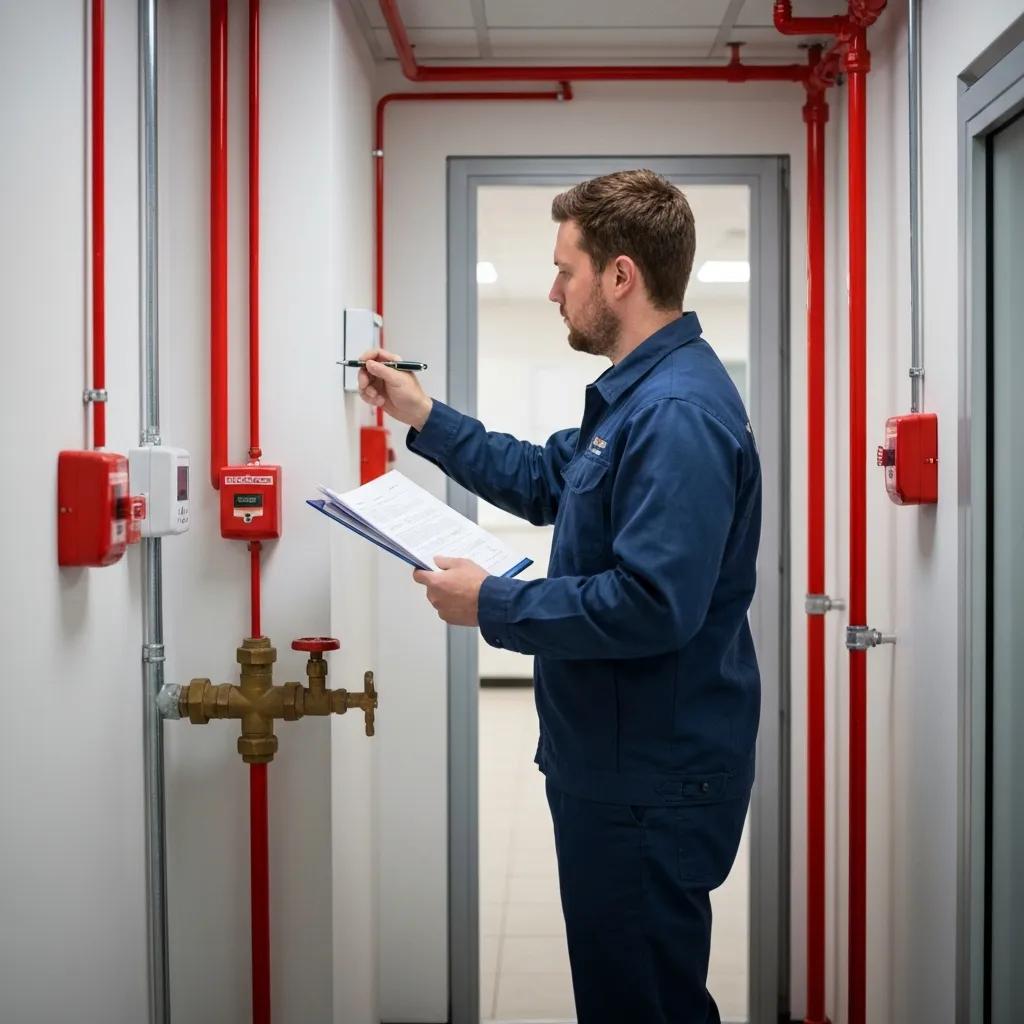
Abu Dhabi Civil Defence (ADCD) translates national and emirate-level policy into enforceable rules for buildings and fire systems. ADCD specifies inspection scopes, documentation standards, criteria for installers and service providers, and the fitness-certificate process that confirms a building meets the UAE Fire & Life Safety Code of Practice. The intent is straightforward: ensure alarms, suppression and life-safety systems are ready to protect people and assets. Knowing ADCD’s core requirements helps owners focus on the records and tasks inspectors will check.
Core regulatory expectations include:
- Routine functional testing and preventive maintenance for fire alarms, sprinklers, emergency lighting and extinguishers.
- Complete, current logbooks, test records and corrective-action histories available for ADCD review.
- Registration of applicable systems in Hassantuk and clear monitoring arrangements for critical points.
- Use of ADCD-approved service providers and documented proof of technician competency.
ADCD evaluates both paperwork and operational performance during audits; missing logs or unresolved corrective actions commonly trigger non-conformity notices. The next section looks at ADCD’s practical role during inspections and enforcement.
What role does Abu Dhabi Civil Defence play in fire safety compliance?
ADCD acts as regulator, auditor and enforcer for fire safety in the emirate. It carries out scheduled inspections, issues notices for deficiencies and grants or withholds fitness certificates based on submitted evidence and system performance. ADCD also approves companies that perform fire-system work and checks that technical personnel meet competency standards. The authority works with municipal bodies and uses digital reporting tools to make audits more efficient.
If ADCD finds shortcomings, outcomes range from corrective orders and re-inspections to delayed occupancy or penalties for unresolved issues. Preparing audit-ready documentation and addressing faults before inspection shortens remediation time and reduces disruption.
What does the UAE Fire & Life Safety Code of Practice require?
The UAE Fire & Life Safety Code of Practice sets the technical baseline ADCD uses for design, installation, testing and maintenance. It prescribes systems by occupancy type — for example, fire alarms, automatic sprinklers, emergency lighting, smoke control and means of egress — and defines testing intervals, documentation formats and acceptable performance thresholds for annual certification.
For facility managers, compliance means mapping Code requirements to on-site devices (smoke detectors, manual call points, sprinkler heads, flow switches and exit lighting), confirming test schedules and keeping records in the formats ADCD expects. Aligning maintenance and documentation with the Code makes inspections smoother and reduces rework.
How do fire safety systems meet Abu Dhabi inspection requirements?
Meeting ADCD expectations requires routine testing, accurate records and timely corrective maintenance. Each major system — fire alarm, sprinkler and emergency lighting — has defined functional checks and inspection cadences. Proper compliance combines scheduled preventive work, incident response logs and integrated tests that show systems operate together. The table below summarises typical requirements for quick reference.
| نظام | تردد التفتيش | Responsible Party | Compliance Outcome |
|---|---|---|---|
| نظام إنذار الحريق | Daily walk test; monthly functional tests; annual full system test | Building FM or accredited service provider | Verified detection and notification readiness; ADCD audit evidence |
| نظام الرش | Weekly valve checks; quarterly flow/pressure tests; annual dry/wet system inspection | Accredited sprinkler contractor or AMC technician | Confirmed water supply, valve operation and alarm-triggered flow |
| الإضاءة الطارئة | Monthly duration tests; annual battery and duration verification | Electrical maintenance team or AMC | Confirmed egress illumination and battery reliability for evacuation |
Use this comparison to prioritise inspections and allocate responsibilities. Consistent records and proven system integration are the clearest signs of effective compliance.
Fire alarm system regulations and maintenance essentials
Fire alarm systems must be checked on a regular cadence that proves detection, notification and control functions work reliably. Typical tasks include daily visual checks for faults, monthly functional tests of detectors and sounders, quarterly inspections of control panels and communications, and an annual end-to-end system test with reporting. Records should state the test type, date, technician and any corrective action — exactly the information ADCD expects to see.
Common issues are detector contamination, wiring degradation and battery failures. Address these with scheduled cleaning, consumable replacement and clear rectification records. Maintaining a timestamped logbook and signed test sheets makes inspections faster and more transparent. The next section covers sprinkler and emergency-lighting expectations and how they link with alarm systems.
Data-driven approaches to fire alarm inspection and maintenance
This research highlights how defect patterns under different operating conditions can guide risk-based inspection plans. Using data to prioritise checks improves the reliability and effectiveness of fire detection and alarm systems.
Defect Trends in Fire Alarm Systems: A Basis for Risk-Based Inspection (RBI) Approaches, 2024
Inspection standards for sprinkler systems and emergency lighting
Sprinkler systems require regular valve checks, flow and pressure testing, and periodic full-system inspections aligned with design standards and locally adapted NFPA guidance. Typical actions include weekly control-valve checks, quarterly flow-switch tests and annual inspections of sprinkler heads and pipework for blockages or corrosion. Emergency lighting needs monthly function and duration checks and an annual full-duration verification to confirm egress illumination for the required time.
Interoperability tests — proving an alarm triggers sprinkler supervisory signals and powers emergency lighting — are a frequent ADCD focus because they demonstrate coordinated life-safety response. Keep records of integration tests and any corrective work to show system readiness. The following table summarises common components, tests and documentation.
| System Component | Typical Test | Documentation Required |
|---|---|---|
| Control Panel Logs | Annual event-log extraction | Signed report with timestamps |
| Flow Switches | Quarterly activation test | Test certificate and corrective notes |
| Batteries | Annual duration test | Battery health report and replacement records |
What is the ADCD inspection, certification and approval process?
The ADCD approval and fitness-certificate process follows clear steps: readiness checks, inspection, remediation and final verification before a certificate is issued. Preparation and documentation, scheduling, addressing non-conformities and submitting evidence are all part of the workflow. Service providers and AMCs typically support these stages by supplying test reports, corrective-action records and the technical evidence ADCD requires.
Below is a practical, action-focused breakdown of the inspection and approval workflow with typical documents and timelines:
| Process Step | Required Document/Action | Typical Timeline |
|---|---|---|
| Pre-inspection readiness | Up-to-date logbooks, test reports, device inventories | 1–2 weeks preparation |
| ADCD inspection | On-site functional demonstration, documentation review | Inspection day + report |
| Corrective action | Repair orders, re-test reports, contractor sign-off | 1–4 weeks depending on scope |
| Final certification | Submission of compliance package; issue of fitness certificate | 1–2 weeks after acceptance |
This staged approach helps teams plan resources and avoid surprises. Organising documents in advance and resolving issues quickly reduces inspection delays.
How do businesses obtain and renew fire safety fitness certificates?
Obtaining or renewing a fitness certificate is a cycle of preparation, inspection, remediation and evidence submission. Start with an internal audit: collect maintenance logs, recent test records, device inventories and any prior ADCD notices. On inspection day, demonstrate end-to-end system operation and present signed test sheets and corrective-action proof if issues exist.
If ADCD raises deficiencies, arrange corrective works, secure re-test reports and supply contractor sign-off to speed final certification. Timelines depend on the scope of work, so plan for several weeks between readiness checks and certificate issuance.
Management responsibility in inspection and testing
Inspection and testing are essential to ensure fire protection systems remain operational. When organisations use in-house teams, management must confirm those individuals are competent and properly trained to perform inspections and tests.
Inspection, testing and maintenance of fire protection systems at industrial plants, 1999
How does ADCD approve fire safety companies and services?
ADCD evaluates companies based on documented technical competence, certifications and evidence that qualified personnel handle installations, testing and maintenance. Applicants must show technician certificates, equipment calibration records and project documentation demonstrating compliance with the Code. ADCD can audit company procedures and project files before granting or renewing approval.
To keep approved status, firms must submit performance data, follow audit recommendations and prove technicians stay trained and authorised for the systems they service. Providers with comprehensive test archives and traceable corrective-action records are better positioned to support clients through ADCD inspections.
| Approval Element | Evidence Required | لماذا هذا مهم |
|---|---|---|
| Technical Personnel | Certificates, training records | Ensures competent maintenance delivery |
| Equipment Calibration | Calibration certificates | Validates test accuracy for inspections |
| Project Documentation | Installation and commissioning reports | Demonstrates code-compliant installations |
Why are Annual Maintenance Contracts important for compliance in Abu Dhabi?
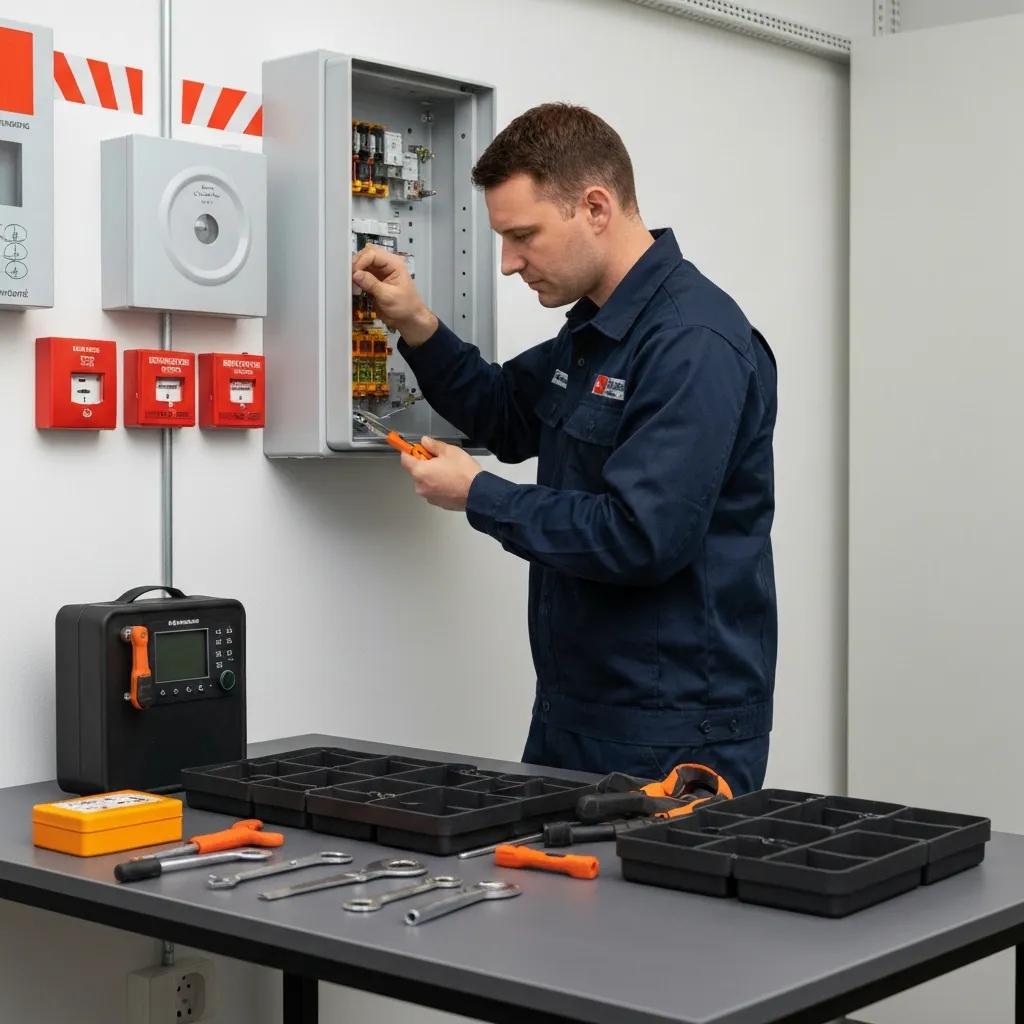
Annual Maintenance Contracts (AMCs) create a reliable schedule of preventive tests, corrective repairs and documentation that keeps systems compliant between ADCD visits. AMCs set routine checks, maintain logbooks and provide fast rectification when faults appear — lowering the chance of failed inspections and supporting continuous readiness. For many organisations, an AMC is the most effective way to stay audit-ready and reduce the administrative load of record-keeping.
Typical AMC tasks map directly to ADCD expectations: scheduled functional tests, equipment servicing, incident response and evidence retention. The table below connects common AMC features to compliance and operational outcomes.
| AMC Feature | فائدة | Compliance / Operational Outcome |
|---|---|---|
| Scheduled testing | Prevents unnoticed failures | Ready audit evidence and fewer non-conformities |
| استجابة سريعة على مدار الساعة طوال أيام الأسبوع | Immediate rectification of faults | Minimises downtime and risk exposure |
| Detailed logbooks | Traceable maintenance history | ADCD-ready documentation for inspections |
| Technical capability across brands | Reliable repairs and calibration | Faster corrective action and fewer repeat failures |
These outcomes show how AMCs convert routine maintenance into measurable compliance benefits and lower inspection risk. The following section explains how AMCs operate day-to-day to sustain ADCD readiness.
How do AMCs ensure continuous compliance with ADCD regulations?
AMCs set a predictable pattern of preventive checks, functional tests and record-keeping that builds an auditable trail between ADCD visits. Deliverables typically include monthly and quarterly checks, an annual full-system validation, incident response records and consolidated reports managers can present to inspectors. Rapid rectification protocols and spare-part strategies reduce the chance of prolonged outages that might trigger non-compliance.
Formalising responsibilities and documentation eases the administrative burden on facility teams and ensures accredited technicians perform technical work. This systematic approach lowers inspection-failure risk and shortens recertification time when problems arise.
Why choose Amples Fire & Safety LLC for AMC services?
Amples designs its AMC to address the compliance and operational needs described above. Our Fire & Safety System Annual Maintenance (Firefighting AMC) emphasises 24/7 response and on-site rectification to reduce downtime and the chance of inspection failures. We maintain experienced in-house technicians who support multiple brands and offer competitive pricing to make ongoing compliance manageable.
Choosing a provider that helps prepare ADCD submissions and supports fitness-certificate workflows reduces administrative friction. Amples assists clients with documentation and technical evidence during approvals. For organisations that want a partner to simplify compliance and build awareness across teams, a specialist AMC provider adds clear value. Next, we explain how Hassantuk affects monitoring and compliance.
Fire safety monitoring and control: life safety as the priority
Modern fire safety monitoring and control practices focus on reducing risk and meeting regulatory expectations, with human safety and life protection as the primary objective. Digital monitoring has become central to demonstrating ongoing readiness.
Contemporary landscape of fire safety monitoring and control practices in buildings, M Aldossary, 2025
How does Hassantuk affect fire safety compliance in Abu Dhabi?
Hassantuk is ADCD’s digital platform for registering, monitoring and reporting certain safety systems. Where it applies, Hassantuk changes how devices are registered and how incidents are reported. Compliance commonly requires submitting device inventories, enabling reliable data feeds or monitoring links, and keeping accurate reporting logs ADCD can audit. The platform increases transparency for regulators but also raises expectations for device connectivity and data accuracy.
If your building is on Hassantuk, device compatibility, continuous connectivity and validated event reporting become part of routine maintenance. Service providers can help configure devices, verify telemetry and produce ADCD-ready reports that show system health. The next subsection outlines practical registration and monitoring steps.
What are Hassantuk registration and monitoring requirements?
Registering systems in Hassantuk usually requires device lists, serial numbers and connectivity details that ADCD uses for remote monitoring and audit trails. Devices must meet communication standards and reliably report events to avoid surveillance gaps. Monitoring expectations typically include incident logging, uptime records and periodic verification that telemetry is accurate and untampered.
Common issues are outdated inventories, intermittent connectivity and missing configuration evidence. Fix these by synchronising device lists, testing network reliability and documenting verification events to reduce audit questions and show operational control.
How does Amples support Hassantuk integration and compliance?
Amples Fire & Safety LLC includes Hassantuk support in its AMC and maintenance services, offering device configuration, commissioning testing and registration assistance. Our technicians prepare device inventories, validate telemetry during commissioning and generate the monitoring reports ADCD expects. By combining Hassantuk setup with ongoing AMC tasks — scheduled tests and incident logging — we help clients present consistent evidence of monitoring and system health.
This approach lowers the administrative burden on facility teams and keeps telemetry-driven requirements met between ADCD inspections. Device-level testing, accurate reporting and rapid on-site remediation together strengthen a building’s compliance posture. The final section looks at trends and best practices shaping compliance strategies.
Latest trends and best practices in Abu Dhabi fire safety
Recent trends in Abu Dhabi focus on electronic monitoring, closer alignment with NFPA standards and adoption of smart tools for predictive maintenance and faster fault detection. Regulators increasingly expect robust digital logs and interoperable systems that provide verifiable evidence during inspections. Best practices combine NFPA-informed design with local code adaptations, invest in predictive maintenance and prioritise technician training and competency.
Organisations should pair preventive maintenance with reliable digital record-keeping and consider IoT-enabled detection for earlier alerts. The list below summarises practical steps to improve compliance and resilience.
- Keep a single, audit-ready log for each system with dated test records and technician sign-off.
- Schedule regular integration tests to confirm alarm, sprinkler and lighting interoperability.
- Use predictive maintenance tools to spot component degradation before it causes failure.
Adopting these measures reduces inspection failures and lowers operational risk. The next subsection explains NFPA’s role in local codes and the final subsection highlights smart technologies shaping compliance.
How do NFPA standards fit into Abu Dhabi fire codes?
Abu Dhabi codes often reference NFPA standards as the technical baseline while applying local amendments for regional conditions. NFPA guidance informs sprinkler hydraulics, alarm testing and egress criteria; local authorities adopt NFPA practices where relevant and clarify implementation details for ADCD inspections. Engineers and AMCs should interpret NFPA clauses alongside the UAE Fire & Life Safety Code to meet both international best practice and local expectations.
In practice, system designs and test plans should cite applicable NFPA procedures and document any local deviations with rationale, which helps maintain transparent communication with ADCD and supports a robust compliance case.
What smart fire-safety technologies are emerging and what do they mean for compliance?
New technologies — IoT-enabled detectors, AI analytics and remote telemetry — enable earlier fault detection, predictive part replacement and automated reporting that match ADCD’s growing digital expectations. These tools improve uptime and reduce false alarms, lowering maintenance costs over time. They also raise requirements for data integrity, privacy and the validation of digital event logs during inspections.
Successful implementation requires documented validation, secure data pathways to monitoring platforms and procedures to reconcile automated reports with manual tests. When combined with disciplined AMC practices, smart systems can reduce inspection failures and strengthen life-safety readiness in Abu Dhabi buildings.
- Operational readiness comes from combining preventive maintenance, accurate records and technology-enabled monitoring.
- Regulatory alignment means documenting how NFPA best practices and local code requirements are reconciled.
- Service partnerships that offer rapid response, broad technical capability and monitoring integration simplify approvals and inspections.
This completes a practical roadmap to meet Abu Dhabi fire inspection regulations and keep fire safety systems compliant and auditable.
الأسئلة الشائعة
What happens if a building is non-compliant with Abu Dhabi fire safety rules?
Non-compliance can lead to fines, legal exposure and delays to occupancy — and in severe cases, criminal liability for negligence. Operationally, a failed inspection can halt business activities and increase the risk of fire-related harm. Prioritising corrective work and maintaining good records are the best ways to avoid these consequences.
How often must fire safety systems be inspected in Abu Dhabi?
Inspection frequency depends on the system: fire alarms commonly need daily walk checks, monthly functional tests and an annual full-system test; sprinklers need weekly valve checks, quarterly flow tests and an annual inspection; emergency lighting requires monthly function/duration checks and an annual full-duration test. Follow the Code and ADCD guidance for exact intervals applicable to your building.
What documentation should be ready for an ADCD inspection?
Inspectors typically request up-to-date logbooks, recent test reports, device inventories and records of corrective actions. Proof of technician competency and equipment calibration may also be required. Keeping these documents organised and accessible speeds the inspection and reduces the chance of non-conformity notices.
How do Annual Maintenance Contracts support compliance?
AMCs provide scheduled testing, record-keeping and rapid corrective response that keep systems compliant between ADCD visits. They reduce the administrative burden on facility teams and ensure accredited technicians perform necessary tests and repairs — increasing the likelihood of passing inspections.
How does Hassantuk improve fire safety compliance?
Hassantuk centralises device registration, monitoring and reporting, making system status and incident history available to ADCD. It improves transparency and forces higher standards for connectivity and data accuracy, which helps regulators verify ongoing compliance.
What are the best practices for preparing for an ADCD inspection?
Prepare by conducting an internal audit, organising logbooks and test reports, confirming device inventories and ensuring technicians are trained. Run integration tests for alarms, sprinklers and lighting, and address defects before inspection day to minimise rework.
What trends should organisations watch in Abu Dhabi fire safety?
Watch for increased digital monitoring requirements, closer alignment with NFPA standards and wider adoption of IoT and predictive-maintenance tools. Regulators expect stronger digital records and interoperable systems, so invest in validated telemetry and disciplined documentation practices.
خاتمة
Clear understanding and active management of Abu Dhabi’s fire inspection requirements protect people, assets and business continuity. Staying inspection-ready means combining preventive maintenance, accurate records and, when appropriate, a trusted AMC partner. Amples Fire & Safety LLC offers tailored Annual Maintenance Contracts to keep your systems compliant and audit-ready — contact us to learn how we can support your readiness and simplify ADCD approvals.