
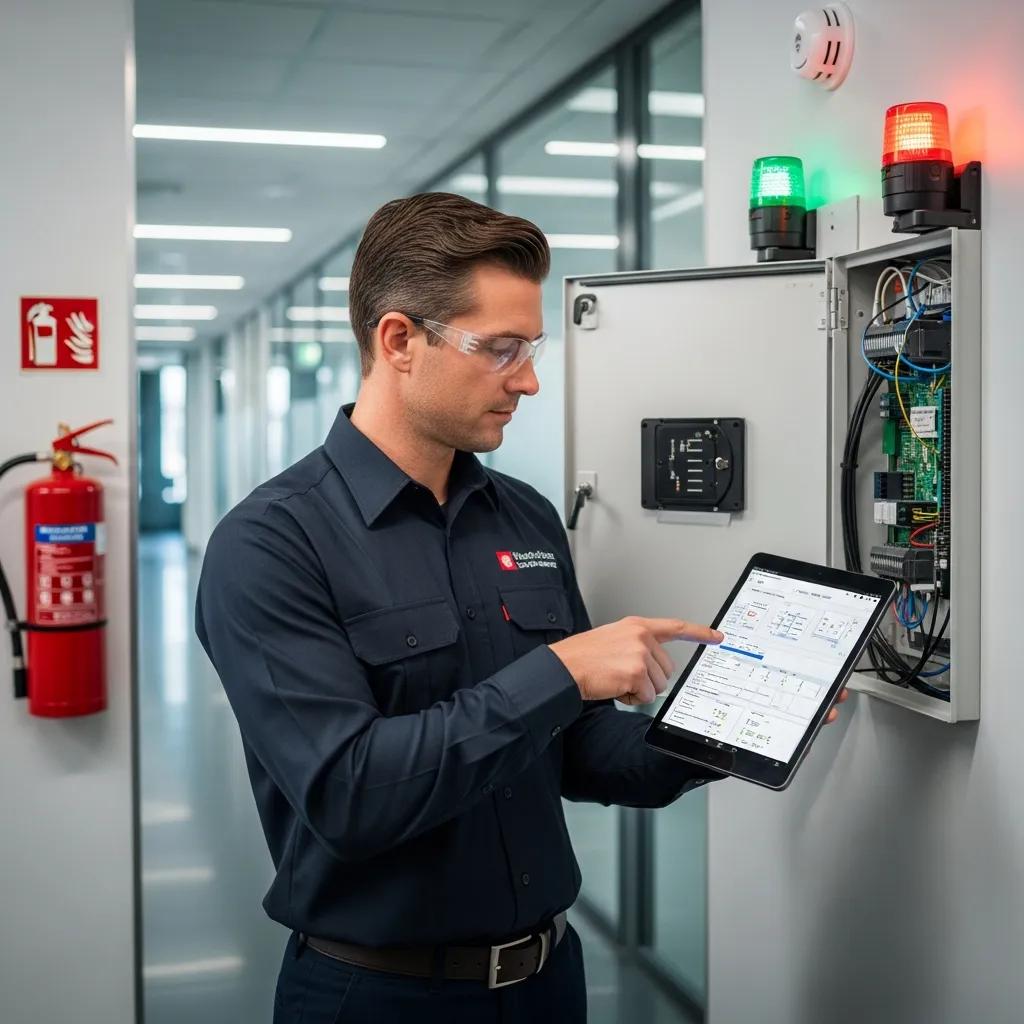
Understanding Fire System Inspection Prices in Abu Dhabi: A Practical Guide for Customers
Fire system inspection price covers the total fee for assessing, testing and certifying your building’s fire protection systems so they work as intended and meet Abu Dhabi regulations. In this guide we explain what typical inspections and Annual Maintenance Contracts (AMCs) include, the main cost drivers, and how Abu Dhabi Civil Defence (ADCD) compliance affects pricing and penalties. You’ll find system-level checklists for alarms, sprinklers, extinguishers, emergency lighting and pumps, example price drivers by building type, and recommended inspection frequencies aligned with ADCD and NFPA guidance. We also cover how to pick a certified provider and the steps to obtain or renew fitness certificates. By the end you’ll be able to evaluate quotes, compare AMC scopes, and prioritise inspections that reduce operational risk and long-term cost.
What Is Included in Fire System Inspection and Annual Maintenance Contracts in Abu Dhabi?
A full fire system inspection and AMC bundles preventive checks, functional tests and certified reporting for every life-safety system to keep equipment operational and audit-ready. Typical AMCs include scheduled visual inspections, functional testing, log checks, minor corrective work and formal reports prepared for ADCD fitness assessments. These services lower the chance of system failure and provide clear documentation for audits; the contract scope and visit frequency determine ongoing costs. Below we match common systems to inspection tasks, test methods and reporting expectations so you can compare proposals more clearly.
The checklist below summarises typical system-level inspection items and the reporting cadence you can expect in a mid-level AMC.
| نظام | Main Inspection Items | Typical Frequency / Reporting |
|---|---|---|
| نظام إنذار الحريق | Detector function checks, control panel event-log review, battery and standby power checks, sounder and interface tests | Monthly visual checks, quarterly functional tests, annual detailed report |
| Sprinkler & water-based systems | Visual inspection of heads and pipework, valve position/tamper switch tests, flow and pressure checks, corrosion assessment | Monthly visual checks, annual flow/pressure test, written maintenance report |
| طفايات الحريق | Pressure verification, hose/nozzle inspection, recharge when needed, tagging and records | Monthly visual checks, annual service and recharge record |
| Emergency lighting | Lamp operation, duration (runtime) test, battery replacement planning, signage verification | Monthly functional check, annual duration test and report |
| Fire pumps | Run tests, suction/discharge gauge readings, controller and coupling checks, engine service points | Monthly run checks, annual performance test with report |
| Fire doors & passive measures | Latch and closer operation, gap and signage inspection, smoke-seal condition | Quarterly inspections and annual compliance record |
What Fire Alarm System Checks Are Covered in Inspections?
An alarm system inspection confirms detectors, notification devices, control panels and power supplies operate reliably in both alarm and fault conditions. Technicians carry out visual checks for contamination, simulated detector activations, zone wiring and end-of-line resistor verification, event-log reviews and battery load tests to ensure backup power holds. These checks follow NFPA 72 principles and ADCD expectations; findings are logged with recommended corrective actions. Accurate detector testing reduces false alarms and ensures fast detection — and repair priorities identified in the report will influence the final AMC cost.
We also test interfaces between alarms and suppression or building-management systems so integrated responses work end-to-end. Integrated systems require extra end-to-end functional tests and specialist expertise, which can increase inspection time and cost compared with standalone alarms.
How Are Sprinkler and Fire Suppression Systems Tested and Maintained?
Sprinkler and suppression inspections emphasise visual condition, valve and pipework integrity, and hydraulic performance to confirm adequate pressure and flow. Typical procedures include head and pipework inspections for corrosion or blockage, trip/flow switch tests, valve tamper and supervisory device checks, and static/dynamic gauge readings — often referencing NFPA 25. Technicians may perform controlled flow tests to verify hydraulic calculations against expected occupancy demand; gas systems require agent quantity checks and cylinder integrity verification. Results are recorded and failed items are quoted for repair or recharge; any reactive work found during inspection will change the quoted price depending on parts and labour.
Access to pump rooms and valves can be complex; some inspections need specialist equipment or confined-space procedures, which lengthen inspection time and affect cost estimates. The next section explains the main factors that influence final pricing.
What Factors Influence Fire System Inspection Costs in Abu Dhabi?
Inspection prices depend on several interacting variables: building size and occupancy, system complexity and age, the AMC’s scope and frequency, and ADCD compliance requirements that add testing and documentation. Each factor alters technician hours, specialist skills needed and the likelihood of parts replacement, which explains variation between quotes. Knowing these drivers helps you read line items in proposals and choose the AMC level that fits your risk tolerance and budget.
| Pricing Factor | How It Is Measured | Example Impact on Price |
|---|---|---|
| Building Size & Type | Square footage, number of floors, occupancy use | Small office (<2,500 sqft) — lower labour; High-rise (>10,000 sqft) — higher labour and access equipment |
| تعقيد النظام | Number of circuits, brands, integrations | Single-brand alarm — faster diagnostics; Mixed brands or bespoke suppression — longer testing and specialist parts |
| System Age & Condition | Years since installation, maintenance history | New systems — lower immediate repair risk; Aged systems — higher chance of parts replacement |
| AMC Scope & Frequency | Basic inspection vs comprehensive with emergency response | Basic annual check — lower price; Comprehensive AMC with 24/7 response — premium for on-call resources |
How Do Building Size and Type Affect Inspection Prices?
Building size and occupancy determine how many devices must be inspected, how accessible those devices are and how long technicians will be on site — all of which scale labour and reporting time in a quote. A small retail unit under 2,500 sqft typically needs fewer detector and extinguisher checks and may finish in a half-day, while multi-storey offices or high-rises require vertical access, more devices and sometimes multi-day visits. Special occupancies — industrial plants or hazardous storage — require permits, confined-space procedures and extra documentation, increasing cost. When comparing quotes, ask providers for device counts and estimated technician-hours per visit so you can see how size and type affect price.
Larger sites also need more administrative work to prepare ADCD reports and coordinate corrective works; many AMCs itemise this as audit-grade documentation rather than simple on-site testing.
What Role Does System Complexity and Age Play in Pricing?
Complex or aged systems raise the probability of repairs, spare-part needs and longer diagnostics, which increase price. Older panels and mixed-brand installations often take longer to troubleshoot because of legacy wiring, obsolete parts or integration issues with modern monitoring — pushing up labour and parts estimates. Modern, well-documented systems streamline testing and reduce on-site corrective work, lowering inspection cost risk. Providers factor in anticipated spare-part replacement, retrofitting to meet ADCD requirements or firmware updates for networked systems when preparing quotes.
Ask providers to list assumptions about parts availability and expected repair rates: transparent assumptions reduce invoice surprises. The next section describes how ADCD compliance changes inspection scope and cost.
How Does Abu Dhabi Civil Defence Compliance Affect Fire Inspection Prices?
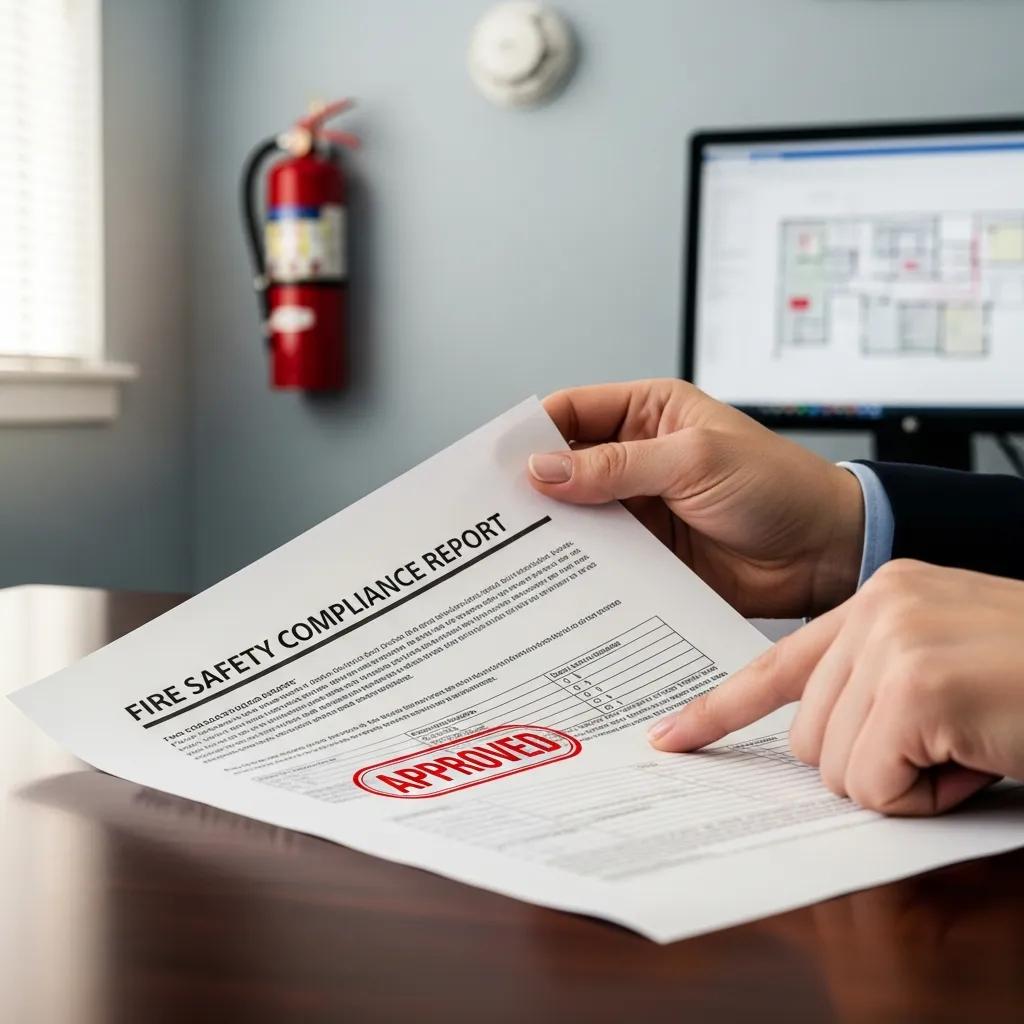
ADCD compliance adds mandatory checkpoints, higher documentation standards and sometimes witnessed tests — all of which expand inspection scope and administrative work, increasing the price versus informal checks. Compliance tasks include preparing submission-ready reports, carrying out ADCD-specified functional tests and completing corrective works to ADCD acceptance before applying for or renewing a fitness certificate. These steps need traceable test logs, certified reporting formats and occasionally coordinated ADCD site attendance — all requiring time and specialist knowledge. Because non-compliance can lead to fines or business disruption, many organisations accept the higher inspection and documentation cost as sensible risk management.
- Preparing detailed test reports and certified logbooks formatted for ADCD submission.
- Conducting witnessed performance tests (for example, pump runs or full-system drills).
- Completing corrective works to ADCD standards and re-testing where required.
These compliance-driven activities reduce the risk of penalties but add inspection time and admin overhead, which explains why certified AMCs cost more than bare-bones checks. After outlining penalties, the next subsection summarises the ADCD requirements that most affect pricing.
What Are the Key ADCD Fire Safety Inspection Requirements?
ADCD focuses on demonstrable functionality, dated maintenance records and evidence that systems comply with the UAE Fire and Life Safety Code (and referenced standards like NFPA where applicable). Key expectations include complete service histories, operational test results for detectors, panels, pumps and suppression systems, and proof of emergency lighting duration and extinguisher servicing. ADCD also expects responsibility traces: signed technician reports, serial-numbered equipment tagging and corrective-action logs showing issues were resolved before approval. Meeting these expectations typically requires regular preventive maintenance, up-to-date documentation and readiness for ADCD inspections — factors that increase AMC scope and cost.
Because ADCD audits prioritise traceable records, providers that supply certified reports and pre-audit inspections reduce the chance of failed visits and costly re-inspections. The next subsection explains the consequences of non-compliance and why proactive AMCs can be more economical long-term.
ما هي العقوبات المترتبة على عدم الالتزام بلوائح هيئة أبوظبي للثقافة والتراث؟
Penalties for non-compliance can include fines, temporary operational restrictions and licensing delays; outright closure is uncommon for a first breach, but repeated or serious failures draw stricter enforcement. Financial penalties and remedial orders force urgent corrective works and re-inspections, often costing more than planned preventive maintenance. Beyond fines, non-compliance raises operational risks — insurance complications, reputational damage and downtime during remediation. A comprehensive AMC lowers the chance of penalties and reduces total cost of ownership through scheduled maintenance and documented readiness.
For these reasons many organisations choose AMCs that include compliance support. Amples Fire & Safety LLC provides ADCD compliance assistance — from Civil Defence AMC approvals to fitness-certificate support — alongside standard inspection and maintenance, to simplify the application process and align testing and reporting with ADCD expectations.
Why Choose a Certified Fire Safety Provider for Your Fire System Inspection in Abu Dhabi?
Working with a certified provider ensures inspections meet ADCD technical and reporting standards and reduces the risk of rework or non-compliance. Certified companies supply qualified technicians, ADCD-acceptable reporting formats and the operational processes needed for audit-readiness. A provider that can both identify issues and promptly fix them limits downtime and simplifies follow-up administration. The table below links common service features to practical benefits so you can judge provider claims against measurable outcomes.
| Service Feature | فائدة | Impact on Compliance/Cost |
|---|---|---|
| 24/7 response and immediate rectification | Faster restoration of critical systems | Reduces downtime and potential fines; lowers business interruption risk |
| In-house experienced technicians across brands | Consistent quality and faster diagnostics | Less diagnostic time and fewer third‑party call-outs, lowering repair costs |
| ADCD compliance assistance (reports, approvals) | Simplified submissions and fitness‑certificate readiness | Fewer re-inspections and administrative delays; predictable compliance costs |
What Criteria Define an ADCD Approved Fire Safety Company?
ADCD-approved providers typically show: certificated engineers, documented maintenance procedures, standardised test logs and report templates acceptable to ADCD, and a formal AMC that spells out scope and response times. Trained staff authorised to sign service records and an auditable trail of completed corrective actions are also essential. These attributes make reports credible to ADCD and reduce the chance of evidence requests or re-inspections. When vetting providers, ask for sample reports and verify the qualifications of the technicians assigned to your site to confirm they meet ADCD expectations.
These checks protect you by ensuring inspections are technically thorough and administratively robust. The next subsection outlines how Amples’ capabilities align with these requirements.
How Does Amples Fire & Safety LLC Ensure Cost-Effective and Reliable Service?
Amples Fire & Safety LLC meets key ADCD expectations through clear service commitments: 24/7 response with on-site rectification capability, an in-house team experienced with multiple brands, and pricing positioned to balance technical outcomes and compliance needs. Our scope covers testing and inspection of fire alarm systems, sprinkler and suppression systems, extinguisher maintenance and recharge, emergency lighting testing, pump testing and fire-door inspections — all aligned with ADCD documentation needs. Working with a single provider reduces the need for multiple contractors, shortens repair cycles and consolidates compliance reporting.
If you need direct assistance, Amples can be contacted via the company email or phone listed on our service pages for AMC options and ADCD support. Choosing a provider that combines technical breadth and compliance assistance often lowers total lifecycle cost compared with piecemeal approaches.
How Often Should Fire System Inspections Be Conducted in Abu Dhabi?
Inspection frequency balances regulatory requirements, manufacturer guidance and operational risk. A common cadence combines monthly visual checks, quarterly functional tests and annual comprehensive performance tests for most systems. Regular inspections catch degradation early, reduce false alarms and keep documentation current for ADCD reviews. Visit frequency also affects AMC pricing — more frequent visits raise labour costs but can lower long-term repair spending by identifying issues early. Below is a recommended schedule that lines up with industry practice and ADCD expectations.
- شهريا: Visual inspections and device spot checks (detectors, extinguishers, emergency-lighting indicators).
- ربع سنوي: Functional tests of alarm circuits, valve supervisory checks and smoke-control spot tests.
- سنوي: Full-system performance tests (pump curves, sprinkler flow tests, battery duration tests) with submission-ready reports for ADCD.
Following this cadence keeps systems audit-ready and reduces the need for emergency remedial work. The next subsection explains the schedule in more detail and links frequency to compliance rationale.
What Is the Recommended Inspection Schedule for Fire Safety Systems?
We recommend pairing frequent light-touch checks with periodic in-depth testing: monthly visual and battery checks for alarms and emergency lights; quarterly functional tests for detection zones, valves and suppression supervisory devices; and annual full-system performance tests with written reports. Emergency lighting needs monthly activation checks plus an annual duration (discharge) test to confirm battery runtime. Fire pumps should be run monthly with an annual performance curve test. ADCD and NFPA guidance support this layered approach because it balances cost with early fault detection and documentation needs. Facilities with higher risk or critical operations should consider tighter intervals.
Regular scheduling also enables predictive maintenance: trends in test results help providers recommend targeted replacements before failures occur, reducing unplanned capital expenditure.
How Does Regular Maintenance Impact Fire Safety and Compliance?
Regular maintenance improves system reliability, cuts false alarms and extends equipment life through preventive parts replacement and calibration. For compliance, consistent maintenance creates a documented history that simplifies ADCD inspections and supports fitness-certificate renewal. Operationally, well-maintained systems reduce the chance of disruption during incidents, and predictable service intervals make budget planning for lifecycle costs easier than reacting to emergencies. In practice, preventive maintenance typically lowers in-service failures and emergency call-outs, which reduces total cost of ownership over time.
Because maintenance choices affect both safety and spending, integrating predictive inspection data into an AMC helps organisations prioritise high-risk items and plan cost-effective upgrades. The next section answers common buyer questions about AMCs and certification.
What Are the Most Common Questions About Fire System Inspection Prices and Services in Abu Dhabi?
Buyers often want to know what a commercial AMC includes, how optional items change price and how to obtain or renew ADCD fitness certificates — all important for procurement and budgeting. Clear answers help procurement teams compare proposals and ensure their chosen provider meets ADCD documentation standards. The following subsections give concise, practical responses and a simple roadmap for fitness-certification processing.
What Does a Commercial Fire Safety Maintenance Contract Include?
A commercial AMC usually covers scheduled inspections, functional testing, written reports, emergency response terms and a breakdown of covered labour versus parts. Optional extras can include spare-part inventory, major retrofits or witnessed ADCD tests at additional cost. Standard inclusions typically are monthly visual checks, quarterly functional tests, an annual comprehensive test with certified reporting, and emergency call-out terms; parts coverage (consumables vs major components) is usually specified separately. When comparing contracts, ask for an itemised scope listing device counts, visit frequency, response times and exclusions so you can compare offers on an apples-to-apples basis.
Providers that add pre-audit inspections and ADCD submission support deliver administrative value that often reduces the total time and cost to achieve fitness certification. The next subsection outlines the practical steps to obtain and renew fitness certificates.
How Can Businesses Obtain and Renew Fire Safety Fitness Certificates?
Obtaining or renewing an ADCD fitness certificate generally follows these steps: arrange a certified inspection, complete required corrective works, compile test reports and submission-ready logs, request ADCD inspection if needed, and receive the certificate once ADCD accepts the submission. Certified providers can simplify this by running pre-audit reviews, supplying ADCD‑formatted reports, coordinating witnessed tests and advising on remediation timelines. Key documents include signed test logs, extinguisher recharge or replacement certificates, pump performance records and a final compliance statement from the service provider. Early engagement with a certified AMC provider reduces administrative burden and shortens the path to approval.
Working with a provider who understands ADCD expectations and delivers submission-ready documentation minimises back-and-forth with the regulator and lowers the risk of reinspection fees for incomplete records.
الأسئلة الشائعة
What are the benefits of regular fire system inspections?
Regular inspections keep fire protection systems reliable and reduce the risk of failure during an emergency. They help spot issues early, lower false alarms and keep documentation current for ADCD. That documentation also speeds up fitness‑certificate renewals and reduces the chance of fines or operational disruption — saving time and money over the long term.
How can businesses choose the right fire safety provider?
Choose a provider with ADCD approval, clear certifications and proven experience in inspections and maintenance. Check response times, 24/7 support availability and how comprehensive their AMC is. Request sample reports, client references and a clear itemised scope so you can judge quality and reliability before signing a contract.
What should businesses do if they fail an ADCD inspection?
If you fail an ADCD inspection, address the identified issues quickly: arrange the necessary repairs or upgrades, document the corrective work and arrange re-testing. Engaging a certified fire safety provider speeds up corrective actions and re-submission. Keep detailed records of all fixes to show ADCD during follow-up inspections and to avoid repeat penalties.
Are there any specific fire safety regulations unique to Abu Dhabi?
Yes. ADCD enforces local fire safety requirements aligned with the UAE Fire and Life Safety Code and referenced standards like NFPA. These rules emphasise demonstrable system functionality, maintenance histories and documentation standards. Businesses in Abu Dhabi need to follow ADCD guidance and maintain regular inspections to stay compliant and avoid penalties.
How do seasonal changes affect fire system inspections?
Seasonal shifts can affect equipment performance. Hot months and heavy air‑conditioning can change humidity and impact detectors and batteries; rain or dust storms can affect outdoor equipment. It’s sensible to schedule inspections before and after significant seasonal changes to catch issues caused by environmental conditions.
What are the common misconceptions about fire system inspections?
One misconception is that inspections are only needed after installation or an incident — in reality, regular checks are essential for ongoing reliability and compliance. Another is that all providers deliver the same service; inspection quality and reporting can vary widely. Choosing a qualified, ADCD-aware provider helps avoid costly mistakes and ensures your systems are ready when they’re needed.
خاتمة
Knowing how fire system inspection prices are built in Abu Dhabi helps you make better decisions about safety and compliance. By understanding the main cost drivers — building size, system complexity, system age and ADCD requirements — you can choose an AMC that matches your risk profile and budget. Working with a certified provider ensures thorough testing and submission-ready reporting, reducing operational risk and unexpected costs. Contact us to discuss your site’s needs and secure a practical, compliant maintenance plan.