
Understanding Fire System Inspection Costs in Abu Dhabi — What’s Included and Why It Matters
A fire system inspection and Annual Maintenance Contract (AMC) keep a building’s life-safety systems reliable, compliant and ready to perform when it counts. This guide explains what a standard inspection and AMC typically cover, how Abu Dhabi-specific requirements influence pricing, and how to read cost estimates so you can budget confidently for commercial properties. Facility managers and business owners often find quotes hard to compare — here we unpack the main cost drivers (system type, device counts, building complexity, testing schedules and ADCD obligations), offer system-specific checklists and compact tables, and give practical tips for requesting clear, itemised quotes. Read on to understand what affects inspection costs for fire alarms, sprinklers, suppression systems, pumps and emergency lighting in Abu Dhabi, how Abu Dhabi Civil Defence (ADCD) standards change scope and cost, and how to get straightforward estimates for your site.
What Factors Influence Fire System Inspection Costs in Abu Dhabi?

Inspection costs reflect the time, specialist skills and compliance work needed to test and maintain life-safety systems. The biggest drivers are the type of system, the number of devices and the regulatory testing required. Different systems need different technician expertise and tools — for example, testing a multi‑zone alarm with voice evacuation takes longer than a simple panel check, which raises labour and specialist-equipment costs. Local market factors in Abu Dhabi, such as ADCD certification rules and formal reporting, add administrative hours to inspections. Knowing these cost drivers helps you see which parts of a quote are fixed and which are variable, making supplier comparisons far easier. Key areas to watch when evaluating inspection and AMC pricing are listed below.
- System type and complexity: Advanced systems need specialist technicians and longer test times.
- Building size and layout: More floors, zones or hard-to-reach devices increase labour and equipment hire.
- Testing frequency and regulatory scope: ADCD-mandated tests, paperwork and certification increase admin time.
- Remedial work and spare parts: Replacements, hydrostatic tests or agent refills are extra costs outside base fees.
- Emergency response expectations: 24/7 coverage or guaranteed rapid attendance typically carry a premium.
These five elements account for most quotes; understanding them makes individual line items easier to interpret. Next, we compare how each protection system affects testing effort and price.
How Do Different Fire Protection Systems Affect Pricing?
Alarms, sprinklers, suppression systems and pumps each follow distinct inspection routines, so their cost profiles differ. Alarm testing becomes labour‑intensive when device counts are high — technicians test detectors, sounders and panel logs; voice evacuation and addressable loop diagnostics require extra time and skill. Sprinkler inspections need mechanical checks such as zone isolation and flow/pressure verification and may require coordination or temporary shutdowns, which raises logistics costs. Suppression systems (clean agents, CO2, foam) require certified handling, agent weight/pressure checks and strict safety procedures, adding both labour and compliance costs. Pump and diesel-generator tests need instruments, fuel management and sometimes multiple technicians for dynamic flow/running tests, which extends onsite time.
Mixed‑system sites are often priced with a blend of per‑device charges, per‑zone fees and fixed visit costs — which leads into how building size and layout further affect pricing.
What Role Does Building Size and Complexity Play in Cost?
Footprint, height and occupancy type all change inspection time and complexity — and therefore cost. A small retail unit with a single zone and a few detectors is often quoted per device, while a multi‑floor office tower needs zone‑by‑zone testing, lift access, and sometimes rope access or scaffolding for ceiling devices, increasing labour and hire costs. High‑rise buildings might require staged shutdowns or night work to minimise disruption, which attracts premium time charges. Plant rooms with complex pipework, pumps and suppression cylinders require longer, more detailed diagnostics and safety steps. Providers commonly mix per‑device rates with per‑zone or per‑m2 surcharges to reflect access and complexity, so a site survey is usually needed to give an accurate quote and avoid surprises.
What Is Included in a Typical Fire System Annual Maintenance Contract in Abu Dhabi?
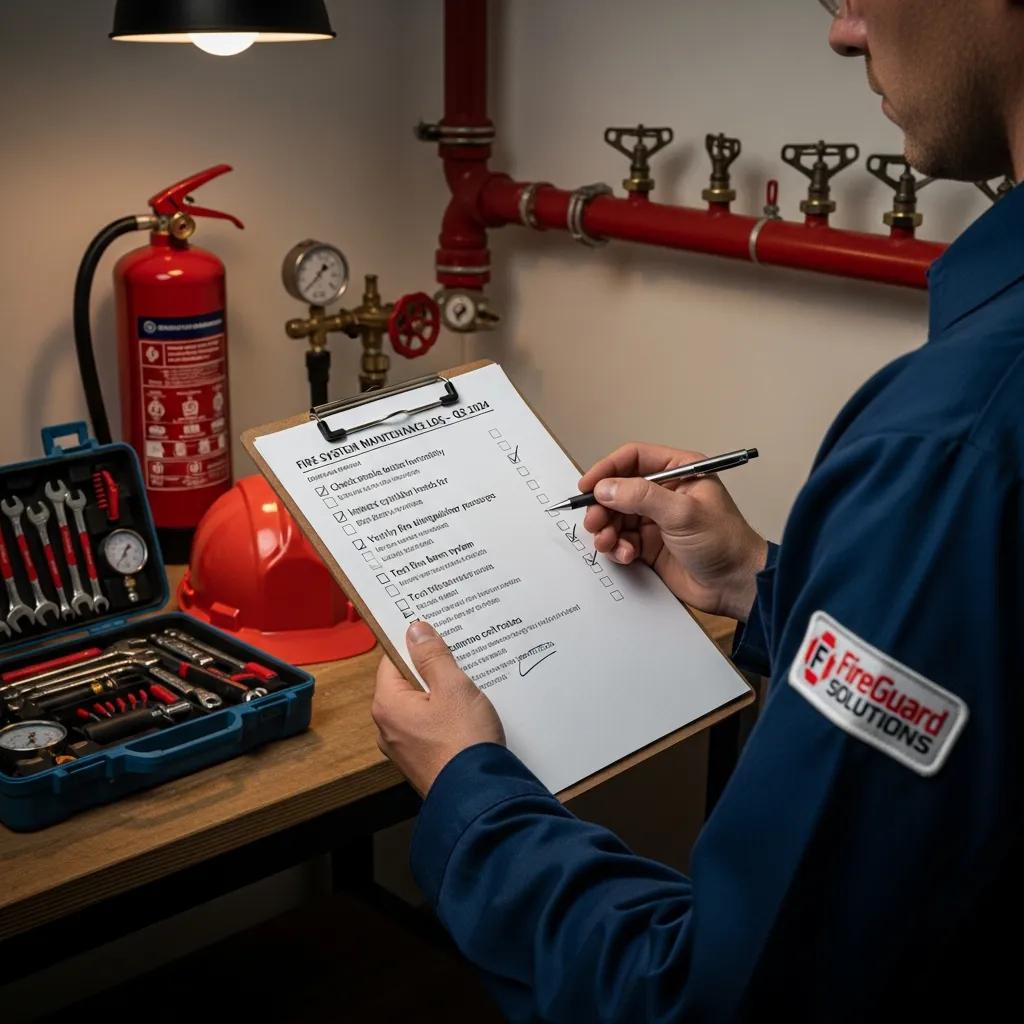
A standard Fire & Safety Annual Maintenance Contract (AMC) covers scheduled inspections, functional testing, preventive maintenance, reporting and minor remedial work for the systems named in the agreement to meet safety and regulatory requirements. Core deliverables typically include routine visual checks, device functional testing, battery and power supply verification, pump and hydraulic tests, emergency lighting checks, and a formal report suitable for ADCD records. AMCs usually include agreed call‑out terms and response times for faults found between visits; parts and major repairs are generally billed separately. The table below summarises common checks per major system so you can see what an AMC usually includes.
| System | Typical Checks | Deliverable |
|---|---|---|
| Fire Alarm System | Functional tests of devices, panel diagnostics, battery and loop integrity checks | Test log with identified faults and corrective notes |
| Sprinkler System | Zone isolation tests, flow/pressure verification, visual inspection of heads | Flow test report and recommended corrective actions |
| Fire Pumps | No‑load and run tests, pressure/flow readings, engine/fuel checks | Pump performance sheet and maintenance recommendations |
- Scheduled inspection and functional testing to verify operational readiness.
- Preventive maintenance: cleaning, minor adjustments, firmware checks and battery changes.
- Formal reporting and documentation prepared for ADCD review and fitness‑certificate support.
When comparing AMCs, check the level of detail and promised response times — some providers include rapid fault rectification and 24/7 response as standard. Amples Fire & Safety LLC offers a Fire & Safety System Annual Maintenance (Firefighting AMC) with 24/7 onsite response and immediate fault rectification, making it a practical choice for clients who prioritise fast remediation and ADCD‑ready documentation.
Which Fire Alarm System Components Are Inspected and Maintained?
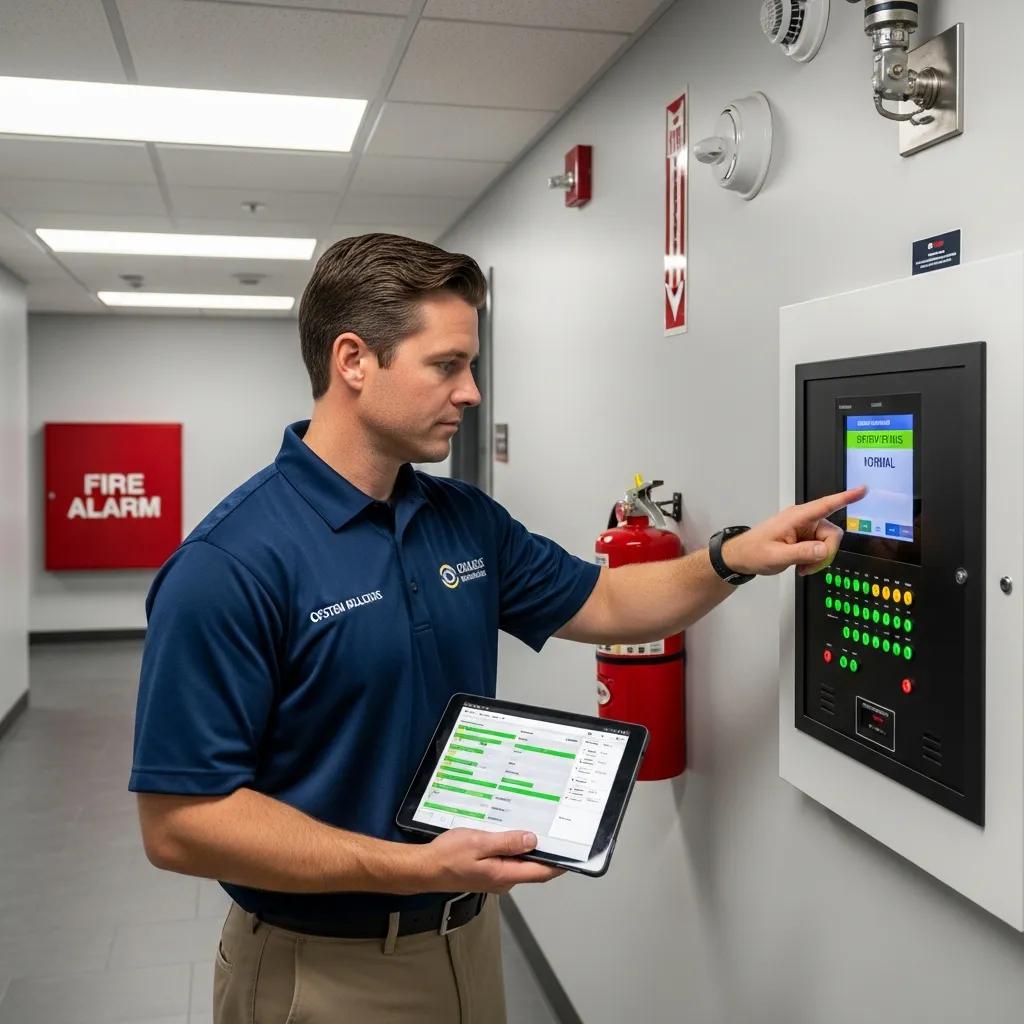
Alarm maintenance centres on the control panel, detection devices, notification appliances and power sources — each with specific tests and pass criteria. Control panels receive diagnostics, event‑log reviews and firmware/status checks. Detectors are tested for function, sensitivity and cleaned of dust or contamination. Sounders and visual alarms are activated to check audibility and synchronisation, and batteries/standby power systems are load‑tested to verify changeover and runtime. Detailed device IDs, test results and any remedial work are recorded to ensure traceability and meet ADCD documentation needs.
These alarm checks naturally pair with the physical firefighting equipment inspections that appear in a comprehensive AMC.
What Fire Fighting Equipment Checks Are Covered in AMC Pricing?
Firefighting equipment checks normally include extinguisher visual inspections and pressure checks, hose reel function tests, hydrant flow and valve operation checks, and scheduled pump performance testing. Portable extinguishers get monthly or annual visual inspections with tag updates; full servicing, refills and hydrostatic testing follow manufacturer and regulatory intervals and are usually charged separately. Hose reels and hydrants are inspected for leaks and mechanical integrity and are function‑tested to confirm flow. Fire pumps undergo systematic performance tests, including pressure and flow verification under load, diesel engine checks and run‑hour logging to confirm reliability.
These equipment checks complement suppression and emergency lighting servicing, discussed next.
How Are Fire Suppression and Emergency Lighting Systems Serviced?
Suppression systems (clean agents, CO2, foam) require agent‑quantity verification, cylinder and valve inspections, and nozzle/discharge checks by certified technicians. Agent tasks include weighing cylinders, checking pressures, and inspecting piping and nozzles for corrosion or leaks; any agent handling or recharging follows strict safety procedures and documentation. Emergency lighting and exit signage maintenance focuses on battery backup testing, duration verification, lamp replacement and illumination measurements to meet required levels during power loss. Together, these checks ensure suppression agents will discharge correctly and escape routes remain lit — both critical for occupant safety and ADCD fitness certification.
How Does Compliance with Abu Dhabi Civil Defence Affect Fire System Inspection Costs?
ADCD compliance adds mandatory testing intervals, formal reporting and documentation standards that expand inspection scope and administrative effort. Meeting ADCD requirements usually means using authorised technicians and keeping traceable records. ADCD typically asks for routine test evidence, formal reports for fitness‑certificate renewals and an AMC that shows ongoing compliance — all of which increase a provider’s record‑keeping and reporting time. Non‑compliance risks (fines, forced closures or delayed fitness certificates) make thorough documentation and timely corrective action essential, so many providers itemise ADCD administrative or certification‑support fees in their quotes. Knowing how ADCD maps to inspection tasks helps you budget accurately and avoid surprise charges when certified reports or expedited testing are needed.
| Requirement Area | ADCD Expectation | Cost Impact |
|---|---|---|
| Inspection Frequency | System‑dependent (monthly/quarterly/annual) with documented testing | Higher recurring labour and additional report preparation |
| Certification & Reports | Formal test reports for fitness‑certificate submission | Administrative fees and possible rush charges |
| Qualified Personnel | Use of authorised technicians and certified testing procedures | Higher hourly rates for certified staff |
What Are the Key ADCD Requirements for Fire System Maintenance?
ADCD requirements usually set minimum inspection frequencies, standardised test reports and record retention to support fitness certificates and trade licences. Systems such as alarms, sprinklers, suppression and pumps each have prescribed intervals and documentation needs; providers must submit evidence showing functionality and any corrective work. ADCD expects maintenance to be carried out by authorised or competent technicians whose credentials and methods are auditable — a factor that can raise labour costs on quotes. Because ADCD compliance is ongoing, AMCs that include reporting, corrective action plans and compliance support often ease the administrative load on building owners.
Providers that handle ADCD submissions regularly can speed up certificate processes — a useful advantage when deadlines are tight.
Fire Protection Compliance in Abu Dhabi
Fire protection, detection and extinction must meet the requirements set out in Chapter 3, Part C of the applicable regulations.
How Does Amples Fire & Safety LLC Ensure ADCD Compliance and Certification?
Amples Fire & Safety LLC helps clients secure ADCD AMC approvals and fitness certificates by combining thorough inspections with compliant documentation and follow‑up repairs. We perform the required tests, produce detailed reports formatted to ADCD expectations, and prioritise rapid fault rectification to meet certification timelines and reduce the risk of penalties. Amples also provides 24/7 on‑site response and immediate fault rectification as standard parts of its service offering, which helps clients remain compliant under tight schedules. For organisations that need fast ADCD coordination alongside technical maintenance, experience in the approval process can cut administrative friction and lower downtime risk.
These compliance services explain why some AMCs cost more but offer stronger regulatory assurance and fewer operational disruptions.
Why Is Proactive Fire System Maintenance Cost‑Effective for Commercial Buildings in Abu Dhabi?
Planned maintenance reduces emergency failures, lengthens equipment life and lowers lifecycle costs compared with reactive repairs. Regular inspections catch minor issues early — corroded fittings, weak batteries or detector drift — before they escalate into expensive failures or downtime. A documented maintenance history also supports insurance and regulator requirements, which can improve a building’s risk profile and simplify claims or certificate renewals. AMCs provide predictable budgeting so facility managers can spread preventive costs rather than absorb sudden remedial expenses.
- Preventive maintenance cuts the risk of emergency failures and unexpected capital outlays.
- Documented AMCs satisfy insurer expectations and simplify compliance audits.
- Scheduled servicing extends equipment life and reduces total cost of ownership.
For commercial properties that cannot tolerate system downtime or regulatory interruptions, AMCs are typically a sound financial choice.
How Does Regular Maintenance Extend Equipment Lifespan and Reduce Risks?
Routine maintenance spots wear and degradation early, allowing targeted repairs that preserve component function and delay full replacements. Actions like detector cleaning, battery load‑testing, sprinkler head replacement for corroded items and scheduled pump servicing prevent accelerated failure from neglect. Early detection also reduces the chance of cascading faults — where one failed part damages others — which often leads to replacement rather than repair. By planning parts replacement and calibrations, organisations avoid premium emergency procurement and keep systems reliable when they’re needed most.
Planned maintenance therefore delivers safer systems and steadier budgets, lowering long‑term capital and operational risk.
What Are the Insurance and Safety Benefits of Annual Fire Safety Inspections?
Insurers expect evidence of regular maintenance as part of good risk management; inspections and AMC records support loss‑prevention claims. Accurate service records show due diligence and operational controls that can influence underwriting and coverage terms. From a safety standpoint, well‑maintained systems improve early detection and suppression effectiveness, which reduces property damage and occupant harm. ADCD‑compliant documentation also lowers regulatory exposure that could result in fines or forced closures, protecting reputation and revenue for commercial operators.
Taken together, these insurance and safety benefits position AMCs as an investment in operational resilience rather than an avoidable expense.
What Are the Typical Pricing Ranges and Cost Breakdown for Fire System Inspections in Abu Dhabi?
Abu Dhabi pricing commonly combines per‑device charges, per‑zone or per‑m2 rates for sprinkler tests, fixed fees for pump and suppression visits, and separate line items for remedial work and certification support. Per‑device pricing suits alarm systems where detector counts drive onsite time; sprinkler testing is often priced per zone or area because flow tests and isolation work relate to coverage. Suppression and pump testing are frequently quoted as fixed visits with extra charges for agent refills or major repairs. The table below highlights common cost drivers and their typical impact so you can plan before a site survey.
| System | Cost Driver | Typical Impact |
|---|---|---|
| Sprinkler System | Building height and zone count | Increases labour and flow‑test costs; may be quoted per zone or per m2 |
| Fire Alarm | Device count and panel complexity | Higher per‑device or panel visit charges for many addressable devices |
| Suppression | Agent handling and cylinder work | Requires certified staff and adds agent refill or handling fees |
- Remedial repairs and replacement parts are usually billed separately from the AMC base fee.
- Hydrostatic testing, agent refills/recharges and major pump overhauls are treated as special‑line items.
- Expedited ADCD certification or out‑of‑hours emergency response incur premium surcharges.
Transparent providers separate base inspection fees from optional or remedial items so you can see where cost flexibility exists. Amples Fire & Safety LLC offers tailored AMC pricing and a request‑a‑quote process to produce itemised estimates that reflect site specifics and ADCD requirements, giving clients clear, comparable proposals.
How Are Costs Structured for Fire Alarm, Sprinkler, and Suppression Systems?
Market practice typically combines per‑device rates for alarm systems, per‑zone or per‑area rates for sprinkler testing and fixed‑visit fees for suppression and pump testing. Alarm quotes often list a per‑detector test fee plus a panel visit charge; sprinkler quotes may use zone or m2 pricing with added premiums for higher floors. Suppression systems are commonly quoted as a visit plus any agent‑handling fees, with refills or cylinder replacement priced separately. Understanding these models helps you ask for comparable quotes and spot which items are standard and which vary by provider.
Some suppliers offer bundled AMC packages that reduce per‑visit rates, but always check exclusions to avoid surprises.
What Additional Charges Might Affect Your Fire System AMC Pricing?
Beyond scheduled inspections, extra costs can include replacement parts, major pump repairs, hydrostatic testing, agent refills and emergency call‑outs outside normal hours. Hydrostatic testing for extinguishers and cylinders is a periodic requirement and is often charged separately because it needs specialised equipment and certification. Expedited ADCD documentation or late‑hour emergency responses incur surcharges that providers usually list as premium rates. Clarifying these potential extras helps you compare not only base fees but the likely out‑of‑pocket total over a contract period.
Ask about billing practices — hourly vs fixed, parts mark‑up and emergency surcharge rates — so you can estimate realistic yearly costs.
How Can You Get a Transparent Quote for Fire System Inspection and Maintenance in Abu Dhabi?
A transparent quote starts with a site survey and clear documentation of scope, device inventory, access constraints and regulatory needs so the proposal reflects actual effort rather than assumptions. Share site plans, system drawings, device counts and any recent inspection reports when requesting an estimate so providers can quantify labour, access and testing complexity. A good quote includes a clear scope of work, an itemised breakdown of base inspection fees and remedial/parts pricing, plus any expected ADCD or certification charges. Practical steps to secure an accurate, transparent quote are below.
- Share site plans, system drawings and an up‑to‑date device inventory with the provider before the site survey.
- Arrange an on‑site survey so the provider can verify access, device locations and special equipment needs.
- Request a written, itemised quote that separates base inspection fees, remedial pricing and anticipated ADCD/documentation charges.
Following these steps reduces misunderstandings and makes side‑by‑side comparisons straightforward.
What Information Is Needed to Request an Accurate Fire System Inspection Cost Estimate?
To speed quoting and improve accuracy, provide system drawings, a current device inventory, recent inspection reports and any access constraints or preferred service windows. Floor plans and areas help estimate sprinkler zone counts and pump hydraulic demands, while device lists enable per‑detector pricing for alarms. Previous ADCD or fitness certificates and past inspection findings let providers anticipate remedial scope. Note any operational constraints — after‑hours access, tenant notifications or high‑security zones — so the survey factors in coordination time.
Providing these details upfront reduces conservative contingency pricing and shortens the time to a reliable final quote.
Why Choose Amples Fire & Safety LLC for Cost‑Effective and ADCD‑Approved Fire Safety Services?
If you need a provider that combines maintenance delivery with ADCD support, Amples Fire & Safety LLC offers a Fire & Safety System Annual Maintenance (Firefighting AMC) service built around 24/7 response and fast fault rectification. Our service model includes assistance with ADCD AMC approvals and fitness‑certificate documentation to help clients manage compliance timelines and reduce administrative work. Amples positions itself as a cost‑effective partner with transparent quoting and on‑demand remediation — useful for facilities that require prompt corrective action to maintain certification and safety readiness. To get a tailored estimate, request a site survey and an itemised quote that separates base inspection fees from remedial and certification costs so you can compare offers objectively.
These steps help you secure a clear, comparable proposal and confirm the chosen provider meets both technical and regulatory needs.
NFPA Standards for Fire Pump Testing and Maintenance
Fire pump standards are governed internationally by bodies such as the National Fire Protection Association (NFPA). NFPA 20 and NFPA 25 set out recommended testing and maintenance practices for pumps, noting that pumps not run regularly can lose performance. Periodic testing is therefore required to keep pumps in working condition.
Automated System for Fire Pump Performance Testing, 2018
Frequently Asked Questions
What are the consequences of non-compliance with ADCD regulations?
Failing to meet Abu Dhabi Civil Defence (ADCD) rules can lead to fines, forced closures or delays in obtaining a fitness certificate. Non‑compliance may also affect insurance cover and increase scrutiny from regulators, which can mean higher premiums or denial of claims after an incident. Staying compliant protects operations, finances and reputation.
How often should fire system inspections be conducted?
Inspection frequency depends on the system and regulatory requirements. Basic visual checks for alarms and emergency lighting are often monthly, while more detailed inspections for sprinklers, suppression systems and pumps may be quarterly or annual. ADCD sets specific intervals based on system type and use — regular inspections keep systems reliable and compliant.
What should I look for in a fire system inspection provider?
Choose a provider with relevant experience, recognised certifications and a deep understanding of local ADCD rules. Look for transparent pricing, clear service descriptions and proven compliance documentation. Customer references and testimonials help confirm reliability. Importantly, ensure technicians are qualified for your specific systems.
Can I perform fire system inspections in-house?
Basic checks — visual inspections of extinguishers or testing exit lights — can be performed in‑house, but comprehensive inspections should be carried out by qualified professionals. Certified technicians have the training, tools and knowledge to meet ADCD standards and spot less obvious faults that could compromise safety.
What documentation is required for fire system inspections?
Inspection documentation usually includes detailed test reports, results, and records of remedial actions. For ADCD compliance you need formal reports for fitness‑certificate submissions, plus maintenance logs, equipment specs and technician credentials. Thorough records support compliance, insurance claims and audits.
How can I ensure my fire system is always compliant?
Keep a maintenance schedule aligned with ADCD requirements, work with a reputable service provider for regular inspections, and retain detailed records of all activity. Stay updated on regulatory changes and ensure systems and staff training are adjusted accordingly. Routine checks, timely repairs and clear documentation are the best way to remain compliant.
Conclusion
Knowing what drives fire system inspection costs in Abu Dhabi helps facility managers and owners make informed choices that protect people and assets. By understanding factors like system complexity and ADCD obligations, you can evaluate quotes with confidence and keep systems compliant. Proactive maintenance reduces risk and long‑term costs, making AMCs a sensible investment for commercial properties. For tailored, transparent estimates, contact our team to arrange a site survey and an itemised quote.