
Essential Fire System Inspection Steps for Abu Dhabi Compliance: Complete Guide for Business Owners and Building Managers
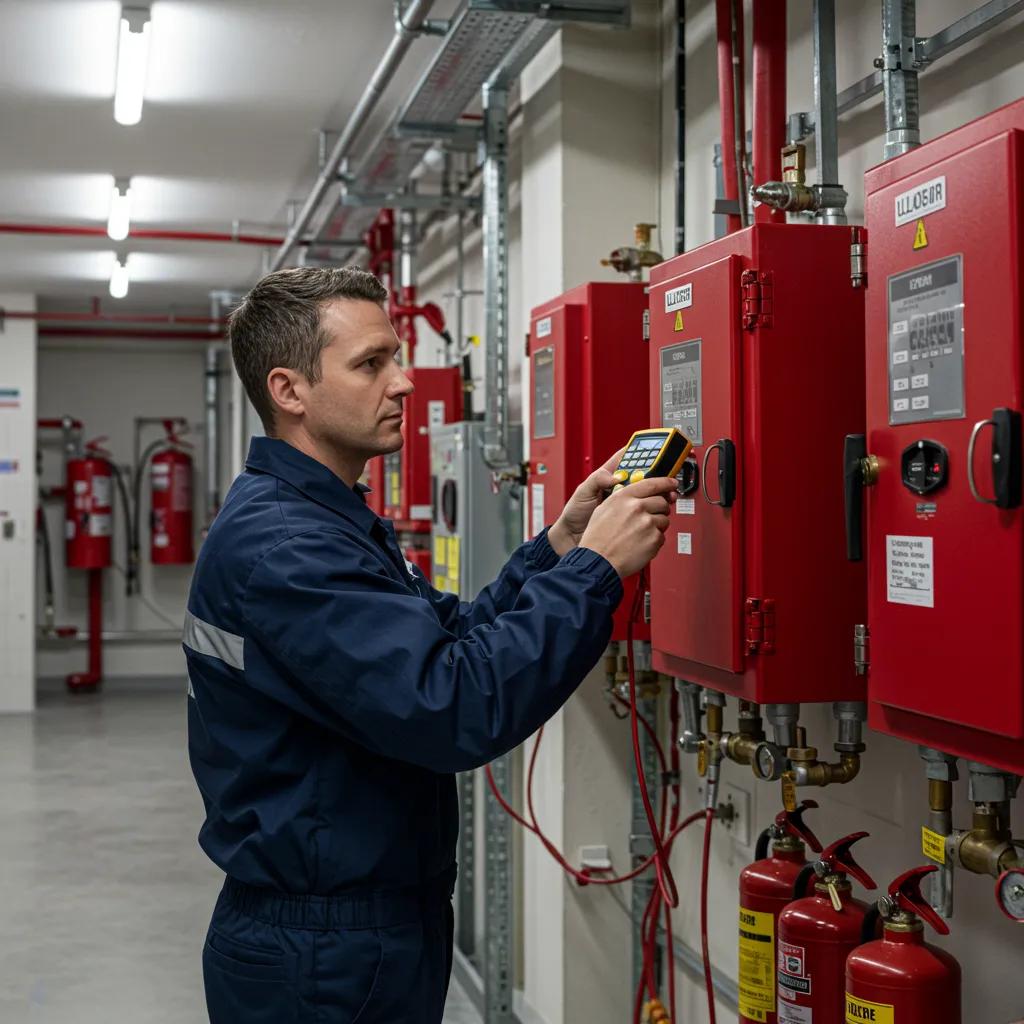
Understanding fire system inspection requirements for ADCD compliance means knowing the scheduled checks, tests, and records needed to prove your building’s fire safety systems are always ready for action, as mandated by the UAE Fire and Life Safety Code and Abu Dhabi Civil Defence (ADCD) rules. This guide equips building managers and business owners with the practical knowledge to prepare, test, document, and certify fire alarms, sprinklers, extinguishers, emergency lighting, and Hassantuk connectivity for seamless ADCD approval. Many properties stumble during inspections due to incomplete records, untested systems, or unverified monitoring connections, leading to operational risks and potential enforcement issues. This article lays out the regulatory path, a system-by-system annual maintenance sequence, Hassantuk installation and certification essentials, and preparation tips to ensure smooth ADCD sign-off. You’ll find step-by-step inspection procedures, EAV comparison tables for quick site actions, downloadable-style checklist guidance, and practical priorities for fixing common issues. Throughout, we’ll reference key terms like fire system inspection Abu Dhabi, ADCD fire safety inspection requirements, Hassantuk system installation Abu Dhabi, and annual fire safety maintenance Abu Dhabi to keep your implementation focused and easily discoverable.
What Are the Abu Dhabi Fire Safety Inspection Requirements and ADCD Compliance Steps?
Abu Dhabi Civil Defence (ADCD) requires proof that your fire safety systems meet functional, documentation, and monitoring standards under the UAE Fire and Life Safety Code to issue or renew fitness certificates. Compliance is achieved through inspection, identifying any defects, rectifying them by the responsible party, and submitting test records and certificates that confirm system integrity and corrective actions. Meeting ADCD requirements minimizes enforcement risks and keeps your building’s insurance valid, making timely inspections a critical regulatory and commercial necessity. The following sections detail ADCD’s role, the governing regulations, the application and renewal process, and the potential penalties for non-compliance.
What Is the Role of Abu Dhabi Civil Defence in Fire Safety Compliance?
Abu Dhabi Civil Defence (ADCD) acts as the governing authority, enforcing fire safety standards, conducting system inspections, issuing fitness certificates, and overseeing corrective actions when systems fall short of code. ADCD carries out both scheduled and complaint-driven inspections, demanding evidence of testing, maintenance, and monitoring before granting approvals. The authority’s mandate includes verifying system functionality and ensuring buildings consistently maintain compliant fire protection. Understanding ADCD’s responsibilities helps building managers plan inspections effectively and respond swiftly to any findings.
Which Regulations Govern Fire System Inspections in Abu Dhabi?
The UAE Fire and Life Safety Code serves as the primary regulatory framework, outlining the design, installation, testing, and maintenance obligations for fire systems in Abu Dhabi, often referencing applicable international standards where necessary. International standards like NFPA are frequently cited within the local code for guidance on testing methodologies, equipment performance, and documentation formats. Mapping these local clauses to each specific system—fire alarm, sprinkler, extinguisher, emergency lighting, and monitoring—ensures inspections target the correct acceptance criteria. Adhering to these mapped requirements minimizes ambiguity during ADCD reviews.
How Do You Obtain and Renew the ADCD Fire Safety Certificate?
Securing or renewing an ADCD fire safety certificate involves a clear sequence: complete all required maintenance and tests, compile comprehensive test reports and evidence of corrective actions, submit the application and documentation to ADCD, and coordinate any necessary follow-up inspections until final approval is granted. Begin by conducting thorough functional checks, producing signed test reports, resolving any identified defects, and preparing a submission package that clearly demonstrates operational readiness. Renewal typically requires updated maintenance records and proof that all previous action items have been successfully closed. Planning ahead for rectification timelines is key to avoiding delays.
What Are the Penalties for Non-Compliance with ADCD Fire Safety Rules?
Failure to comply can result in operational restrictions, enforcement notices, mandatory re-inspections, and potential financial penalties, all of which can disrupt business continuity and lead to insurance complications. ADCD enforcement prioritizes immediate safety risks; buildings with critical failures may face temporary closure or restricted occupancy until hazards are resolved. The reputational and operational impact of enforcement actions often outweighs the direct cost of repairs, underscoring the importance of proactive inspection and rectification. Addressing defects before an inspection minimizes the likelihood of escalated enforcement.
What Are the Key Steps in Fire System Annual Maintenance for Abu Dhabi Compliance?
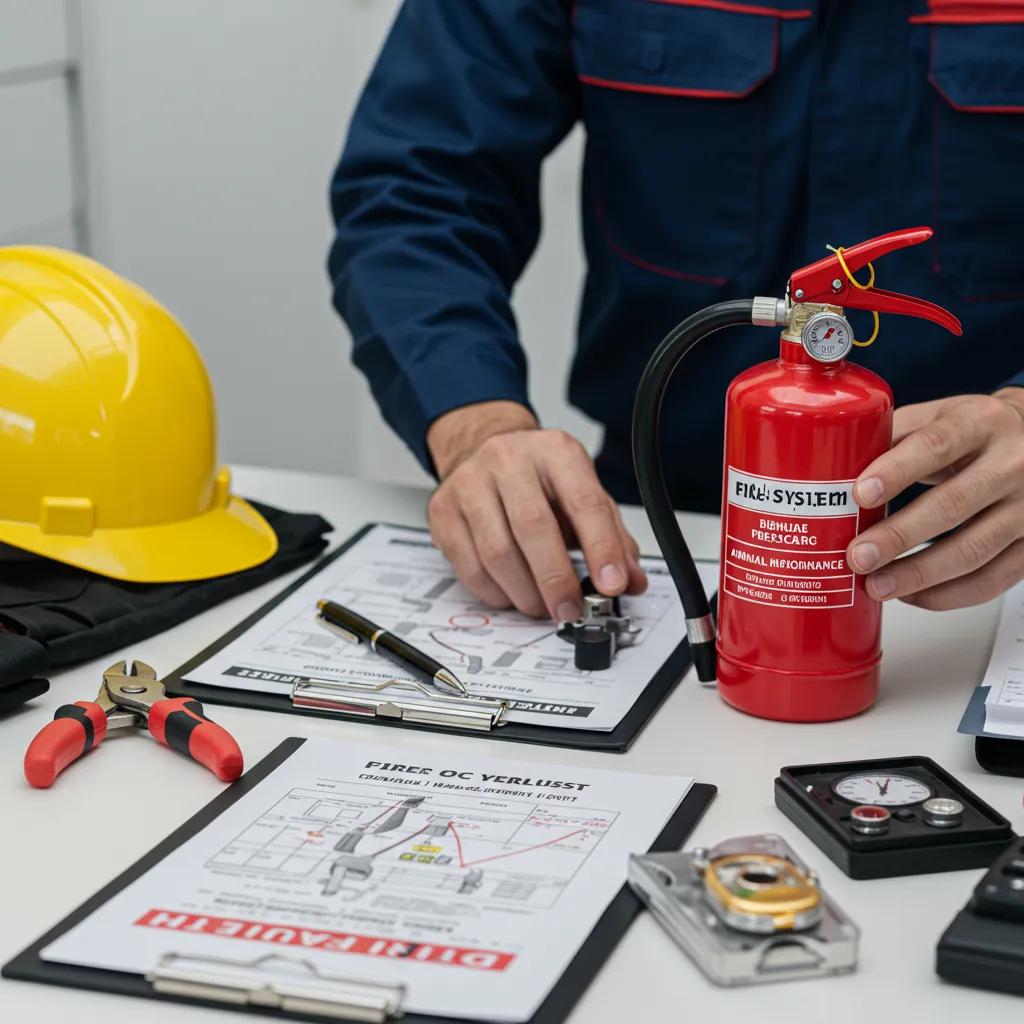
Annual maintenance for ADCD compliance follows a structured process: conducting a site risk assessment and survey, performing system-specific inspections and functional tests, carrying out remedial repairs, compiling evidence, and submitting for certification. This annual cycle ensures that alarms, sprinklers, extinguishers, emergency lighting, pumps, and doors perform according to acceptance criteria and are properly documented for ADCD review. The following sections break down the process into site survey methods and system checklists, including a comparative EAV table to clarify responsibilities and pass criteria across different systems.
Different systems necessitate distinct inspection tasks and frequencies, which are summarized here and then detailed in the system-specific checklists that follow. A practical, numbered sequence helps teams prioritize tasks on inspection day and establishes a clear workflow for log entries and corrective actions.
- Initiate the process with a risk assessment and site survey to identify hazards and critical zones.
- Execute functional tests for each system type and meticulously record evidence of pass or fail results.
- Rectify any identified defects immediately if safe to do so; otherwise, schedule professional repairs promptly.
- Compile all inspection reports, test logs, and evidence of corrective actions for submission to ADCD.
- Maintain an active annual maintenance contract and an ongoing log to support all future reviews.
This systematic approach ensures the process is auditable and geared towards ADCD acceptance, minimizing rework and operational downtime.
An introduction to system inspection tasks and responsibilities for quick reference.
| System Type | Inspection Item | Pass Criteria / Frequency / Responsible Party |
|---|---|---|
| Fire Alarm System | Detectors, panels, batteries, annunciators | All devices respond within accepted timeframes; log updated / Annual functional test / Certified technician |
| Sprinkler System | Water supply, pressure gauges, valves, heads | Supply meets design pressure; valves operate correctly; no signs of corrosion / Annual flow test / Specialist plumber or fire engineer |
| Fire Extinguisher | Cylinder pressure, tags, accessibility | Pressure within the green range; tag is current; unobstructed access / Monthly visual inspection, annual service / Trained service technician |
| Emergency Lighting | Lamp function, battery duration, signage | Lights operate and sustain required duration; signage is clearly visible / Monthly check, annual duration test / Electrician or certified tester |
How to Conduct an Initial Fire Risk Assessment and Site Survey?
An initial site survey is crucial for identifying potential hazards, mapping egress routes, understanding occupancy types, and pinpointing any gaps in system coverage. This survey forms the bedrock for developing an effective inspection schedule and allocating resources appropriately. The survey process involves using a site map, assigning priority scores (high/medium/low), and creating an equipment inventory to determine the testing sequence and anticipate spare parts needs. Key deliverables include a risk register, a photographed asset list, and a prioritized task list to feed directly into the annual maintenance plan. A thorough survey minimizes redundant efforts and ensures that ADCD-relevant items are addressed first.
What Are the Fire Alarm System Inspection Procedures in Abu Dhabi?
Fire alarm inspection procedures involve verifying the functionality of detectors, manual call points, control panels, batteries, and annunciators, requiring detailed logging of each functional test and simulated event. Tests include checks for detector sensitivity, zone isolation capabilities, battery discharge verification, and comprehensive panel integrity tests, with all defects meticulously listed and assigned for corrective action. Acceptance hinges on timely alerts reaching monitoring services and accurate fault logging for ADCD review. Detailed logs and timestamped test records significantly strengthen the submission package.
How to Inspect and Maintain Fire Sprinkler Systems Effectively?
Sprinkler system inspection encompasses visual checks of sprinkler heads, assessment for corrosion, verification of valve operation, confirmation of water supply integrity, and performance of flow and pressure tests to ensure hydraulic efficiency. Inspectors confirm that sprinkler heads are free from obstructions, conduct sample valve operations including tamper and supervisor switch checks, and perform flow tests that simulate activation to verify adequate discharge. Common failure points include clogged or painted heads and errors in valve isolation; these issues are prioritized for immediate correction. Clear labeling and accurate test certificates expedite ADCD acceptance.
What Are the Fire Extinguisher Inspection and Servicing Requirements?
Fire extinguisher maintenance involves routine monthly visual inspections to verify pressure gauge readings and ensure tags are up-to-date, alongside annual servicing that may include refilling or hydrostatic testing as needed to confirm cylinder integrity. Visual inspections confirm that extinguishers are accessible, unobstructed, and clearly signed. Servicing addresses any damaged hoses, expired tags, or low pressure. Records of all inspections and service actions must be logged and retained as evidence for ADCD. Prompt replacement of any non-compliant units is essential to prevent inspection failures.
How to Test Emergency Lighting and Exit Routes for Safety Compliance?
Emergency lighting tests are conducted to confirm lamp operation, verify battery backup duration, and assess signage visibility. Simultaneously, exit route checks ensure that pathways remain unobstructed and that door hardware functions reliably under emergency conditions. Duration tests validate that batteries can sustain the required illumination for the rated period, and visibility checks assess the contrast and placement of exit signage. Any unit that fails is logged with a timeline for corrective action and must be replaced or repaired before the ADCD inspection. Accurate test logs and photographic evidence are vital for demonstrating compliance.
What Are the Documentation and Certification Steps for ADCD Approval?
Compile signed inspection reports, test certificates, records of corrective actions, and evidence of monitoring connectivity into a cohesive submission package for ADCD. This package must clearly demonstrate system functionality and traceable remediation efforts. Documentation should include dated test logs, certificates for any replaced components, and proof of monitoring connectivity where applicable. Utilize structured reports that link each finding to a specific corrective action and its closure evidence to minimize review queries. Well-organized records expedite approvals and reduce the need for re-inspections.
After detailing the technical steps, many building owners find it beneficial to engage professional support for the complete process. Amples Fire & Safety LLC offers an Annual Maintenance Contract (AMC) that covers all the system checks and documentation outlined above, while also assisting clients with ADCD submissions and fitness certificate facilitation. The AMC provides a single, accountable arrangement for performing inspections, managing repairs, and compiling the necessary evidence for approval, ensuring continuity of records across inspection cycles.
How Does the Hassantuk System Installation Impact Fire Safety Compliance in Abu Dhabi?
The Hassantuk system is the mandatory monitored alarm connectivity solution designed to transmit verified alarm signals directly to Civil Defence monitoring centers, thereby enhancing response times and enabling centralized oversight. Its installation is critical for compliance because ADCD often requires proof of operational monitoring connectivity and confirmation that alarm signals are successfully received and logged by the monitoring center. Proper Hassantuk integration simplifies the inspection process and is frequently a prerequisite for certificate issuance in specific building categories. The following sections delve into the system itself, its installation steps, the certification process, and its applicability.
What Is the Hassantuk System and Why Is It Mandatory?
Hassantuk is a centralized alarm monitoring framework established to ensure that fire alarm events are promptly transmitted to Civil Defence monitoring centers for rapid dispatch and effective incident management. The mandate aims to significantly shorten emergency response times and provide centralized incident records, making monitoring an integral part of the regulatory compliance chain. Buildings classified with certain risk profiles are required to demonstrate continuous monitored connectivity to meet ADCD expectations. Clear evidence of this connectivity is often requested during final certification reviews.
What Are the Installation Steps for the Hassantuk System in Abu Dhabi?

Hassantuk installation follows a structured process: initial planning and site checks, physical installation and integration with the building’s fire alarm panels, verification of communication links to the monitoring center, and the completion of signed handover documentation confirming signal receipt. Installers conduct alarm transmission tests under supervised conditions, capture monitoring logs, and prepare the connectivity evidence that ADCD accepts. Proper planning is essential to avoid failed handovers and ensure that monitored signals meet the authority’s verification criteria.
| Hassantuk Component | Requirement | Compliance Outcome / Testing Method |
|---|---|---|
| Alarm Interface | Seamless integration with the fire alarm control panel | Verified transmission of alarm events to the monitoring center during a supervised test |
| Communication Link | Establishment of a redundant communication path to the monitoring center | Demonstrated uptime and signal integrity confirmed via test logs |
| Monitoring Contract | Formal agreement with the monitoring center and their acceptance | Signed monitoring confirmation accepted by ADCD |
| Handover Report | Comprehensive test logs and connectivity evidence | Certificate or stamped report used as part of the ADCD submission |
How to Obtain the Hassantuk Certificate for ADCD Compliance?
To obtain Hassantuk certification, you must complete supervised transmission tests, secure a signed monitoring acceptance report from the monitoring center, and compile test logs that clearly show alarm events and their acknowledgements. Submit this evidence, along with other inspection reports, to ADCD as part of your fitness certification package. Common reasons for rejection include incomplete logs or failure to demonstrate redundant communications, so installers must meticulously document all tests. Third-party installers can provide valuable assistance by preparing organized test reports and liaising effectively with the monitoring center.
Which Buildings Require Hassantuk System Installation by Law?
Hassantuk mandates typically apply to residential clusters such as villas and townhouses in designated areas, as well as commercial or high-risk occupancy buildings where centralized monitoring significantly reduces emergency response times. The applicability can vary based on occupancy classification, and ADCD notifications specify the exact categories and timelines. Building managers should consult ADCD guidance for specific cases, but planning for monitored connectivity is advisable wherever mandates or risk profiles suggest a higher likelihood of enforcement.
When professional expertise is needed for Hassantuk setup or verification, Amples Fire & Safety LLC can provide installation support and assist with certification preparation to help ensure reliable monitoring connectivity and ADCD acceptance.
Why Is Professional Fire System Annual Maintenance Crucial for Abu Dhabi Businesses?
Professional annual maintenance ensures fire systems remain reliable, extends component lifespan, keeps documentation audit-ready, and minimizes business disruption through planned interventions and rapid fault rectification. Certified technicians employ structured testing methods, produce ADCD-compliant evidence, and advise on prioritizing remedial works to prevent inspection failures. Professional services reduce total lifecycle costs by preventing emergency repairs and decreasing the frequency of re-inspections. The three subsections below highlight lifecycle benefits, the advantages of using certified providers, and the operational value of 24/7 response capabilities.
Annual maintenance maximizes operational uptime and occupant safety, while also supporting demonstrable compliance for ADCD reviews.
- Certified technicians adhere to standardized procedures that align precisely with ADCD expectations.
- Scheduled maintenance proactively prevents minor defects from escalating into critical system failures.
- Documentation generated by professionals establishes a defensible audit trail during inspections.
These key advantages explain why numerous property owners opt for professional AMCs rather than relying on ad hoc repairs.
How Does Annual Maintenance Maximize Fire System Reliability and Lifespan?
Scheduled inspections are designed to identify wear, battery degradation, and component fatigue before they lead to system failures. This allows for planned replacements that extend the overall service life of the equipment and preserve its original design performance. Preventive maintenance effectively addresses common failure modes, such as corroded sprinkler heads, depleted batteries, or detector drift, thereby reducing the need for emergency interventions. Lifecycle planning includes strategic parts rotation and prioritization of high-failure items to prevent unexpected downtime. This comprehensive approach leads to predictable maintenance costs and enhanced system resilience.
What Are the Advantages of Choosing a Certified Fire Safety Company in Abu Dhabi?
Selecting a certified local provider guarantees familiarity with ADCD procedures, consistent documentation formats, and a streamlined remediation approach that aligns with regulatory expectations. Certified companies typically maintain in-house technical teams capable of servicing multiple major brands, which significantly reduces coordination delays and facilitates faster corrective actions. Providers who are well-versed in ADCD submissions also minimize administrative rejections by supplying complete and accurate evidence packages. Verifying a provider’s competencies and checking their references are crucial steps to ensure high-quality service delivery.
How Does 24/7 Response and Immediate Fault Rectification Minimize Downtime?
The availability of round-the-clock response capabilities drastically shortens the time between detecting a fault and completing its repair, thereby preventing extended system outages that could lead to failed inspections or operational restrictions. Immediate rectification often prevents cascading issues and reduces the likelihood of enforcement actions during routine ADCD reviews. Rapid response also mitigates business interruption and ensures the safety of occupants, particularly for critical systems like pumps or central alarm panels. Having a readily accessible emergency contact pathway significantly improves resilience and inspection outcomes.
Amples Fire & Safety LLC structures its service offerings around comprehensive scopes, 24/7 response availability, in-house technical expertise for major brands, and competitive pricing to support businesses seeking reliable Annual Maintenance Contract (AMC) arrangements.
What Are the Most Common Questions About Fire System Inspection and Maintenance in Abu Dhabi?
Facility managers frequently inquire about the optimal frequency for maintenance cycles, the specific rules governing fire extinguishers, how to align with the UAE Fire and Life Safety Code, and the qualifications required for performing audits. Clear, concise answers to these questions simplify planning and support practical compliance decisions. The following subsections provide direct, actionable responses that are highly useful for pre-inspection planning and procurement decisions.
How Often Should Fire Safety Annual Maintenance Be Conducted in Abu Dhabi?
While annual maintenance serves as the baseline for ADCD fitness certificate preparation, certain components necessitate more frequent checks—monthly or quarterly—based on operational risk assessments and manufacturer guidelines. Critical elements like battery backups and emergency lighting often require monthly functional checks, whereas comprehensive system functional tests and documentation updates are typically performed annually. Adjust frequencies based on site risk assessment findings and directives from ADCD or manufacturers. Regular intervals are key to preserving functionality and ensuring evidence continuity.
What Are the Requirements for Fire Extinguisher Inspections in Abu Dhabi?
Fire extinguishers must undergo routine visual inspections to confirm accessibility, proper working pressure, and intact seals. Scheduled servicing addresses refilling, replacement, or hydrostatic testing as dictated by the unit’s condition. It is essential to maintain tags and a service history log that meticulously records monthly visual checks and annual servicing actions for presentation during ADCD reviews. Any extinguisher exhibiting pressure loss, corrosion, or physical damage must be replaced or serviced immediately. Proper tagging and an auditable trail are crucial for inspection acceptance.
How Can Businesses Ensure Compliance with UAE Fire and Life Safety Code?
Businesses can ensure compliance with the UAE Fire and Life Safety Code by engaging certified service providers, utilizing code-aligned checklists, maintaining comprehensive documentation, and promptly implementing corrective actions for any identified deficiencies. It is important to regularly update practices to reflect code revisions and ADCD notices, and to incorporate manufacturer recommendations into maintenance schedules. Maintaining an active annual maintenance contract and organized records significantly streamlines the compliance verification process.
Who Is Qualified to Perform Fire Safety Audits and Inspections in Abu Dhabi?
Qualified auditors are certified technicians possessing demonstrated experience in fire system testing, a thorough understanding of ADCD procedures, and the capability to generate compliant documentation and clear remedial plans. Seek providers with proven in-house teams skilled in testing major system brands and producing test certificates that are acceptable to regulatory bodies. Verify qualifications through references, sample reports, and documented workflows to ensure the credibility of the audit. Providers should also be adept at coordinating with monitoring centers and ADCD when necessary.
How to Prepare for Your Fire System Inspection to Ensure Smooth ADCD Approval?
Thorough preparation significantly reduces inspection time and minimizes the likelihood of rejections. Key preparatory actions include gathering all necessary records, conducting pre-inspection tests, addressing common defects proactively, and utilizing standardized checklists to confirm readiness. The following sections offer an EAV-style document table, guidance for addressing frequent deficiencies, and the rationale behind using downloadable checklists to establish consistent audit trails.
What Documents and Records Should Be Ready for Fire Safety Inspections?
Ensure that inspection and test reports, maintenance logs, AMC records, monitoring confirmations (including Hassantuk evidence), component certificates, and any prior ADCD correspondence demonstrating historical compliance and corrective action completion are readily available. Keep all records date-stamped, signed by responsible technicians, and organized by system and zone to facilitate ADCD review. Store documents in an accessible format and maintain backups to prevent delays during submission. Well-organized records clearly demonstrate due diligence and expedite the approval process.
| Document Type | Required Details | Example / Where to Find / How Long to Keep |
|---|---|---|
| Test Reports | Date, technician’s name, list of tested devices, pass/fail notes | Stored in the maintenance folder / Keep for a minimum of one inspection cycle |
| Maintenance Logs | Details of service actions performed, parts replaced, signatures | Found within AMC records / Retained as per contractual terms |
| Monitoring Confirmation | Signed acceptance document from the monitoring center | Provided after a successful Hassantuk test / Attach to the ADCD submission package |
| Certificates | Certificates for components or services rendered | Obtained from suppliers or technicians / Retain for audit trail purposes |
How to Address Common Fire System Deficiencies Before Inspection?
Prioritize safety-critical defects such as non-functioning detectors, depleted batteries, blocked exits, and valve isolation issues; remediate these immediately and document all repairs with dated photos and signed work orders. Employ a prioritized timeline that treats life-safety items as urgent and administrative items as secondary. Engage certified technicians for repairs requiring specialist intervention to prevent improper fixes. A prioritized remediation list ensures that the most impactful issues are resolved before the ADCD inspection.
What Are the Benefits of Using Downloadable Fire System Inspection Checklists?
Downloadable checklists standardize the inspection process, provide a clear audit trail, reduce the chance of overlooking critical items, and can be used effectively by both in-house teams and external technicians to ensure consistent evidence collection. Checklists specifically designed for alarms, sprinklers, extinguishers, and emergency lighting guide testers through all required steps, helping to create a defensible submission package for ADCD. Utilizing these templates minimizes rework and supports the training of maintenance personnel. Consistent checklists accelerate inspections and enhance the overall quality of documentation.
Here is a simple checklist for inspection day readiness:
- Confirm all test logs are current and properly signed.
- Verify that Hassantuk monitoring test logs are readily available.
- Conduct spot-tests on detectors, batteries, and emergency lighting systems.
What Are the Latest Trends and Market Insights Affecting Fire Safety Compliance in Abu Dhabi?
Recent market dynamics highlight a strong emphasis on technology adoption, increasingly stringent enforcement of monitored connectivity requirements, and sustained growth in demand for professional maintenance services, all driven by ongoing urban development and evolving regulatory updates. Technological advancements, including wireless detectors, smart diagnostics, and building management system integration, are enhancing inspection accuracy and reducing manual labor. The subsections below briefly outline how incident trends influence regulations, the direction of market growth, technological advancements, and recent changes in Hassantuk enforcement.
How Are UAE Fire Incident Statistics Influencing Fire Safety Regulations?
Analysis of fire incident statistics is prompting regulators to tighten inspection frequencies and monitoring expectations, particularly in high-risk sectors, and to focus enforcement efforts on occupancy types that exhibit elevated incident rates. ADCD’s monitoring of incident patterns informs targeted compliance campaigns and updates to guidance documents. Facility managers should interpret these incident trends as clear signals to prioritize high-risk systems and strengthen preventive maintenance programs. Aligning maintenance expenditures with risk data effectively reduces overall exposure.
What Is the Projected Growth of the UAE Fire Protection Market?
Market projections indicate a trend of sustained investment in fire protection services and technologies throughout the coming years. This is fueled by ongoing construction and retrofit projects across the region, creating consistent demand for both installation and professional maintenance services. Market growth fosters a broader availability of specialized services and advanced technologies, offering improved competitive options for building owners. As market capacity expands, property managers gain enhanced access to certified providers and value-driven service packages.
How Are Technological Advancements Improving Fire System Inspections?
Emerging technologies such as wireless detectors, remote diagnostics, and cloud-based test logs are enabling faster fault identification, reducing the incidence of false alarms, and creating searchable maintenance archives that regulators find easier to review. Smart detectors, compliant with updated standards, enhance sensitivity and minimize nuisance alarms, while integration with building management systems automates alert routing. These innovations collectively streamline the inspection process and improve long-term system reliability.
What Are the Recent Changes in Hassantuk System Mandates and Enforcement?
Recent enforcement trends place a significant emphasis on verified monitoring connectivity and clearer requirements for handover evidence. This reflects a 2024-era push to ensure that alarms are not only installed but are actively monitored and logged. ADCD updates have increasingly focused on proof of monitoring and communication redundancy to mitigate failures, so installers and owners must verify current guidance before final submission. Monitoring center acceptance and thoroughly documented test logs are now central components of Hassantuk compliance.
This article has comprehensively covered the regulatory pathway, system-specific inspection steps, Hassantuk considerations, documentation best practices, and relevant market trends pertaining to fire system inspection in Abu Dhabi and ADCD fire safety inspection requirements. For businesses seeking practical implementation support, particularly in preparing evidence packages and securing ADCD approvals, we encourage you to contact Amples Fire & Safety LLC. Discuss your needs for an Annual Maintenance Contract (AMC), Hassantuk installation assistance, and 24/7 response arrangements to bolster your compliance and minimize operational downtime.
Frequently Asked Questions
What Should I Do If My Fire System Fails an Inspection?
If your fire system fails an inspection, the immediate priority is to pinpoint the exact reasons for the failure. Carefully review the inspection report to fully understand the deficiencies identified by the inspector. Address these issues promptly by engaging qualified technicians to perform the necessary repairs or maintenance. Once all corrections have been made, meticulously document all actions taken and schedule a re-inspection with the Abu Dhabi Civil Defence (ADCD). Timely rectification is absolutely crucial to avoid penalties and ensure ongoing compliance with essential safety regulations.
How Can I Ensure My Fire Safety Records Are Audit-Ready?
To maintain your fire safety records in an audit-ready state, it is vital to keep organized documentation that includes all inspection reports, maintenance logs, and service history records. Ensure that all records are clearly date-stamped and signed by qualified technicians. Regularly update your documentation to accurately reflect any repairs or maintenance activities performed. Implement a systematic filing system that categorizes records by system type and inspection date. This level of organization will facilitate quick access during audits and inspections, effectively demonstrating your commitment to compliance and safety.
What Are the Common Deficiencies Found During Fire System Inspections?
Common deficiencies frequently identified during fire system inspections include non-functional smoke detectors, expired fire extinguisher tags, blocked emergency exits, and inadequate emergency lighting. Other potential issues may involve insufficient documentation of maintenance activities or a failure to demonstrate Hassantuk connectivity. Proactively addressing these deficiencies through regular maintenance and inspections can significantly help ensure compliance and reduce the risk of enforcement actions from the Abu Dhabi Civil Defence (ADCD).
How Do I Choose a Qualified Fire Safety Service Provider?
When selecting a qualified fire safety service provider, it is essential to look for certifications and licenses that confirm compliance with local regulations. Inquire about their experience in handling systems similar to yours and assess their familiarity with ADCD procedures. Request references and review past client feedback to gauge their reliability and the quality of their service. A provider with a proven track record in fire safety inspections and maintenance will be instrumental in ensuring your compliance and safety needs are met effectively.
What Is the Importance of Keeping Up with Regulatory Changes in Fire Safety?
Staying informed about regulatory changes in fire safety is paramount for maintaining compliance and ensuring the safety of all occupants. Regulations can evolve based on incident trends, technological advancements, and the introduction of new safety standards. By keeping abreast of these changes, businesses can proactively adjust their fire safety protocols, avoid potential penalties, and enhance their overall safety measures. Implementing regular training and updates for staff on compliance requirements also contributes significantly to fostering a robust culture of safety within the organization.
What Are the Benefits of Implementing a Fire Safety Maintenance Contract?
Implementing a fire safety maintenance contract offers a multitude of benefits, including consistent inspections, timely repairs, and comprehensive documentation management. A maintenance contract guarantees that your fire systems are regularly checked by certified professionals, thereby reducing the risk of failures during inspections. Furthermore, it provides invaluable peace of mind, knowing that your systems are compliant with Abu Dhabi regulations. This proactive approach can also lead to significant cost savings by preventing emergency repairs and minimizing operational downtime.
Conclusion
Ensuring steadfast compliance with Abu Dhabi’s stringent fire safety regulations is absolutely critical for maintaining business continuity and operational safety. By diligently following the outlined inspection steps and maintaining thorough, organized documentation, building managers can significantly mitigate the risk of enforcement actions and substantially enhance system reliability. For tailored support in navigating these essential requirements, we strongly encourage you to connect with Amples Fire & Safety LLC for expert guidance and comprehensive service solutions. Take the proactive step today to secure your fire safety compliance and safeguard your valuable investment.