
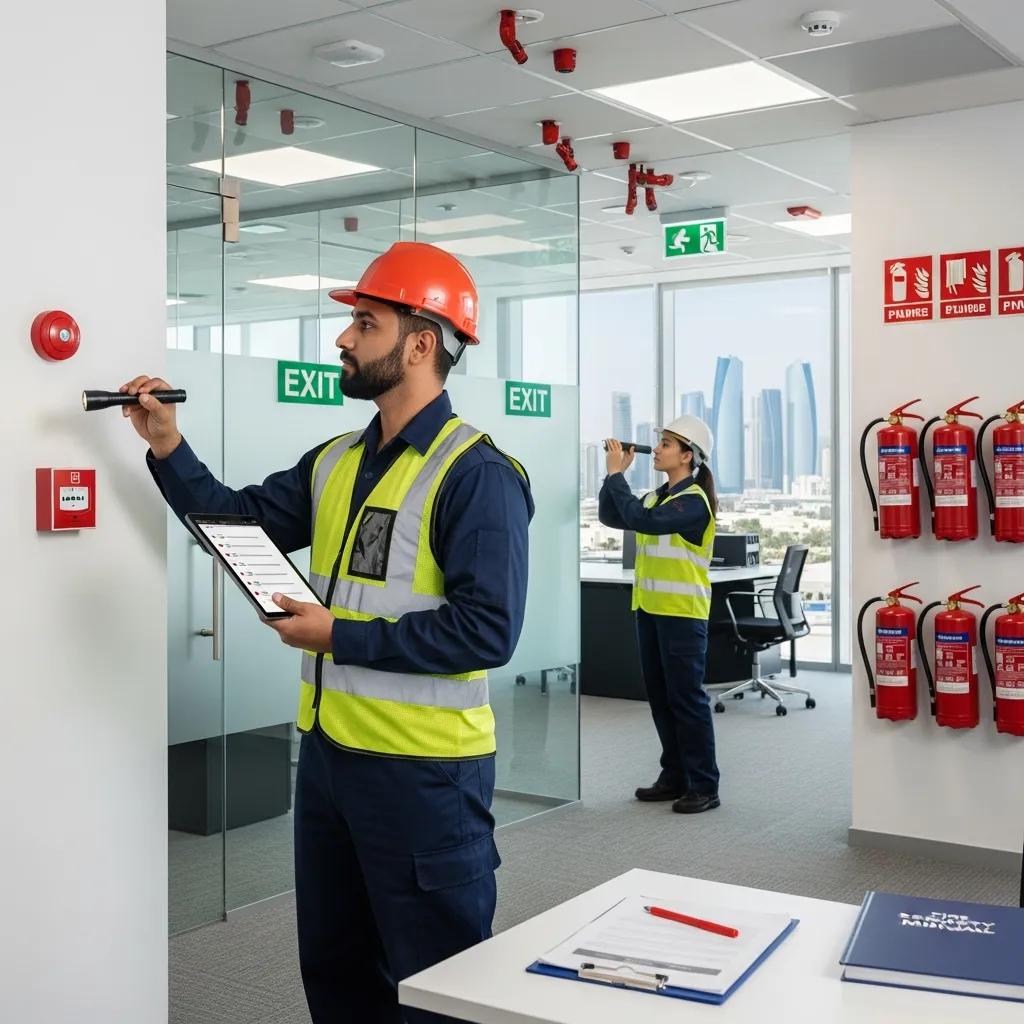
Understanding the Risks and Penalties of Skipping Fire System Inspections in Abu Dhabi
Skipping mandatory fire system inspections in Abu Dhabi creates gaps in scheduled tests, lets critical components go unserviced, and leaves businesses without the records ADCD requires. Below we outline the safety, legal and financial consequences of neglecting inspections and give practical steps to stay compliant with Abu Dhabi Civil Defence (ADCD). You’ll find clear links between common violations and penalties, how failures in alarms, sprinklers, pumps and Hassantuk monitoring raise risk, and the inspection cycles and certified‑contractor rules that affect fitness certificates. We also explain the economic case for proactive maintenance and Annual Maintenance Contracts—how they help avoid fines, downtime and insurance headaches. For organisations that need expert support, Amples Fire & Safety LLC offers Annual Maintenance Contracts (AMCs) and 24/7 response to help secure ADCD compliance and fitness‑certificate approval. The article then covers legal penalties, operational impacts, ADCD rules, the Hassantuk system’s role, financial benefits of proactive care, and why certified providers matter.
What legal penalties apply if you neglect fire system inspections in Abu Dhabi?
Failing to carry out required inspections can lead to ADCD enforcement: warnings, remedial orders, fines, suspension of occupancy or business licences, and in serious or repeated cases temporary closure until the issues are fixed. These actions are taken under the UAE Fire and Life Safety Code of Practice 2018 and related resolutions. Specific breaches—tampering with devices, operating without approved designs, or missing maintenance records—map to predictable enforcement steps, so building managers should treat compliance as a priority. The table below gives a quick reference linking common violations to typical penalty ranges and the immediate actions ADCD usually requires. After this summary we unpack typical fine ranges and administrative outcomes in more detail.
Abu Dhabi EHS Management System: Decree 42 and Sectoral Implementation
In 2009 the Abu Dhabi Emirate issued Decree 42 to develop an Emirate-wide Environment, Health and Safety Management System across sectors including Building and Construction (B&C). Entities in the B&C sector were expected to implement these systems by 2020. The study identified implementation challenges and highlighted opportunities, grouping key drivers for a successful safety management system into organizational, stakeholder, technical, financial, procedural and external categories. It recommends clear leadership roles and the right tools and processes to support SMS adoption.
The table below summarises typical ADCD enforcement for common fire safety breaches and the immediate corrective steps authorities expect.
| Violation | Typical Penalty Range (AED) | Consequences / Action Required |
|---|---|---|
| Tampering with detectors or panels | 3,000–10,000 | Immediate remedial order, device replacement, possible fine; submit proof of rectification to ADCD |
| Operating without approved systems or permits | 5,000–50,000 | Fines, stop‑work orders, requirement to submit approved designs and remediate systems |
| Failure to maintain records / missing tests | 2,000–10,000 | Written notice, mandatory re‑inspection, submission of retroactive test records |
| Non-functional fire pumps or sprinklers | 10,000–50,000 | Closure until repairs; higher fines for repeat offences; mandate certified contractor repairs |
This mapping shows how violations typically escalate and the practical steps building owners must take to resolve enforcement actions. Use it to prioritise inspections and engage certified contractors for corrective work.
What fines does Abu Dhabi Civil Defence impose for fire safety non‑compliance?
ADCD applies fines that vary by the type and severity of the infraction and whether it’s a repeat offence. Common paperwork or record‑keeping lapses attract moderate fines; disabled detection or suppression equipment carries higher penalties; and deficiencies that create an immediate hazard can trigger substantial penalties and suspension of occupancy. Administrative penalties usually come with deadlines for corrective work and proof of repair from certified contractors; missing those deadlines can increase fines or lead to temporary closure. Real‑world inspection cases show that fines plus emergency repairs and downtime often cost far more than planned maintenance, reinforcing the value of proactive compliance. The next section summarises the regulatory basis—Cabinet Resolution No. (24) of 2012—and its rules on inspections and authorised service providers.
How does Cabinet Resolution No. (24) of 2012 regulate fire system inspections?
Cabinet Resolution No. (24) of 2012 sets obligations for fire safety installations: approved designs, licensed installation, regular testing and certified maintenance to safeguard people and property. It limits critical installation and maintenance tasks to authorised contractors and ties non‑compliance—using unapproved vendors or skipping tests—to enforcement by local authorities. Practically, building owners must keep records, allow inspections and ensure systems meet technical standards; failure to comply can void fitness certificates required for occupancy or trade. This framework makes certified contractors central to compliance workflows; the next section explains how neglected inspections translate into operational risk.
How does skipping fire system inspections affect safety and day‑to‑day operations?
Missed inspections let faults go unnoticed: sensors drift, sprinkler heads corrode or clog, pumps seize, and panels accumulate unrepaired errors. These failures slow detection and weaken suppression, increasing fire size and risk to occupants. Beyond safety, system failures cause business impacts: emergency evacuations, costly repairs, extended downtime, insurance disputes and damage to reputation among customers and tenants. The list below highlights the main operational and business consequences of neglected inspections and helps managers prioritise next steps.
- Delayed Detection: Faulty detectors or panels delay alarms and emergency response.
- Suppression Failure: Corroded or obstructed sprinklers and seized pumps reduce suppression effectiveness.
- Enforcement Actions: ADCD notices can force temporary closure or operational limits.
- Insurance Complications: Insurers may dispute claims or penalise policies when maintenance records are incomplete.
- Reputational Damage: Public incidents or forced closures erode customer trust and tenant confidence.
These outcomes show why routine, documented maintenance matters. The next section explores common equipment failure modes and how they can cascade into larger incidents.
What are the risks when fire alarm and firefighting equipment fail?
Equipment failures often follow predictable chains: sensor drift reduces sensitivity, zone faults block alarm routing, suppression valves stick from corrosion, and pumps fail from lack of exercise or lubrication. Left unchecked, these faults produce slower detection, incomplete alarm propagation and reduced suppression pressure—conditions that allow fires to grow and complicate emergency response. Technicians frequently find that a single overlooked issue, such as a blocked sprinkler or an unreported panel error, multiplies problems across building zones and turns a containable incident into a major loss. Regular testing and prompt repairs break these fault chains.
How does neglecting inspections threaten lives, property and reputation?
Neglected inspections increase legal liability: if injuries or fatalities follow a system failure, businesses face civil suits, regulatory sanctions and long‑lasting reputational damage. Property losses from uncontrolled fires raise rebuild and business‑interruption costs, and insurers may reduce settlements or rescind coverage when maintenance records are missing or work was done by uncertified providers. Employees, customers and tenants lose confidence after incidents, which affects occupancy and revenue. In many anonymised examples the combined costs—fines, repairs, downtime and higher premiums—exceed the cost of an annual maintenance contract, making proactive inspection a financially sound choice.
What does Abu Dhabi Civil Defence require for fire system inspection compliance?
ADCD requires documented, periodic inspections for life‑safety systems, backed by certified contractors’ reports and records for fitness certificate applications. Core obligations include scheduled testing of fire alarms, sprinklers, pumps and emergency lighting; use of certified service providers for installation and maintenance; and maintained records readily available for ADCD review. These rules make system safety verifiable and allow enforcement to trace failures to documented omissions.
The table below lists common system types, typical inspection frequencies and the provider qualifications ADCD expects.
| System Type | Inspection Frequency | Required Action / Certified Provider Requirement |
|---|---|---|
| Fire alarm system | Quarterly visual; annual full test | Certified contractor testing, signed report, log retention for ADCD |
| Sprinkler system | Monthly checks; annual hydraulic test | Certified inspector for pressure tests and valve maintenance |
| Fire pumps | Monthly run; annual full service | Manufacturer‑authorised or certified contractor servicing and certification |
| Hassantuk monitoring | Continuous reporting; periodic verification | Certified Hassantuk integrator for gateway maintenance and ADCD reporting |
Use this compliance reference to plan testing schedules and confirm that the right contractors carry out verifiable work. The following sections explain inspection cadence and the legal reasons for contractor certification.
How often are fire safety inspections required in Abu Dhabi?
Inspection frequency depends on system type and occupancy risk. Annual comprehensive audits are the baseline for fitness certificates, but higher‑risk occupancies—industrial sites, high‑rise mixed‑use buildings and hospitals—require more frequent tests and richer documentation. Routine visual and functional checks are typically monthly or quarterly; full integrated system tests, pump flow tests and fire drills are generally annual or as required by system criticality. These intervals help catch degradation early and create a verifiable maintenance history for ADCD.
Why must fire system maintenance be carried out by certified contractors?
Certified contractors are both a legal and insurance requirement: ADCD requires authorised personnel for installation, testing and critical repairs to ensure technical competence and regulatory traceability. Work done by uncertified providers risks voiding fitness certificates and can lead insurers to deny claims after an incident. Verifying contractor credentials and keeping signed service reports are essential steps that protect owners from enforcement penalties and evidentiary disputes.
Building managers who need help with scheduling, certified inspections and fitness‑certificate preparation commonly turn to experienced providers. Amples Fire & Safety LLC offers Annual Maintenance Contracts built to meet ADCD requirements and assist clients with paperwork, ensuring inspections and documentation are handled by an in‑house certified team.
How does the Hassantuk system affect fire safety compliance in Abu Dhabi?
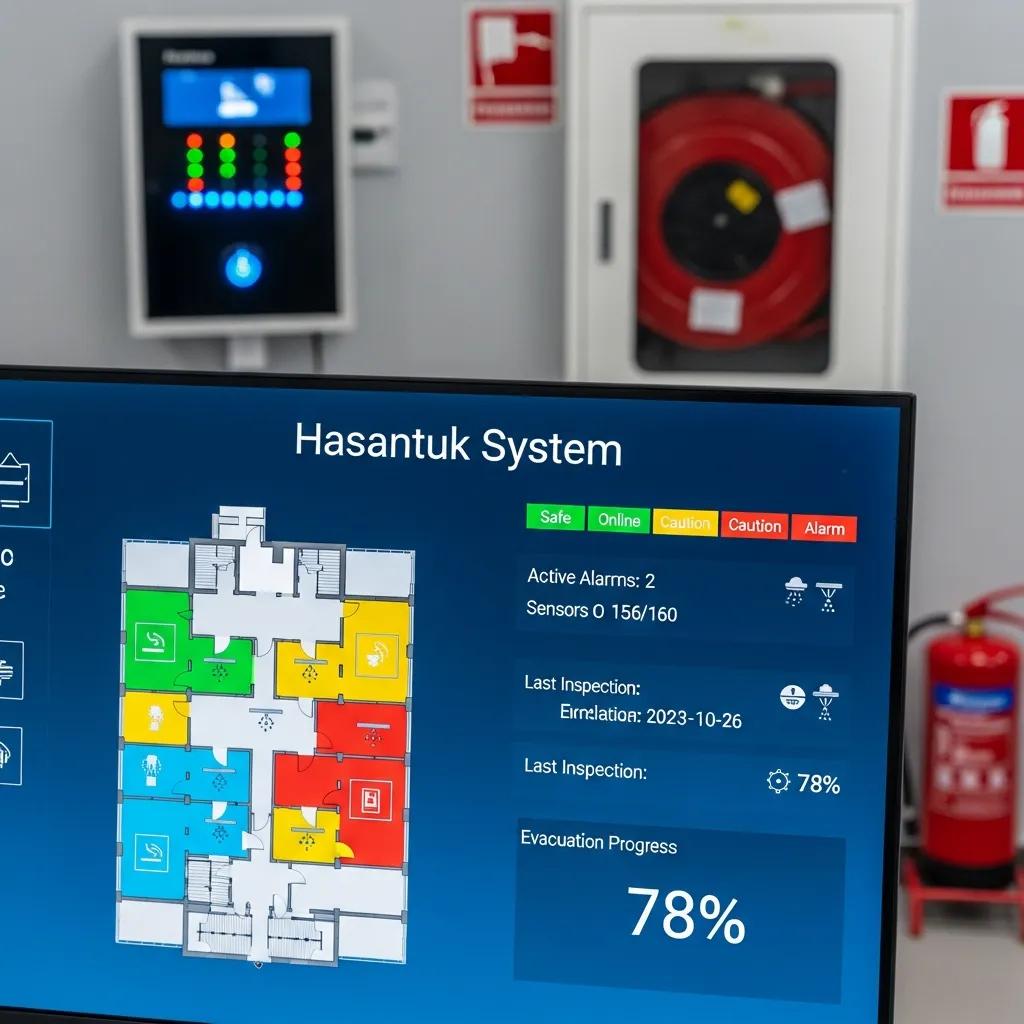
Hassantuk is the central monitoring and reporting platform that links building fire systems to ADCD for event reporting, status checks and remote oversight, making it a compliance‑critical component. When Hassantuk gateways and reporting channels work correctly, ADCD receives near‑real‑time alerts about alarms and system faults—streamlining incident response and supporting fitness‑certificate validation. A non‑functional or misconfigured Hassantuk installation creates oversight gaps, can delay emergency response and may trigger administrative penalties for non‑reporting.
Key Hassantuk functions that support regulatory compliance include:
- Continuous Event Reporting: Transmits alarms and system faults to ADCD in real time.
- Remote Status Verification: Allows authorities to check system health remotely via Hassantuk feeds.
- Incident Traceability: Provides logs for post‑event reviews and fitness‑certificate evidence.
Maintaining Hassantuk integrity is therefore as important as maintaining physical detection and suppression equipment; the next section explains the system’s role and the risks of neglect.
What is the Hassantuk system and its role in fire safety monitoring?
Hassantuk is a monitoring and reporting framework that relays fire system events from local panels and gateways to ADCD, enabling central alerting and remote status checks that guide enforcement and emergency response. It aggregates signals—alarm activations, faults, tamper events—and forwards them under ADCD protocols so authorities can decide on on‑site intervention or administrative follow‑up. For owners, Hassantuk connectivity speeds ADCD notification and simplifies proving active monitoring when applying for or renewing fitness certificates.
What are the risks of ignoring Hassantuk system maintenance?
Neglecting Hassantuk maintenance can create silent reporting gaps, delay ADCD awareness of incidents and cause failed audits when transmission logs are inconsistent or missing. Typical faults include gateway failures, incorrect alarm‑panel integration and untested failover systems—each of which can leave authorities unaware of on‑site emergencies. Administrative consequences range from fines and corrective‑action orders to delays in issuing or renewing fitness certificates until connectivity and logs are restored and validated. Given these stakes, Hassantuk upkeep is essential.
What are the financial benefits of proactive fire system maintenance in Abu Dhabi?
Proactive maintenance reduces enforcement fines, lowers the chance of large incidents, and stabilises insurance relationships—delivering measurable savings versus reactive repairs after failures. Regular inspections and preventive replacements lengthen equipment life, cut emergency call‑out costs and minimise business interruption, producing a strong return on investment for many properties. The table below compares Annual Maintenance Contracts (AMCs) with reactive service calls across key financial factors to show how an AMC reduces total cost of ownership and exposure to fines. After the table we outline cost‑saving mechanisms and give an illustrative ROI example.
The table compares maintenance approaches and their typical financial impacts for Abu Dhabi businesses.
| Maintenance Approach | Cost Type | Estimated Financial Impact / Benefit |
|---|---|---|
| Annual Maintenance Contract (AMC) | Predictable annual fee | Reduces fines, lowers emergency repair costs, preserves insurance validity |
| Reactive Service Calls | Variable emergency fees | High immediate repair costs, potential fines, greater downtime losses |
| Preventive Parts Replacement | Scheduled capital expense | Extends equipment life, reduces catastrophic failure risk |
| Certified Documentation & Reporting | Administrative cost | Enables smoother insurance claims and faster ADCD fitness approval |
This comparison shows how structured AMCs and consistent documentation reduce unpredictable costs and regulatory exposure, making an AMC a sensible financial decision for risk management. The sections that follow explain how AMCs prevent penalties and the insurance advantages of regular inspections.
How does an Annual Maintenance Contract prevent costly penalties and failures?
An AMC formalises scheduled testing, preventative replacements and certified reporting so systems are tested at required intervals and any remediation is recorded and verifiable. AMCs commonly include routine tests of alarms, sprinklers, pumps and Hassantuk checks, plus guaranteed response windows for fault rectification—measures that directly reduce ADCD violations and related fines. The contract model spreads maintenance costs predictably, avoiding sudden expense spikes from emergency repairs or enforcement mandates. A documented maintenance history helps owners demonstrate due diligence to authorities and insurers, lowering enforcement risk and financial exposure.
What insurance and compliance advantages come from regular fire system inspections?
Regular inspections create a documented maintenance trail insurers use to validate claims and assess premiums; consistent records also show proactive risk management to underwriters. Insurers are more likely to accept claims and keep premiums stable when policyholders can produce up‑to‑date inspection logs and certified repair reports. Gaps in records can complicate claims or trigger premium increases. For ADCD compliance, robust inspection records simplify fitness‑certificate renewals and reduce the chance of unexpected enforcement. Many businesses find the avoided fines, smaller emergency repair bills and better insurance outcomes offset inspection costs—making proactive maintenance a financially prudent strategy. Amples Fire & Safety LLC offers AMC evaluations to quantify potential savings and align plans with ADCD expectations.
Why choose Amples Fire & Safety LLC for inspection and maintenance in Abu Dhabi?
Amples Fire & Safety LLC delivers comprehensive annual maintenance services across Abu Dhabi and Al Ain. Our Annual Maintenance Contracts bundle scheduled testing, repairs and certified documentation to support ADCD compliance and fitness‑certificate applications. The AMC covers routine inspections of fire alarms, sprinkler systems, pumps and Hassantuk monitoring, and pairs technical work with the administrative reports ADCD needs. We prioritise reliability with 24/7 response, fast fault rectification and in‑house technical teams—service levels that minimise downtime and speed corrective action. The sections below list typical AMC services and explain how Amples operationalises 24/7 response and ADCD liaison to secure compliance for clients.
What services does Amples include in its Annual Maintenance Contracts?
Amples’ AMC includes scheduled functional testing, preventive maintenance and documentation aligned to ADCD requirements for alarms, sprinklers, pumps and Hassantuk integration. Contracts typically cover periodic functional tests, corrective repairs or part replacements found during inspections, and certified service reports for fitness‑certificate submissions. By combining technical work with paperwork management, AMCs reduce the administrative burden on building managers and help maintain continuous compliance.
How does Amples deliver 24/7 response and ADCD compliance support?
Amples maintains 24/7 on‑site response capability through coordinated in‑house teams and an escalation workflow that prioritises immediate remediation to limit enforcement exposure and operational downtime. Our process includes rapid triage, mobilisation of certified technicians and documented repair logs provided to building managers and ADCD as evidence of remediation. We also assist with ADCD follow‑up by preparing and submitting the technical paperwork needed for fitness certificates, reducing the administrative steps owners must manage. This combined technical and administrative service shortens resolution times and helps keep systems compliant.
This service summary shows how an experienced AMC provider turns regulatory obligations into practical maintenance schedules and verifiable outcomes that protect safety, budgets and business continuity. The recommendations across this article are designed to help building owners and managers in Abu Dhabi prioritise inspections, work with certified contractors and choose maintenance solutions that reduce legal, financial and operational risk.
Frequently Asked Questions
What should I do if I miss a fire system inspection deadline?
If you miss an inspection deadline, act immediately: book a certified contractor for the next available inspection, document the reason for the delay and keep records of any interim steps you take. Notify ADCD proactively if required and be prepared for potential penalties—showing prompt remediation and clear documentation often helps mitigate enforcement. Fast communication and a signed service report will strengthen your position.
How can I find a certified contractor for fire system inspections in Abu Dhabi?
Start with the ADCD website for approved providers, and ask industry peers for recommendations. Verify a contractor’s certifications, relevant experience and ADCD approvals, and request references or past work examples. Confirm they supply signed reports suitable for fitness‑certificate submissions.
What are the common signs that my fire safety system needs maintenance?
Warning signs include frequent false alarms, unusual noises from panels, visible corrosion on equipment, warning lights or error messages on control panels, clogged sprinkler heads or underperforming pumps. Regular inspections catch these issues before they escalate.
Can I perform fire system inspections myself?
You can do basic visual checks, but comprehensive inspections and critical maintenance must be done by certified contractors as required by ADCD. Certified technicians have the training and tools to find hidden faults and issue the reports ADCD and insurers expect. DIY work on critical systems can create liability and jeopardise fitness certificates.
What are the consequences of using uncertified contractors for fire system maintenance?
Using uncertified contractors can lead to legal penalties, higher fines and insurance claim denials. If an incident occurs and maintenance was done by an unqualified provider, you risk liability for damages and injuries, and ADCD may revoke your fitness certificate—affecting your ability to operate.
How can I ensure my fire safety systems are compliant with ADCD regulations?
Set a routine maintenance schedule with certified contractors, keep detailed records of inspections and repairs, and stay current with ADCD requirements. Make sure systems are tested at mandated intervals and that certified reports are retained for audits and fitness‑certificate renewals. Address issues promptly to avoid penalties and protect occupants.
What should I include in my fire safety inspection records?
Records should list inspection dates, names and certifications of contractors, test results, corrective actions taken and parts replaced, plus signed service reports and any correspondence with ADCD. Complete, well‑organised records support compliance, streamline insurance claims and speed fitness‑certificate processing.
Conclusion
Ignoring fire system inspections in Abu Dhabi risks safety, invites fines and can cause costly operational disruption. Regular, documented maintenance—carried out by certified contractors—protects people, assets and your business continuity. Partnering with experienced providers like Amples Fire & Safety LLC helps ensure systems are tested, repaired and documented to meet ADCD standards. Take a proactive step: secure your fire systems and explore our Annual Maintenance Contracts for comprehensive, compliance‑ready support.