
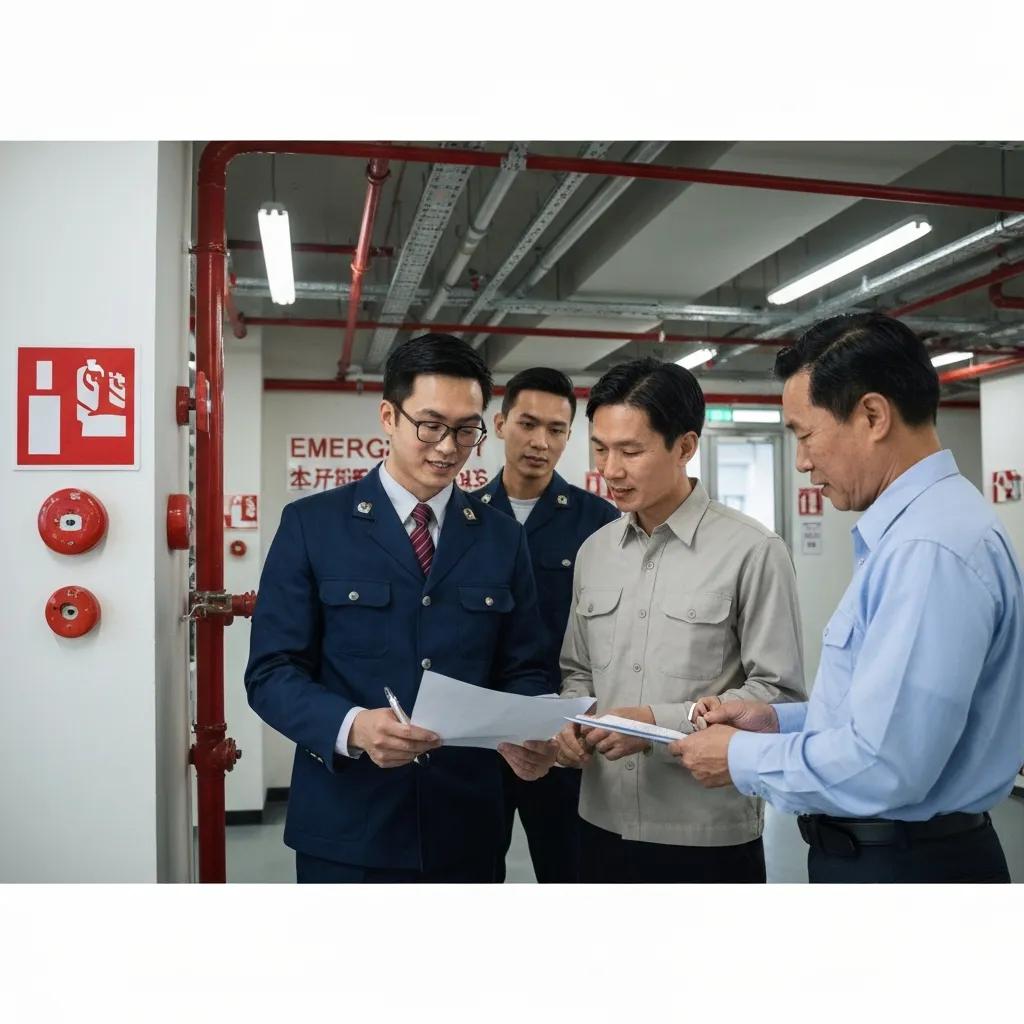
Fire safety compliance inspections — a practical, step-by-step guide to ADCD approval for commercial buildings
A fire safety compliance inspection in Abu Dhabi is an official assessment that confirms a building’s fire protection systems, records and procedures meet Abu Dhabi Civil Defence (ADCD) requirements and are safe for use. This guide explains the inspection workflow, how each step lowers risk, and what outcomes to expect — notably the ADCD fitness certificate — when you prepare correctly. You’ll find a clear walkthrough of the inspection stages, how alarm and firefighting systems are tested, how interviews and hazard checks inform findings, and the post‑inspection route to approvals. Practical checklists, EAV (entity‑attribute‑value) tables and realistic remediation timelines are included so facility managers and safety officers can anticipate common failings and present concise, verifiable evidence. Where relevant, the guide shows how Amples Fire & Safety LLC helps inspection readiness through proactive annual maintenance contracts and on‑site rectification to reduce re‑inspection delays. Following this structured approach helps organisations meet ADCD expectations and sustain continuous fire safety compliance.
Key steps in an ADCD fire safety inspection — what to expect
An ADCD inspection typically follows a consistent sequence: document checks, an on‑site walkthrough, equipment testing, staff interviews, hazard identification and a final report with corrective actions. Each step checks different aspects of compliance and together they form a systematic audit of active systems (alarms, sprinklers, pumps) and passive measures (compartmentation, exits). Preparing items in advance shortens inspector time on site and lowers the risk of findings that delay the ADCD fitness certificate. Below is a concise, numbered summary of the core phases and what happens at each stage.
- Documentation review to confirm permits, plans and maintenance history are current.
- On‑site walkthrough to inspect exits, signage, compartmentation and equipment placement.
- Live testing of alarms, sprinklers, pumps and emergency lighting under controlled conditions.
- Interviews with facility staff to verify training, drills and maintenance ownership.
- Hazard identification and prioritised remedial recommendations.
- Consolidated report with guidance on re‑inspection and document submission.
This ordered checklist mirrors the inspector’s flow and highlights the preparation priorities covered in the sections below.
Why documentation review matters for compliance

Documentation review is the evidence‑first step where inspectors confirm that records reflect the building’s physical layout and system performance. Inspectors typically match as‑built plans and fire system schematics to installed components, check maintenance logs for scheduled servicing, and review previous inspection reports and evacuation plans for completeness. Missing or expired maintenance records are a common administrative finding, while outdated as‑built drawings can lead to technical observations. The documentation phase often sets the tone for the rest of the inspection — incomplete paperwork usually triggers deeper checks — so accurate, time‑stamped records demonstrate an organised maintenance regime and reduce follow‑up friction with ADCD.
Before the walkthrough, assemble original plans, maintenance certificates, service invoices and any ADCD correspondence to present a cohesive history. This preparation lowers the chance of administrative non‑compliance and speeds the inspector’s verification work.
Required documents and common failings. The EAV table below maps essential documentation to its purpose and typical issues found during ADCD reviews.
| Document | Purpose | Typical Issue |
|---|---|---|
| As‑built fire plans | Show system layout and escape routes | Outdated or missing schematics |
| Maintenance records | Prove scheduled servicing and repairs | Missing dates or expired tags |
| Previous inspection reports | Show past findings and corrective actions | No evidence that prior defects were closed |
| Emergency and evacuation plan | Describe occupant procedures and responsibilities | Generic plan not tailored by floor or tenant |
| Equipment certificates (pumps/alarms) | Confirm third‑party testing and compliance | Absent or not traceable to the installed unit |
This table explains how each document supports a verification step and why accurate records prevent administrative holds during ADCD processing.
What inspectors look for during the on‑site walkthrough
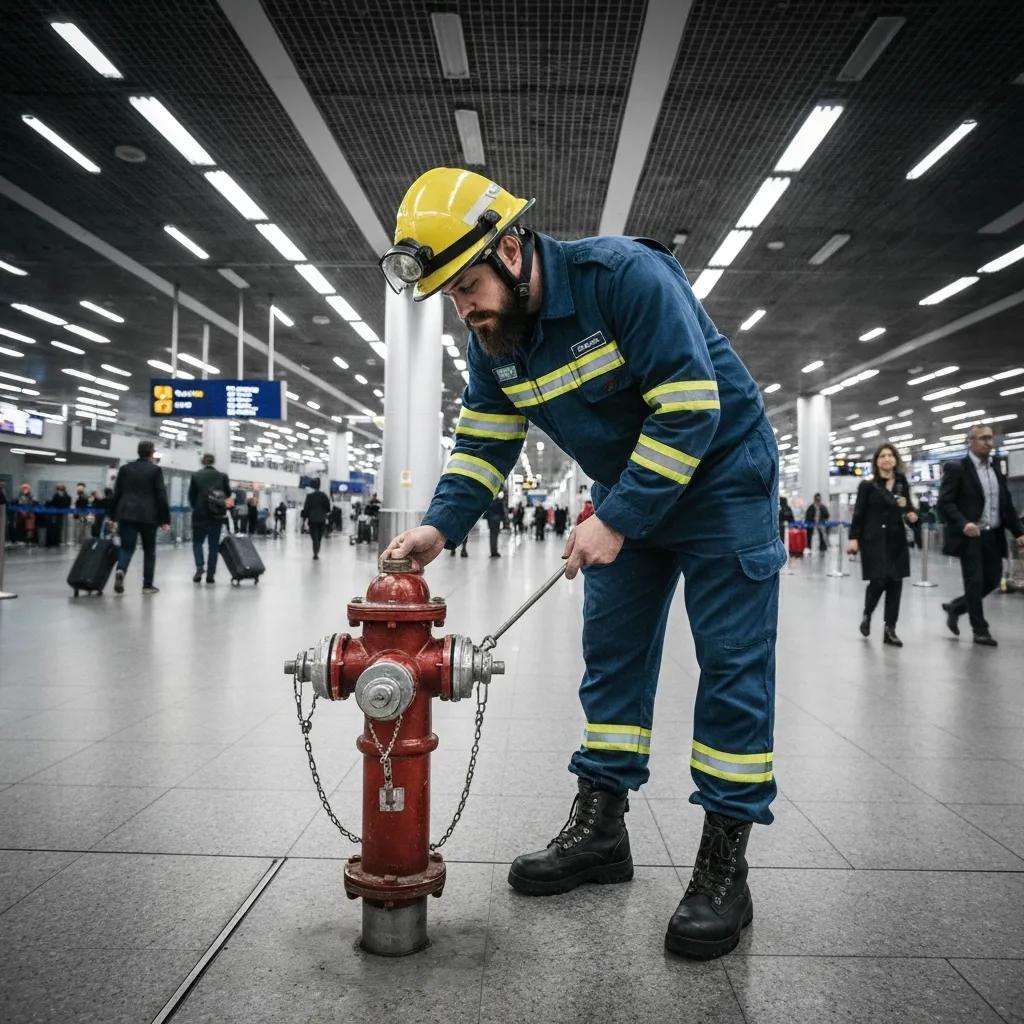
During the walkthrough, inspectors visually confirm that passive and active protections are correctly installed, accessible and free of obstructions, and that signage, escape routes and fire doors perform as intended. The walkthrough covers stair cores, emergency exits, escape‑route signage, fire doors and compartmentation, plant rooms, hydrant locations and high fire‑load areas. Inspectors note modifications to walls or penetrations that compromise compartmentation, obstructions in corridors or exits, and illegal storage near critical equipment. Photographic evidence from the walkthrough is often requested for ADCD submissions, so keeping a pre‑inspection photo log is useful.
A measured walkthrough reduces surprises: check fire doors for correct closing action, confirm signage visibility in low light, and ensure valves and pump rooms are accessible. The next section covers how active systems are tested and recorded during formal inspections.
How fire alarm and firefighting equipment are tested
Testing protocols verify the performance and reliability of fire alarms, sprinklers, pumps, emergency lighting and portable equipment under simulated conditions so systems react as designed. Inspectors check correct zone responses at the alarm panel, detector sensitivity and cleanliness, sprinkler head integrity and water supply pressure, pump start‑up under load, and emergency lighting battery duration and coverage. Test results must be recorded in maintenance logs with timestamps, technician names and serial numbers to meet ADCD expectations. Safety precautions — such as coordinating alarm suppression notifications and informing occupants — are essential to avoid false evacuations during live testing.
Testing priorities for common equipment types:
- Fire alarm panels: verify zone indication, signal transmission and battery/back‑up power.
- Sprinkler systems: confirm head condition, pressure readings and valve positions.
- Fire pumps and hydrants: test auto‑start, flow and pressure under simulated demand.
- Emergency lighting: validate battery runtime and photometric coverage of escape routes.
- Portable extinguishers: inspect service tags, pressure and accessibility.
Recording each test with pass/fail outcomes and corrective actions is essential because ADCD requires traceable maintenance history. The table below matches equipment to standard checks and expected compliance results.
Equipment checks and expected results.
| Equipment | Test | Compliance Check / Expected Result |
|---|---|---|
| Fire alarm panel | Zone activation and fault logging | Correct zone annunciation; no unexplained faults |
| Smoke / heat detectors | Simulated activation and contamination check | Detectors respond and are free from contamination |
| Sprinkler network | Pressure test and visual head inspection | Stable supply pressure; no corroded or obstructed heads |
| Fire pump | Auto‑start and flow test | Pumps start automatically and maintain required pressure |
| Emergency lights | Runtime and illumination test | Batteries meet runtime and lamps cover escape routes |
This comparison helps technicians prioritise actions that produce clear, ADCD‑acceptable test records and reduce the chance of technical findings.
Fire alarm system inspection and testing — the standard procedure
Fire alarm inspection follows a step‑by‑step protocol to verify detectors, panel function, transmission and back‑up power so alarms will operate reliably in an emergency. Technicians typically test individual detectors with calibrated tools, confirm the panel records correct zone activations and that alarms reach monitoring endpoints, and validate battery condition and mains failover. Common failure modes include dirty detectors, mislabelled zones and weak batteries — all fixable before the formal inspection. Qualified technicians record each action in the maintenance log so inspectors can trace the service history and accept the system as compliant.
Clear logs of test steps and corrective actions improve transparency during ADCD review and demonstrate that competent personnel maintain the system.
Inspection checks for sprinkler systems, emergency lights and extinguishers
Checks for water‑based suppression and portable equipment focus on functionality, accessibility and record keeping to confirm readiness. Sprinkler inspections verify pipe condition, pressure, valve tamper status and unobstructed heads; emergency lighting tests confirm battery duration and correct illumination of escape routes; extinguishers are checked for pressure, tags and correct placement. Missing service tags or untested batteries are common causes of findings. Each device should have service history entries showing recent inspections or repairs to meet ADCD audit expectations.
These tests create an evidence trail linking device condition to scheduled maintenance, reducing the likelihood of remedial orders during final ADCD review.
The role of interviews and hazard identification in audits
Interviews and hazard identification add the human and observational context behind records and equipment status, confirming that procedures are understood and hazards are actively managed. Inspectors question facility managers and safety officers about training, drill frequency, maintenance oversight and escalation procedures to ensure responsibilities are assigned and practised. At the same time they look for storage practices, electrical risks, housekeeping issues and temporary works that could increase ignition risk or hinder evacuation. Interview answers must match documented plans and drill records; discrepancies often generate findings requiring both administrative and physical remediation.
Demonstrating staff competence and maintaining a systematic hazard register reduces inspector uncertainty and helps prioritise remediation into safety‑critical and administrative categories, as covered below.
Typical questions inspectors ask facility managers and safety officers
Inspectors commonly ask about emergency roles, drill schedules, recent maintenance outcomes and incident escalation to confirm the facility can respond effectively to a fire. Example questions include: “Who is the fire safety officer on each shift?”, “When was the last full evacuation drill and where are the drill records?”, and “How are defects raised, tracked and closed after maintenance?”. Clear, concise answers supported by dated drill reports, training records and a defect log demonstrate robust governance. Preparing model answers and keeping drill and training logs accessible speeds the interview stage and limits ADCD follow‑ups.
How hazards are identified and typical recommendations
Inspectors identify hazards by comparing observed conditions with documented controls, focusing on blocked exits, storage near fire systems, overloaded electrical circuits and penetrations in fire compartments. Typical recommendations include clearing escape routes, repairing or replacing compromised fire doors, improving storage practices and commissioning electrical inspections for overloaded panels. Recommendations are prioritised by risk: life‑safety issues (blocked exits, inoperative alarms) come first, administrative corrections (missing records) follow. Each recommendation gets a suggested timeframe for completion; safety‑critical items require the fastest remediation to qualify for ADCD approval.
This risk‑based approach helps operations teams sequence repairs so ADCD re‑inspections focus on high‑priority items rather than every minor observation.
Post‑inspection steps to secure the ADCD fitness certificate
After the inspector issues a report, the post‑inspection workflow is: triage findings, carry out corrective works, compile photographic and document evidence, request a re‑inspection and submit proof to ADCD for final clearance. Prioritise safety‑critical items for immediate rectification and address administrative corrections concurrently to present a consolidated resubmission. Timely, well‑documented remedial actions reduce re‑inspections and speed issuance of the ADCD fitness certificate. The EAV‑style timeline table below clarifies common ADCD requirements, typical remediation and expected timeframes to aid planning.
Typical requirements and remediation timelines so managers can plan resources and avoid approval delays.
| Requirement | Typical Remediation | Typical Rectification Timeframe |
|---|---|---|
| Blocked escape routes | Clear and re‑label routes; supply photos of clearance | 1–3 days |
| Inoperative alarm zones | Repair detectors, update panel logs and retest zones | 3–7 days |
| Pump failure or low pressure | Repair pump, replace seals and provide a test report | 3–10 days |
| Missing maintenance records | Reconstruct logs and attach invoices and technician notes | 3–14 days |
| Faulty emergency lighting | Replace batteries/lamps and provide runtime test results | 2–5 days |
This mapping sets realistic expectations and helps allocate technicians and documentation resources efficiently.
How businesses should manage findings and rectifications
Divide findings into safety‑critical, operational and administrative categories, assign an owner and set clear deadlines for each item to show effective governance to ADCD. Safety‑critical items (e.g., blocked exits, non‑operational alarms) should be remedied first with photographic evidence, service reports and signed completion notes; operational issues (e.g., minor sprinkler head defects) follow with scheduled repairs and parts orders documented. Administrative issues such as missing certificates require locating invoices and service records. Consolidating evidence into one submission package and keeping a traceable defect log accelerates ADCD review and reduces the chance of additional findings.
A disciplined remediation workflow demonstrates proactive risk management and typically shortens the path to a fitness certificate.
Process for securing official ADCD approvals and certificates
Securing ADCD approval requires submitting corrected documentation and evidence, requesting a re‑inspection and addressing any follow‑up observations until the inspector confirms the premises meet fitness criteria. ADCD reviews resubmitted files and may schedule checks to verify remedial works. Common delays stem from incomplete photographs or untraceable maintenance records, so consolidated, timestamped submissions progress more quickly. Expect iterative communication until safety‑critical items are closed; once ADCD accepts the evidence and confirms system functionality, the fitness certificate or contract approval is issued.
Understanding this administrative cycle and preparing complete re‑inspection packets reduces back‑and‑forth and speeds approval.
Specialist support can help: Amples Fire & Safety LLC provides on‑site rectification and maintenance regimes designed to close many typical findings, offering a pragmatic route from inspection report to ADCD approval.
How an Annual Maintenance Contract with Amples ensures smoother compliance
An Annual Maintenance Contract (AMC) with Amples Fire & Safety LLC keeps systems inspection‑ready and simplifies the ADCD cycle by combining scheduled servicing, rapid repairs and documentation management. Amples provides 24/7 response, immediate rectification capability and an experienced in‑house technical team able to service multiple brands and system types. Typical AMC coverage includes routine testing of alarms, sprinkler and pump systems, emergency lighting checks, portable extinguisher servicing and maintenance record generation — all aligned with ADCD expectations. Outsourcing routine maintenance and records to a provider that understands ADCD workflows reduces unexpected findings and speeds certificate issuance when inspections occur.
Key AMC benefits to help facility managers evaluate outsourced maintenance:
- 24/7 rapid response: On‑site attendance minimises downtime and limits the impact of critical faults on ADCD outcomes.
- Immediate rectification: Technicians can complete corrective works during initial visits to avoid re‑inspection delays.
- Comprehensive documentation: Service logs and test certificates are produced in ADCD‑acceptable formats.
- Multi‑brand capability: In‑house expertise handles diverse systems without subcontracting delays.
These benefits directly reduce inspection failures and accelerate ADCD approvals, making an AMC a practical investment for continuous compliance.
Benefits of proactive fire safety maintenance
Proactive maintenance increases system reliability, lowers emergency risk and keeps documentation current for ADCD audits — together these reduce operational and financial exposure from fire incidents. Scheduled servicing prevents latent defects becoming critical failures, supports predictable budgeting for parts and labour, and improves protection system uptime. Useful KPIs for proactive programs include fewer emergency call‑outs, higher first‑reinspection pass rates and shorter mean time to repair. Demonstrating a proactive maintenance culture also builds tenant confidence and strengthens regulatory relations by showing systematic control of fire risks.
Maintaining these KPIs requires disciplined record keeping and regular internal audits to stay aligned with ADCD expectations.
How Amples helps businesses pass ADCD inspections
Amples Fire & Safety LLC prepares organisations for ADCD inspections through pre‑inspection audits, targeted corrective works, compliant maintenance log creation and coordination of re‑inspection activities with relevant authorities. Their service emphasises 24/7 on‑site response and the ability to rectify issues immediately, reducing the operational and administrative friction that can delay certificate issuance. Because their technicians service multiple brands, clients get consistent workmanship and one point of accountability for evidence submission. Engaging Amples under an AMC is a proactive risk‑mitigation step that aligns maintenance with regulatory workflows and smooths the path to ADCD fitness certification.
For organisations needing follow‑up repairs and consolidated documentation, a managed AMC can be the difference between repeated re‑inspections and a single successful approval.
Frequently asked questions
What happens if a site fails a fire safety compliance inspection?
Failing an inspection can prevent issuance of the ADCD fitness certificate, which may stop occupancy and cause operational delays, financial loss and potential legal liability. Authorities can also issue fines for non‑compliance. Address identified issues promptly and document corrective actions to reduce disruption and demonstrate commitment to compliance.
How often should fire safety inspections occur?
ADCD requires regular inspections, typically at least once a year, but the frequency may increase depending on operation type, occupancy changes or major building work. More frequent checks help keep systems compliant and reduce safety risk.
What should be done when issues are found during an inspection?
If defects are identified, act quickly: classify findings as safety‑critical, operational or administrative, prioritise life‑safety fixes, assign owners and deadlines, and document corrective work with photos and service reports for re‑submission to ADCD.
Can businesses appeal inspection findings?
Yes. If a finding appears incorrect, organisations can submit an appeal or clarification to ADCD with supporting evidence. Engaging fire safety experts or legal advisors can strengthen the case and ensure the appeal is presented clearly.
What role do fire safety officers play in inspections?
Fire safety officers are central to inspections: they maintain documentation, run drills, oversee equipment maintenance and provide inspectors with operational details. Their records and on‑site competence strongly influence inspection outcomes.
How can technology support fire safety compliance?
Technology streamlines compliance by automating documentation, scheduling maintenance and tracking inspection outcomes. Software can generate reports, reminders and audit trails, while smart systems provide real‑time monitoring and alerts to address issues faster and keep ADCD‑required records current.
Why hire a professional fire safety service?
Professional services bring ADCD knowledge, technical capability and streamlined processes. They can perform pre‑inspection audits, carry out repairs, manage documentation and prepare submission packs — reducing the likelihood of findings and letting businesses focus on core operations.
Documents required for a fire safety inspection in Abu Dhabi
ADCD commonly requests as‑built fire plans, recent maintenance records for alarms and sprinklers, previous inspection reports, emergency and evacuation plans, and certificates for pumps and panels. Inspectors use these documents to verify installations and service histories. Organise files chronologically, label entries with dates and technician names, and include a cover sheet mapping each document to the system or area it supports. Providing digital copies alongside originals speeds review. A prepared documentation package shortens inspection time and reduces administrative findings, helping you receive the ADCD fitness certificate sooner.
See the earlier documentation EAV table for a template of required items and common issues.
How businesses can prepare effectively for an inspection
A practical preparation timeline: 30 days for record and major system review, 7 days for operational checks and test runs (including a drill), and 24 hours for final site tidy and photographic evidence capture. Assign owners for each task, rehearse likely interview questions with staff, and ensure service tags are current. Simple actions — clearing escape routes, labelling valves and charging portable extinguishers — can convert potential findings into closed items before inspection. If resources are limited, consider a pre‑inspection audit from an experienced provider to identify and fix likely ADCD observations in advance.
Professional pre‑inspection support — such as the services offered under an AMC — can compress this timeline while ensuring documentation and technical actions meet ADCD expectations.
Conclusion
Structured inspections ensure compliance with Abu Dhabi Civil Defence (ADCD) standards while improving overall safety and operational resilience. By understanding the inspection process and preparing methodically, businesses can avoid costly delays and secure fitness certificates with confidence. Partnering with a specialist such as Amples Fire & Safety LLC streamlines that journey, delivering expert support and maintenance solutions tailored to your needs. Take proactive steps today to protect your facility and ensure compliance — explore our full fire safety services for practical, inspection‑ready support.