

Fire system inspection regulations in Abu Dhabi and the UAE — essential guidance for facility teams
Inspections in Abu Dhabi and across the UAE verify that fire protection systems meet Abu Dhabi Civil Defence (ADCD) requirements and the UAE Fire and Life Safety Code of Practice — protecting people, property and operational continuity. This guide lays out the regulatory framework, typical inspection frequencies, and the component-level checks for alarms, sprinklers, extinguishers, emergency lighting and pumps. We also explain how NFPA references (notably NFPA 25 and NFPA 72) are used as technical guidance, what documentation ADCD expects, common failure modes, and practical steps to prepare for inspections and secure fitness certificates. Throughout, we note local monitoring integrations such as Hassantuk and how working with certified contractors speeds up rectification and keeps you inspection-ready.
Key Abu Dhabi Civil Defence rules and the UAE Fire & Life Safety Code

ADCD enforces fire safety through approvals, scheduled inspections and fitness certificates that confirm a building’s systems meet performance and maintenance standards. The UAE Fire and Life Safety Code of Practice sets the national baseline for design, testing, maintenance and recordkeeping, while ADCD applies and enforces those requirements locally and frequently refers to NFPA technical procedures for test methodology. Local monitoring programs — including data exchange with platforms like Hassantuk — increase the expectation for continuous readiness and faster fault reporting. Knowing how ADCD, the UAE Code and NFPA guidance work together helps facility teams prioritise maintenance and audit preparation.
Primary codes and standards referenced include:
- Abu Dhabi Civil Defence enforcement rules and fitness certificate criteria.
- The UAE Fire and Life Safety Code of Practice as the national compliance framework.
- NFPA 25 for inspection and testing of water-based fire protection systems.
- NFPA 72 for fire alarm system testing, maintenance and signaling practices.
These documents shape inspection cycles, recordkeeping and contractor qualifications. The next section shows how ADCD manages inspections and fitness certificates in practice.
How ADCD manages fire system inspections
ADCD issues approvals, schedules inspections and grants fitness certificates when systems satisfy defined performance and maintenance standards. Inspectors review documentation, may witness functional tests, and issue remedial notices when defects threaten occupant safety or system reliability. For most commercial buildings ADCD expects at least annual baseline inspections; higher-risk sites face more frequent checks. Where systems are connected to monitoring platforms (for example Hassantuk), ADCD can review real-time alarms and event logs, so facilities must keep continuous records and show timely rectification workflows.
Typical enforcement follows inspection → rectification → re-inspection → issuance (or denial) of the fitness certificate. That sequence highlights why documented maintenance, certified contractors and rapid corrective response are essential to avoid penalties or operational restrictions.
Main obligations under the UAE Fire and Life Safety Code of Practice
The UAE Code requires that fire protection systems are designed, installed, tested and maintained to perform reliably in an emergency. Core duties include keeping systems operational, running scheduled inspections and functional tests, retaining accurate service records, and using competent, licensed contractors for maintenance and repairs. The Code references NFPA procedures (for example NFPA 25 and NFPA 72) to define technical test methods and acceptance criteria that ADCD inspectors expect to see applied. Owners and facility managers must keep inspection logs, test reports and corrective-action records available for ADCD audits.
In practical terms this means having a calendar for monthly, quarterly and annual checks, clear assignment of maintenance responsibilities, and evidence of both preventive and reactive servicing to remain eligible for fitness certificates.
UAE Fire Code Compliance for Firefighting Systems
Facilities must install firefighting systems according to their classification under the UAE Fire and Life Safety Code of Practice.
Systems Thinking a Vehicle to Enhance the Fire Prevention Management in Residential Buildings Throughout Sharjah Emirate, M Omar, 2023
Fire alarm inspection requirements in Abu Dhabi
Inspections check that detection, notification, control and power-backup components perform reliably, using ADCD expectations and NFPA 72 as the technical reference. Typical practice includes monthly visual checks, quarterly functional tests of key devices, and an annual comprehensive system test that covers panel diagnostics, zone integrity and battery load performance. Test records, fault logs and evidence of remedial work must be maintained and available for ADCD review; higher-risk sites may have tighter testing and documentation demands. Certified technicians should perform or supervise tests so methods align with NFPA procedures and ADCD submission requirements.
Amples Fire & Safety LLC can carry out scheduled monthly and annual fire alarm testing and provide the documentation ADCD requires, helping facility teams manage both testing and records.
Here’s a concise checklist of typical fire alarm inspection frequencies and checks you’ll see during ADCD reviews.
- Monthly visual inspections: Check panels, indicators and device cleanliness.
- الاختبارات الوظيفية الفصلية: Confirm detectors and notification appliances respond correctly.
- Annual comprehensive tests: Run full panel diagnostics, battery load tests and zone integrity checks.
These activities form the backbone of a compliant fire alarm maintenance programme; the table below maps components to expected inspection cadences.
| عنصر | Inspection / Test | Typical Frequency |
|---|---|---|
| Control Panel | Diagnostics, event log review, firmware/status check | Annual comprehensive; monthly visual status check |
| Smoke & Heat Detectors | Sensitivity check, functional activation, cleaning | Quarterly functional tests; monthly visual inspection |
| Notification Appliances | Audible and visual test, wiring verification | Quarterly functional tests; annual full-duration test |
| Batteries & Backup Power | Load testing, capacity verification | Annual load test; monthly visual battery condition check |
| Wiring & Zone Integrity | Continuity checks, end-of-line device verification | Annual comprehensive; remediate as needed after alerts |
This reference helps teams align device checks with ADCD expectations and NFPA methods. The following section explains how inspection frequency varies by risk and component.
Inspection and test frequency for fire alarm systems
Frequency depends on component criticality and the building’s risk profile. A robust programme combines monthly, quarterly and annual activities: monthly visual checks to spot obvious faults, quarterly functional tests to confirm devices operate correctly, and an annual comprehensive test that exercises system logic, batteries and monitoring links. High-risk sites or ADCD directives can require more frequent full-system tests. Keeping a consistent schedule and organised test reports makes ADCD audits smoother, since reviewers prioritise continuous maintenance and prompt rectification evidence.
A predictable testing calendar reduces inspection failures and speeds fitness-certificate issuance.
Key components checked during fire alarm maintenance
Maintenance covers the control panel, initiating devices (smoke/heat detectors), notification appliances (sirens, strobes), wiring and end-of-line devices, and power supplies including batteries and backup sources. Technicians validate detector sensitivity, check notification audibility and strobe visibility, and test wiring continuity and zone isolation so alarms propagate correctly. Batteries and chargers get load tests to confirm backup runtime — battery faults are a common cause of non-compliance and must be fixed promptly. Equally important is accurate recordkeeping: ADCD expects clear logs showing each device’s test history and any corrective actions taken.
Regular, component-level care prevents small issues from turning into system-wide failures that trigger enforcement.
Fire sprinkler system maintenance standards in the UAE
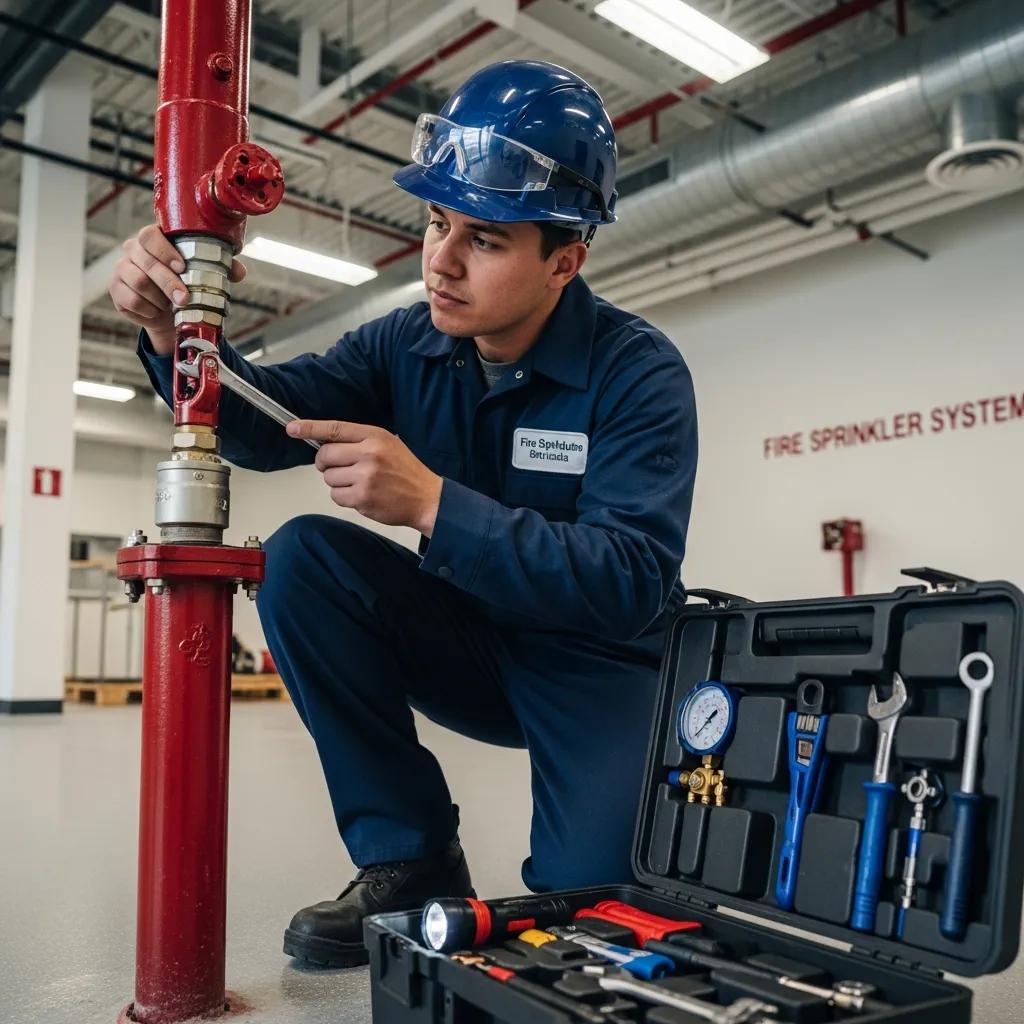
Sprinkler systems are maintained in line with NFPA 25 and ADCD expectations, focusing on water supply integrity, valve operation, flow testing and corrosion control to ensure reliable suppression. NFPA 25 specifies monthly visual checks, quarterly tests for specific items and annual main drain/flow tests; ADCD typically expects those intervals plus professional documentation to verify results. Critical actions include main drain tests to confirm supply, control valve inspections to ensure valves are unlocked and accessible, and pressure/gauge monitoring to detect leaks or supply issues. Certified technicians familiar with NFPA 25 and ADCD procedures are essential for accurate testing, remediation and report submission that support fitness-certificate approval.
Below we compare NFPA 25 recommended tests with typical ADCD practice so teams can see how expectations translate into inspection records.
| System Element | NFPA 25 Test Type | ADCD Expectation / Typical Frequency |
|---|---|---|
| Main Drain / Flow Test | Measure flow and pressure loss under open drain | Annual main drain / flow test required for supply verification |
| Control Valves | Operability and tamper switch verification | Monthly/quarterly visual checks; annual functional verification |
| Sprinkler Heads | Visual inspection for damage, corrosion or obstruction | Quarterly visual checks; replacement as needed |
| Pressure Gauges | Compare static and residual pressure against design | Annual calibration verification and routine visual checks |
| Pumps & Controllers | Full weekly/annual pump tests including churn/run tests | Weekly churn or exercise runs; annual full performance test |
This side-by-side shows how NFPA 25 procedures appear in ADCD inspection records. The next section outlines the typical test steps managers should expect.
How sprinkler systems are tested and inspected under NFPA 25 and ADCD
NFPA 25 combines visual inspections with performance tests — monthly visual checks of piping and heads, quarterly valve and gauge checks, and annual main drain/flow and full-system tests — and ADCD expects these procedures to be documented. A main drain test measures supply adequacy by recording flow and pressure when the drain is opened. Control valve checks confirm correct positioning and tamper protection. Pumps receive routine churn and full-flow tests to validate capacity. Technicians also look for corrosion, obstructions and damaged sprinkler heads. Recording each step with test data, photos and corrective-action records meets ADCD’s requirement for traceable evidence when you apply for or renew a fitness certificate.
Following NFPA 25 gives a technically sound test record and reduces the chance of rework during ADCD verification.
Common issues found during sprinkler maintenance
Typical problems include corroded fittings and sprinkler heads, leaking joints, partially closed or seized control valves, blocked supply lines and miscalibrated pressure gauges. Corrosion can cause pressure loss; valve mispositioning or tampering can block water flow; obstructions limit coverage. Documentation gaps — missing logs or incomplete corrective-action records — also commonly trigger ADCD non-conformances. Preventive steps such as corrosion control, valve exercise programmes and disciplined recordkeeping lower the chance of urgent failures.
Fixing these issues proactively reduces downtime and speeds fitness-certificate outcomes during ADCD inspections.
How extinguisher and emergency lighting inspections support compliance
Servicing fire extinguishers and testing emergency lighting are essential for safe evacuation and first-response. ADCD and the UAE Code expect routine visual checks, scheduled servicing and periodic full-duration tests for battery-backed lighting. Extinguishers must suit the local hazard, be accessible and undergo monthly visual checks plus annual servicing and recharge when needed; some extinguisher types require hydrostatic testing at set intervals. Emergency lighting needs monthly operational checks and annual full-duration tests to verify battery runtime and illumination levels for safe egress. Correct placement, signage and documented testing form key evidence during ADCD site visits and lower both safety and regulatory risk.
Below are practical lists on extinguisher placement and emergency lighting tests to help plan compliance work.
- Intro to lists: These lists summarise placement rules and testing expectations so facilities teams can act quickly.
- Extinguisher placement and service rules: Type matching: Install extinguisher classes that match identified hazards.Accessibility: Mount extinguishers at required heights with clear signage and unobstructed access.Service intervals: Perform monthly visual checks and annual servicing; apply hydrostatic testing where specified.
- Emergency lighting testing expectations: Monthly function tests: Confirm automatic activation and lamp operation under simulated power loss.Annual duration tests: Run lighting on battery backup for the full design duration to confirm runtime.Battery health checks: Replace batteries when capacity falls below required levels or at end of life.
Consistent extinguisher servicing and disciplined emergency-lighting testing protect occupants and produce the documentation ADCD inspectors expect.
Fire Safety Regulations and System Maintenance in Properties
Owners and property managers must keep premises compliant and maintain safety systems — including extinguishers, alarms and sprinklers — in operational condition.
Fire hazard management in dining properties: a case study, MA Hassanain, 2024
Servicing and placement requirements for fire extinguishers in the UAE
In UAE commercial buildings extinguishers must match local hazards, be placed within prescribed travel distances, and be mounted at the correct heights for quick access. Monthly visual inspections confirm tamper seals, pressure indicators and overall condition. Annual servicing covers internal inspection, recharge and replacement of worn parts; specific extinguisher types require periodic hydrostatic testing. Only competent, licensed technicians should service extinguishers, and detailed service tags and logs must be kept for ADCD review. Proper placement, signage and clear access improve response time and meet ADCD expectations for occupant safety.
These practices support a facility’s ability to tackle small fires and satisfy regulatory checks.
Maintaining emergency lighting and exit signage for compliance
Emergency lighting and exit signs need routine functional checks and full-duration tests to confirm battery health and adequate illumination for safe evacuation. Monthly operational checks ensure automatic activation during simulated power loss; annual duration tests verify battery capacity and lamp performance over the design period. Technicians also check luminaire aiming, sign visibility and replace batteries when capacity is reduced. Documentation of tests and repairs is essential for ADCD inspections. Keeping records of all tests and fixes supports quicker responses to ADCD queries and smoother fitness-certificate processing.
Good recordkeeping helps you respond quickly to regulator requests and reduces rework during audits.
Why Annual Maintenance Contracts matter for fire system compliance
Annual Maintenance Contracts (AMCs) bundle inspections, testing, recordkeeping and emergency response into a predictable service relationship that simplifies meeting ADCD and UAE Code requirements. AMCs align schedules with NFPA-recommended cadences, ensure certified technicians perform tests and repairs, and supply the documentation trail ADCD expects for fitness certificates. With an AMC you gain proactive preventive maintenance, faster corrective action through defined response terms, and budget predictability for recurring compliance work. Choosing a provider that understands ADCD processes, monitoring integrations like Hassantuk, and NFPA test methods turns technical maintenance into regulatory readiness.
The table below outlines common AMC services and the benefits they deliver for compliance and operations.
| AMC Service | يصف | قيمة |
|---|---|---|
| Scheduled Inspections | Coverage | Monthly, quarterly, annual checks aligned to NFPA/ADCD |
| الاستجابة للطوارئ | SLA | 24/7 call-out and immediate rectification options |
| Documentation & Reporting | Deliverable | Test reports, fault logs and corrective-action records for ADCD |
| ADCD Coordination | Assistance | Support during inspections and fitness-certificate submissions |
This AMC overview shows how contract elements map to ADCD expectations and practical outcomes for facility managers.
How AMCs translate regulations into day-to-day compliance
AMCs convert regulatory duties into scheduled tasks: they plan inspections, perform NFPA-aligned tests, produce test reports and complete corrective work ADCD needs for fitness certificates. By ensuring continuity — monthly visual checks, quarterly functional tests and annual comprehensive exercises — AMCs keep evidence ready when ADCD inspects. Predefined response procedures also speed corrective action, narrowing the window between fault detection and remediation that might otherwise trigger enforcement. Centralising technical expertise and documentation with an AMC lowers compliance risk and eases interactions with ADCD and monitoring platforms like Hassantuk.
Why choose Amples Fire & Safety LLC for AMC services?
Amples Fire & Safety LLC delivers AMCs tailored to Abu Dhabi and Al Ain, combining compliance-focused processes with practical response capabilities to help clients secure ADCD approvals and fitness certificates. Our offering includes ADCD coordination support, a 24/7 response model for immediate on-site rectification and an experienced in-house technical team that works across multiple brands and system types. These strengths mean predictable maintenance cycles, robust documentation for regulators and faster recovery when systems generate faults or fail tests. For facility managers who prioritise compliance and quick remediation, Amples provides a structured, locally informed AMC option.
Consequences of non-compliance — and how to reduce risk
Not meeting ADCD inspection standards can lead to fines, enforcement notices and, in serious or repeated cases, temporary closure until remedial works restore compliance. Insurance claims may be impacted if systems were not properly maintained. Operational risks include higher chance of incidents, longer downtime after events and reputational harm affecting tenants or customers. Mitigation combines scheduled maintenance, certified contractors, thorough recordkeeping and an AMC to ensure continuous compliance and fast corrective action. Proactive risk management lowers the chance of enforcement and helps restore operations more quickly if ADCD raises non-conformances.
Prioritise these mitigation steps to reduce regulatory and operational exposure.
- Regular maintenance: Implement monthly to annual inspection schedules and log every activity.
- Certified contractors: Use licensed, trained technicians for testing and repairs to meet ADCD standards.
- التوثيق: Keep detailed test records, photos and corrective-action evidence for ADCD audits.
UAE Fire Safety Code of Practice: Compliance and Response Times
This study proposes a fire index system to measure compliance. The UAE Fire and Life Safety Code of Practice also references response-time benchmarks used in practice.
Fire safety index for high-rise buildings in the Emirate of Sharjah,
UAE, M Omar, 2023
Penalties for failing fire system inspections in Abu Dhabi
Common penalties include fines and enforcement notices that require fast remediation; severe or repeated non-compliance can lead to temporary closure or restricted operations until defects are fixed. ADCD may demand immediate corrective actions, re-inspections and verified evidence of repairs before issuing or reinstating a fitness certificate. Non-compliance also increases liability exposure and can complicate insurance claims after a fire. After a failed inspection the immediate steps are to engage a certified contractor, document the corrective work and submit evidence to ADCD to request re-inspection.
Acting quickly and methodically reduces business disruption and improves the chance of a favourable regulatory outcome.
How regular maintenance and professional services prevent violations
Regular maintenance and professional services prevent violations by ensuring tests follow NFPA methods, defects are fixed before escalation and activities are recorded for ADCD review — creating a defensible compliance posture. A practical checklist includes monthly visual checks, quarterly and annual functional tests; maintaining test logs and photographic records; vetting contractors for competency; and using AMCs to centralise responsibilities and SLAs. These measures reduce unexpected failures during ADCD inspections and shorten remediation timelines when faults occur. For organisations that need continuous compliance and rapid rectification, working with a provider that offers 24/7 response, ADCD coordination and NFPA-aligned testing simplifies achieving and retaining fitness certificates.
If you need direct help with AMCs, ADCD approvals or urgent inspections, Amples Fire & Safety LLC provides compliance-focused maintenance contracts and round-the-clock response to support regulatory readiness and remedial work.
الأسئلة الشائعة
What is the role of certified contractors in fire system inspections?
Certified contractors make sure testing and maintenance meet ADCD rules and the UAE Code. They perform inspections, carry out repairs and keep accurate documentation that ADCD needs to accept inspection results. Their expertise helps spot issues early, keeps systems operational and reduces the risk of enforcement.
How can businesses prepare for an ADCD inspection?
Prepare by reviewing your fire safety systems and documentation: ensure components work, inspection logs and maintenance records are current, and corrective-action evidence is available. A pre-inspection check by a certified contractor often uncovers issues you can fix before ADCD arrives. Also ensure equipment is accessible and labelled to help the inspection run smoothly.
What are the consequences of failing to maintain fire safety systems?
Consequences range from fines and enforcement notices to temporary closure in serious cases. Insurance claims may be affected if systems weren’t maintained. Operational and reputational risks rise with poor maintenance. Regular servicing and detailed records are the most effective ways to avoid these outcomes.
What types of fire extinguishers are required for different hazards?
Select extinguishers by hazard: water for Class A (ordinary combustibles), foam for Class B (flammable liquids), CO2 for Class C (electrical) in some contexts, Class D for combustible metals and Class K for kitchen oils and fats. Correct classification and placement are critical for safe, compliant firefighting readiness.
How does the Hassantuk system enhance fire safety compliance?
Hassantuk provides real-time monitoring and reporting of fire alarm activity to ADCD. That link improves response times, surface faults faster and provides an audit trail ADCD can review — all of which support compliance and faster resolution of issues.
What should be included in fire safety training for staff?
Training should cover extinguisher use, evacuation routes and procedures, keeping exits and equipment accessible, and the basics of your alarm and emergency lighting systems. Designate fire wardens, run regular drills and make sure staff know their roles — practical training reduces confusion and improves safety during an incident.
خاتمة
Clear, consistent maintenance and solid documentation are the foundation of fire-safety compliance in Abu Dhabi and the UAE. Following ADCD rules, applying the UAE Fire and Life Safety Code and using NFPA test methods keeps systems reliable and simplifies fitness-certificate processes. Work with certified contractors and consider an AMC to centralise inspections, reporting and emergency response. If you’d like tailored support to reach or maintain compliance, Amples Fire & Safety LLC can help — from scheduled testing to ADCD coordination and 24/7 response.