
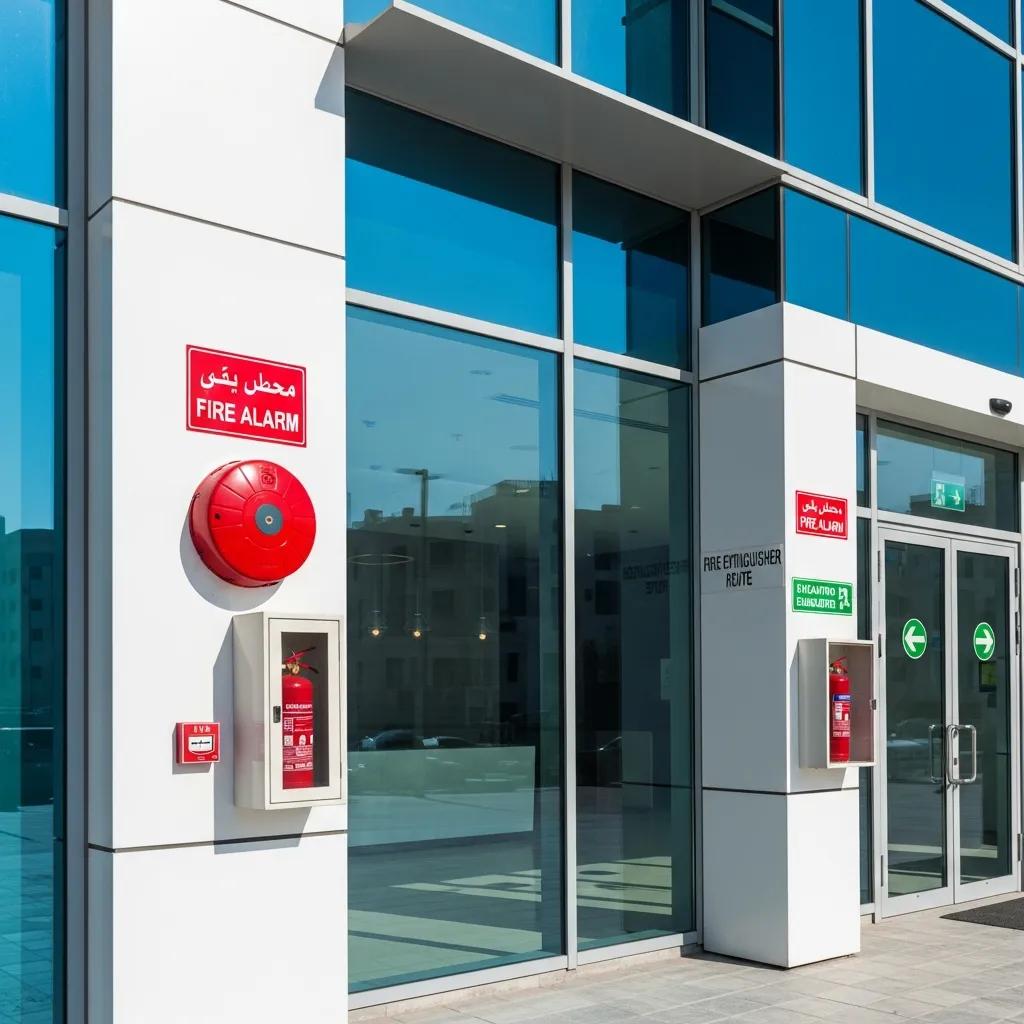
Comprehensive guide to fire safety regulations for commercial properties in Abu Dhabi and the UAE
Fire safety regulations protect people, assets and the environment across Abu Dhabi and the wider UAE. This guide breaks down the compliance obligations that matter most to commercial property owners: the UAE Fire & Life Safety Code, Abu Dhabi Civil Defence (ADCD) requirements, and rules for fire alarm and firefighting systems. We also explain fitness certificates, annual inspection expectations and the real consequences of non‑compliance — so you can keep your premises safe and audit‑ready.
Key Abu Dhabi commercial fire safety compliance requirements
Abu Dhabi sets clear fire safety standards that commercial buildings must meet to operate legally and safely. These standards are administered by the Abu Dhabi Civil Defence (ADCD), which oversees inspections, approvals and ongoing compliance. Meeting these requirements protects occupants and reduces business risk.
How the Abu Dhabi Civil Defence enforces fire safety regulations
The ADCD enforces regulations through scheduled and spot inspections, documentary checks and system verifications. When a property falls short, enforcement can include fines, suspension or closure orders, and in severe cases, legal action. Staying compliant avoids penalties and keeps staff and customers safe.
Steps to obtain ADCD fitness certificates for commercial buildings
To secure an ADCD fitness certificate, owners must submit the required documentation — typically fire safety plans, system test records and compliance reports — and arrange an ADCD inspection. Inspectors verify that alarms, suppression systems and equipment are correctly installed and operational. Approval timelines vary but generally take a few weeks depending on readiness and documentation.
What the UAE Fire and Life Safety Code of Practice means for commercial properties
The UAE Fire & Life Safety Code sets the technical and procedural baseline for fire protection design, construction and maintenance. It establishes mandatory systems, performance standards and testing regimes to ensure buildings provide safe evacuation paths and effective fire control.
Mandatory fire safety systems under the UAE Fire Code
The Code requires certain systems in commercial buildings: fire detection and alarm systems, fire suppression measures, emergency lighting and clear exit signage. Each element is designed to detect incidents early, control spread and guide occupants to safety.
How regional differences affect regulations in Abu Dhabi, Al Ain and the Western Region
Regulations follow the national Code but enforcement and specific requirements can vary between Abu Dhabi, Al Ain and the Western Region. Differences stem from local risk profiles, building types and ADCD practices. Property owners should confirm region‑specific rules to ensure full compliance.
Commercial building fire alarm system regulations in Abu Dhabi
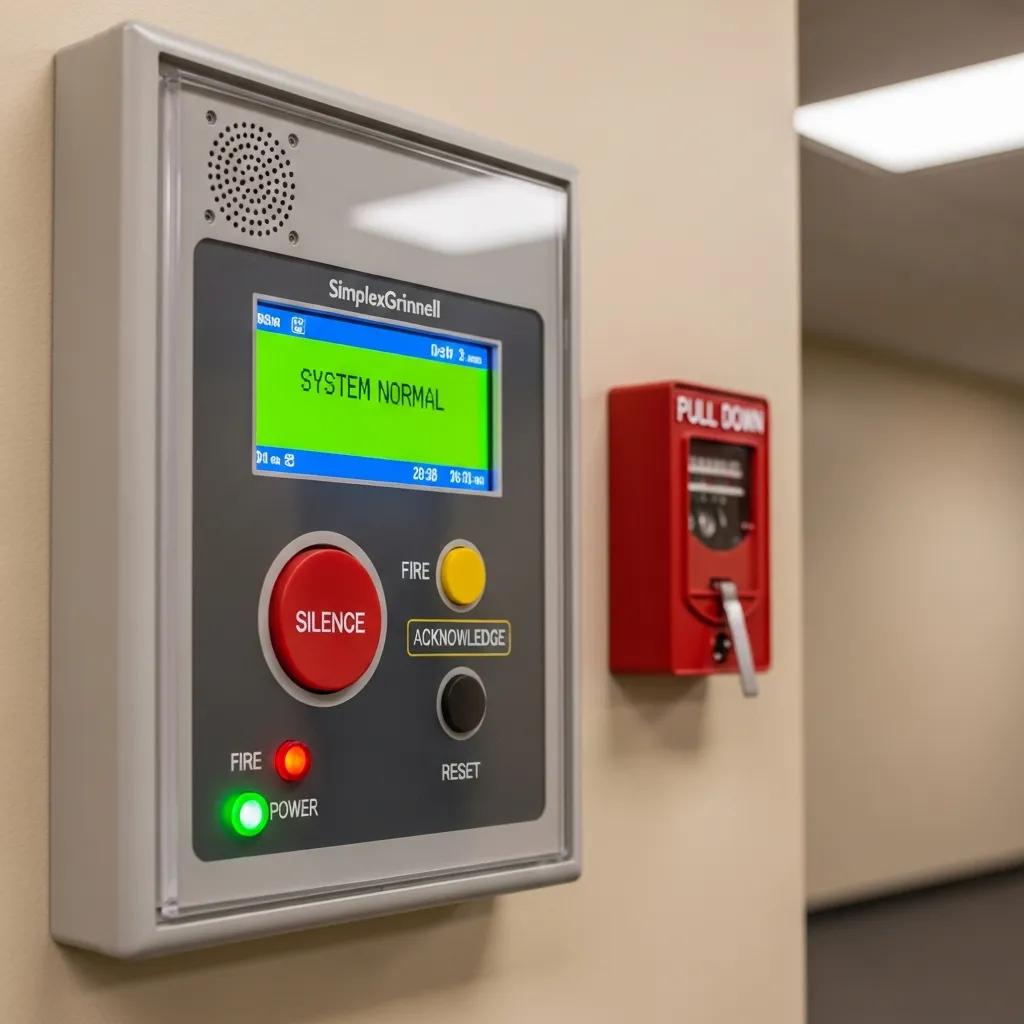
Fire alarm systems are a primary line of defence in commercial buildings. Abu Dhabi regulations require reliable detection, clear occupant alerting and documented servicing so systems perform when needed.
Testing and maintenance requirements for fire alarm systems
Fire alarm systems must be tested at least once every three months, with a full maintenance check annually. All tests and repairs should be recorded and retained as part of your compliance file — these records are reviewed during inspections and audits.
How Amples Fire & Safety LLC supports fire alarm system compliance
Amples Fire & Safety LLC offers services to keep your alarm systems compliant and operational: scheduled inspections, preventative maintenance and rapid response for faults. Our Annual Maintenance Contracts (AMCs) include documented testing and certified reports, helping you meet regulatory requirements and simplify ADCD audits. Annual Maintenance Contracts (AMCs)
Firefighting equipment requirements for commercial properties in the UAE
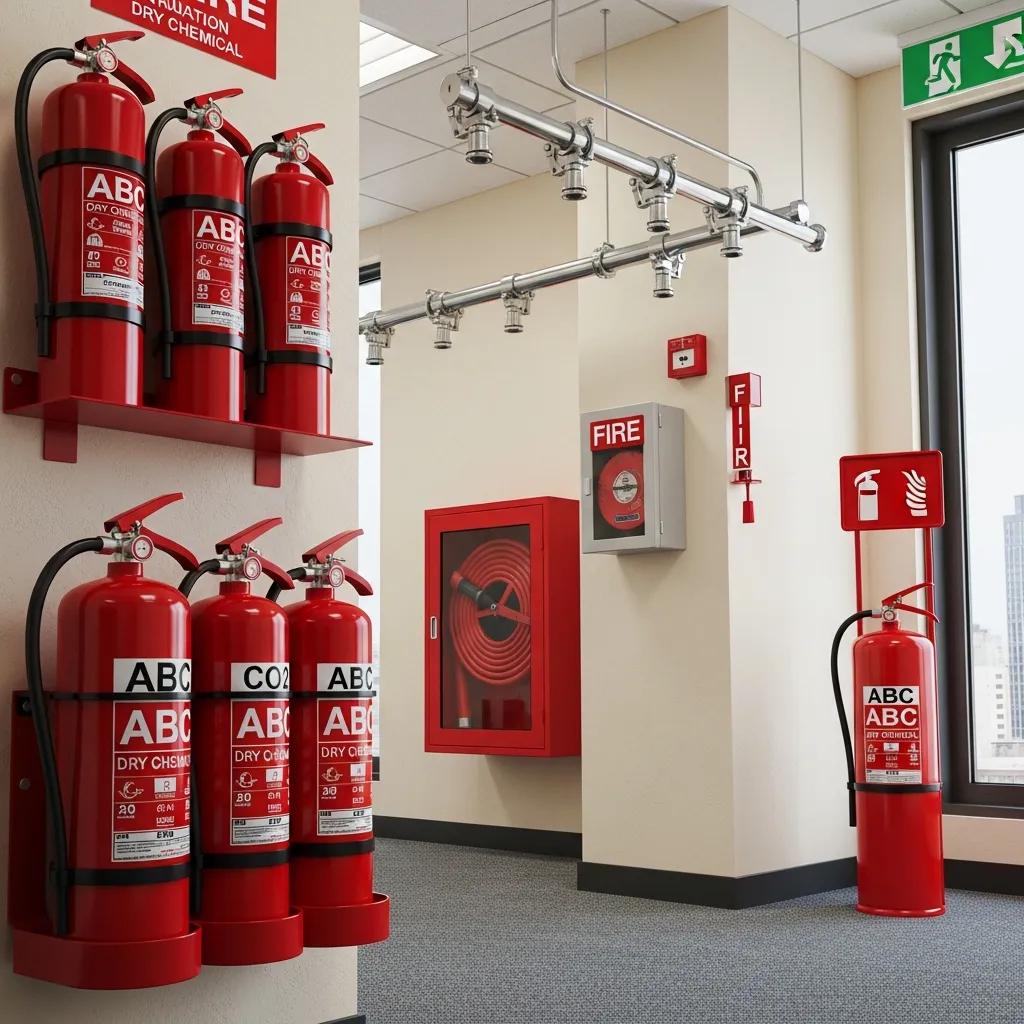
Appropriate firefighting equipment must be installed and maintained to control outbreaks and protect occupants. The UAE specifies which types of extinguishers and suppression systems are required based on risk and occupancy.
Mandatory fire extinguishers and suppression systems
Commercial properties are required to have the correct mix of extinguishers and suppression systems for the hazards present: water‑based, foam, CO and dry chemical extinguishers where applicable. Equipment locations and capacities must follow regulatory placement guidelines for quick access during an incident.
Inspection and maintenance frequency for firefighting equipment
Firefighting equipment should be inspected at least once every three months, with maintenance performed as manufacturers and regulations require. Maintain clear records of inspections, service work and replacements to demonstrate compliance.
Why annual fire safety inspection is critical for commercial properties in Abu Dhabi
Annual fire safety inspections identify hazards early, verify system performance and confirm documentation is in order. Regular inspections reduce risk to people and property and help avoid enforcement actions during ADCD checks.
Benefits of Annual Maintenance Contracts for fire safety systems
Annual Maintenance Contracts (AMCs) provide predictable service, reduce the likelihood of system failures and save time managing compliance. With a professional AMC, you receive scheduled testing, priority repairs and certified reports that support ADCD audits.
How 24/7 emergency response and fault rectification enhance fire safety
Round‑the‑clock emergency response and fast fault rectification limit downtime and stop small issues from becoming major incidents. Quick intervention protects occupants and reduces repair costs and business disruption.
Consequences of non-compliance with fire safety regulations for commercial buildings
Failing to meet fire safety obligations carries significant legal, financial and operational risks. Understanding these consequences helps owners prioritise corrective action before inspectors intervene.
Fines and legal actions businesses can face for violations
Penalties for non‑compliance can include significant fines, orders to cease operations, remediation mandates and, in serious cases, criminal charges for responsible parties. The exact penalty depends on the nature and severity of the violation.
How non-compliance affects insurance and business operations
Insurance claims for fire damage may be reduced or denied if a property is found non‑compliant. Beyond financial loss, non‑compliance can harm reputation, force temporary closures and interrupt normal business activities.
This table summarises essential firefighting equipment requirements and typical maintenance frequencies for commercial properties in the UAE, highlighting the need for regular checks to remain compliant.
| Equipment Type | متطلبات | تردد الصيانة |
|---|---|---|
| طفايات الحريق | Required across commercial premises | Every 3 months |
| أنظمة إنذار الحريق | Must be installed and operational | Quarterly testing; annual maintenance |
| أنظمة إخماد الحرائق | Mandatory for designated hazards | Annual inspection |
الأسئلة الشائعة
What should I do if my commercial property fails a fire safety inspection?
Immediately review the inspection report, prioritise the listed issues and arrange repairs or upgrades with a qualified fire safety provider. Once corrections are complete, request a re‑inspection from the ADCD. Acting quickly reduces the risk of fines or closures.
Are there specific fire safety training requirements for employees in commercial properties?
Yes. Employers must provide fire safety training covering evacuation procedures, correct use of firefighting equipment and emergency roles. Regular drills are recommended to ensure staff can respond confidently during an incident and to demonstrate preparedness during inspections.
How can I ensure my fire safety systems are up to date with current regulations?
Stay informed through ADCD updates and the UAE Fire & Life Safety Code, and partner with a certified fire safety company for routine inspections and maintenance. Keep complete records of all tests, servicing and certifications to show compliance during audits.
What role does fire safety signage play in commercial properties?
Clear, compliant signage shows escape routes, extinguisher locations and emergency instructions — helping occupants evacuate safely. Signs must be visible, correctly placed and maintained as part of your overall safety strategy.
Can I install fire safety systems myself, or do I need a professional?
Installation and commissioning should be handled by qualified professionals. Proper design and installation ensure systems meet regulatory standards and function under stress. Professionals also provide the certificates and documentation required by ADCD.
What are the implications of having inadequate fire safety measures in my commercial property?
Insufficient fire safety can lead to fines, denied insurance claims, reputational damage and, most importantly, increased risk to life and property. Prioritise compliance to protect people and minimise business exposure.
How often should I review and update my fire safety plan?
Review your fire safety plan at least annually and whenever there are major changes to occupancy, layout or building use. Regular reviews, drills and updates ensure the plan stays effective and aligned with current regulations.
خاتمة
Fire safety compliance is a practical, ongoing responsibility for every commercial property owner in Abu Dhabi and the UAE. By following the Code, keeping systems serviced, and maintaining clear records, you protect people, reduce liability and keep your business operating. Start with a clear maintenance plan and professional support to stay compliant and prepared.