
Comprehensive Fire Risk Assessment Abu Dhabi: How Businesses Ensure Safety and Compliance
Every business in Abu Dhabi must preempt fire hazards before they escalate into costly incidents. A Comprehensive Fire Risk Assessment Abu Dhabi service systematically inspects premises to identify fire hazards, evaluate their likelihood and impact, and recommend controls that align with the UAE Fire and Life Safety Code and Abu Dhabi Civil Defense Authority standards. This article explains how assessments uncover risks, guide you through the Civil Defense Certificate process, clarify core regulations, review protection systems, and equip teams with evacuation and training plans under a unified safety framework.
What Is a Fire Risk Assessment for Businesses in Abu Dhabi?
A fire risk assessment for Abu Dhabi businesses defines hazards and evaluates potential harm to people, property and operations. By examining building layouts, material storage and electrical systems, assessors determine risk levels and prescribe mitigation measures that improve safety.
How Does Fire Risk Assessment Identify Hazards and Risks?
A fire risk assessment identifies ignition sources, fuel loads and environmental factors that may trigger or worsen a fire through on-site inspections and document reviews. Assessors map hazard points, rate risk based on severity and frequency, and prioritize controls—ensuring every risk is documented and addressed.
Why Is Fire Risk Assessment Important for Abu Dhabi Businesses?
Fire risk assessments ensure legal compliance with Abu Dhabi Civil Defense Authority regulations, protect employees and assets, and maintain business continuity by preventing unplanned shutdowns. Early hazard control also reduces insurance premiums and reinforces stakeholder confidence in workplace safety.
Fire Risk Assessment Importance
Fire risk assessments are crucial for ensuring legal compliance with Abu Dhabi Civil Defense Authority regulations, protecting employees and assets, and maintaining business continuity by preventing unplanned shutdowns.
Fire Risk Assessments (FRA) determine if existing fire precautions are adequate and reasonable relative to the overall fire risks presented or if it requires reduction via control measures as per local and international codes and standards.
How Do Businesses Obtain a Civil Defense Certificate in Abu Dhabi?
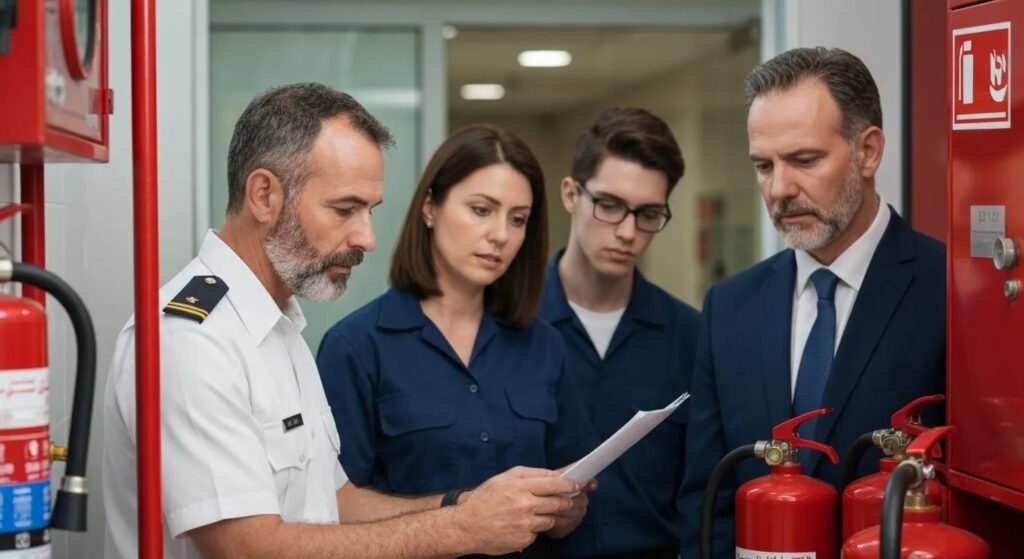
Securing a Civil Defense Certificate in Abu Dhabi involves demonstrating full compliance with ADCDA fire safety standards through documentation, site inspection and certified system installation. This approval confirms your premises meet mandatory fire prevention and response requirements.
What Are the Abu Dhabi Civil Defense Authority Requirements?
ADCDA requires businesses to implement approved fire protection systems, provide evacuation routes, maintain emergency lighting and submit detailed building drawings, risk assessment reports and maintenance logs. These standards ensure consistent readiness across all commercial and industrial sites.
Abu Dhabi Civil Defense Authority Requirements
ADCDA requires businesses to implement approved fire protection systems, provide evacuation routes, maintain emergency lighting, and submit detailed building drawings, risk assessment reports, and maintenance logs to ensure consistent readiness across all commercial and industrial sites.
The Abu Dhabi Civil Defence Authority (ADCDA) is responsible for public safety, including emergency response and fire prevention, and enforces compliance with fire safety regulations through regular inspections and audits [7, 9].
What Is the Step-by-Step Application Process for Civil Defense Approval?
To obtain certification, businesses first compile required documents—floor plans, risk assessment reports and system specifications—then submit them for ADCDA review. A qualified inspector conducts an on-site audit, and upon meeting all criteria, the authority issues the Civil Defense Certificate. For detailed guidance on document submission and timeline management, refer to the “Civil Defense Certificate process” guide.
What Are the Key Fire Safety Regulations in the UAE for Businesses?
The UAE Fire and Life Safety Code of Practice 2018 establishes national fire safety standards that local authorities enforce. This code covers building design, passive and active fire protection measures and emergency procedures to ensure uniform safety across all emirates.
UAE Fire and Life Safety Code of Practice
The UAE Fire and Life Safety Code of Practice 2018 establishes national fire safety standards that local authorities enforce, covering building design, passive and active fire protection measures, and emergency procedures to ensure uniform safety across all emirates.
This code is the fundamental guide for civil defense in the United Arab Emirates, providing essential requirements for fire safety and life safety design and installation.
Which UAE Fire and Life Safety Code Sections Apply to Businesses?
Below is a concise breakdown of critical code sections that directly affect commercial premises.
| Section | Requirement | Purpose |
|---|---|---|
| Section 2 (Building) | Fire-resistant construction materials | Limits fire spread and structural damage |
| Section 5 (Detection) | Installation of fire alarm and detection | Ensures early warning and rapid response |
| Section 8 (Means of Exit) | Design of escape routes and emergency lighting | Facilitates safe evacuation under stress |
Each section mandates specific design and maintenance parameters, forming the backbone of compliance with Abu Dhabi Civil Defense regulations.
What Are the Penalties for Non-Compliance with Fire Safety Laws?
Businesses that fail to comply face escalating fines, forced shutdowns and potential legal action. Common enforcement measures include:
- Monetary fines for missing or faulty fire protection systems.
- Suspension of business operations until corrective actions are completed.
- Legal liability for damages and injuries resulting from fire incidents.
Timely compliance prevents these penalties and preserves operational integrity.
What Types of Fire Protection Systems Are Assessed in Fire Risk Evaluations?
A fire risk evaluation assesses both active and passive systems that detect, suppress and contain fires. Covering alarms, sprinklers and structural safeguards, this review verifies the readiness and interoperability of all fire safety components.
How Do Fire Detection and Alarm Systems Work?
Fire detection systems use smoke, heat and flame sensors to trigger alarms and alert occupants and emergency responders. These systems monitor environmental changes continuously, improving early fire suppression and evacuation times.
What Are Fire Suppression Systems and Their Roles?
Fire suppression solutions—sprinkler networks, handheld extinguishers and gas-based suppression—actively control or extinguish fires upon activation. By targeting fuel, heat or oxygen, these systems minimize fire growth and limit property damage.
How Can Businesses Prepare for Emergency Evacuation and Fire Safety Training?
Effective emergency preparedness combines a clear evacuation plan with regular drills and staff education. This dual approach ensures teams respond confidently and efficiently during real incidents.
What Is an Effective Emergency Evacuation Plan?
An evacuation plan delineates escape routes, assembly points and communication protocols in a documented procedure. Regular route inspections and clear signage maintain plan accuracy and support orderly exits under pressure.
Why Are Fire Drills and Staff Training Essential?
Fire drills and training reinforce correct evacuation behavior, familiarize staff with safety equipment, and validate emergency procedures. Consistent practice builds muscle memory, reduces panic and demonstrates compliance with regulatory requirements.