

Hidden fees in fire system inspections — what to expect in Abu Dhabi
Fire system inspections typically combine a base service fee with variable cost drivers that can produce surprise charges if scope and exclusions aren’t agreed up front. This guide outlines what a standard inspection covers, why quotes differ between providers, the extra charges that often appear after an initial visit, and how an Annual Maintenance Contract (AMC) can reduce unexpected costs while supporting Abu Dhabi Civil Defence (ADCD) compliance. You’ll learn the main cost drivers — from system type and device counts to site access — and find practical checklists to prepare accurate quote requests. Read on for clear steps to spot vague line items, evaluate transparent providers, and request a detailed, line‑item quote so you can budget reliably and avoid costly remediation or penalties.
What does a fire system inspection include in Abu Dhabi?
A fire system inspection is a scheduled check to confirm systems are operational, to identify faults, and to document compliance with applicable regulations. Technicians examine core components — control panels, detectors, valves, pumps and extinguishers — to confirm functionality and safety, then produce an inspection report that records defects and recommended actions. Inspections combine testing, visual checks, functional exercises and record-keeping to support ADCD audit requirements and fitness certificate submissions. Knowing the difference between inspection (testing and reporting) and repair (parts replacement or corrective work) helps owners avoid unexpected charges; the next section explains which systems are usually covered and typical test intervals.
Which fire safety systems are covered in inspections?
Inspections usually cover several related fire-safety systems, each with its own tests and frequencies. Fire alarm inspections check the control panel, detectors, sounders and circuit integrity through functional tests and sensitivity checks to ensure alarms propagate correctly. Sprinkler and suppression inspections review valves, flow switches, pressure gauges and sprinkler heads for leaks, obstructions and correct hydraulic performance — often requiring wet or dry testing depending on the system. Fire extinguisher servicing checks cylinder condition, pressure and expiry; emergency lighting inspections test batteries, lamp assemblies and emergency circuits to confirm egress illumination. These component-level checks determine inspection depth and the detail in the final report.
How does an Annual Maintenance Contract support fire system inspections?

An Annual Maintenance Contract (AMC) schedules routine inspections and preventive work so testing, record-keeping and minor adjustments are carried out under a predictable plan instead of ad‑hoc visits. AMCs commonly bundle scheduled visits, priority response and documented reports that simplify ADCD submissions and reduce the need for reactive call‑outs at premium rates. Preventive tasks such as battery replacement, detector cleaning and valve lubrication are often included in an AMC, lowering the chance that small issues escalate into costly repairs. An AMC also clarifies which activities count as “inspection” versus “repair,” making it easier to request line‑item pricing and compare providers fairly; next we cover the cost drivers you should expect to see in quotes.
What key factors influence fire system inspection costs?
Inspection pricing reflects several cost drivers tied to time on site, specialist labour and equipment requirements. Major factors include system type (alarm, sprinkler, suppression), device count, building footprint and vertical complexity, plus site accessibility and any specialist safety needs that require extra technicians or equipment. Understanding these variables helps you read variations between providers and anticipate legitimate surcharges that should be explained in the quote. The table below maps common system attributes to how they typically affect price, making it easier to compare line items and ask targeted questions during quoting.
Different system and site attributes change inspection effort — and therefore price.
| System | Attribute | How This Affects Price |
|---|---|---|
| Fire Alarm System | Device count (detectors / sounders) | More devices increase testing time and report detail, raising labour costs |
| Sprinkler / Suppression | Pipework complexity and zone count | Complex hydraulics and multiple zones require longer functional tests and specialist checks |
| Emergency Lighting | Number of emergency units and battery types | Battery testing and lamp replacements add parts and labour |
How do system type and building size affect pricing?
System type and building size are primary cost multipliers because they change technician hours, required specialist skills and reporting complexity. A small retail unit with a single‑zone alarm needs fewer checks and a simpler report than a multi‑floor office tower with integrated suppression, multiple risers and a high device count that may require multi‑day attendance. Systems tied to a building management system (BMS) or complex suppression agents need specialist technicians, which increases hourly rates compared with standard alarm inspections. Large footprints often require multiple teams to complete testing within operational windows, and that coordination is reflected in the quote.
What role does accessibility and facility complexity play in cost?
Accessibility and site complexity affect safety planning, specialised equipment and additional labour — items that commonly appear as separate line entries in quotes. Sites with rooftop risers, confined spaces, high‑level ceiling detectors or restricted zones often need MEWP hire, rope access teams or permit‑driven work windows that add cost. Industrial plants or facilities with live processes may require safety inductions, specialist PPE and coordination with facility managers, which increase time on site and billed hours. Identifying access constraints in advance and documenting them in your quote request reduces the risk that a straightforward inspection becomes a higher‑cost operation once technicians arrive.
What hidden fees should you watch for in fire system inspection pricing?
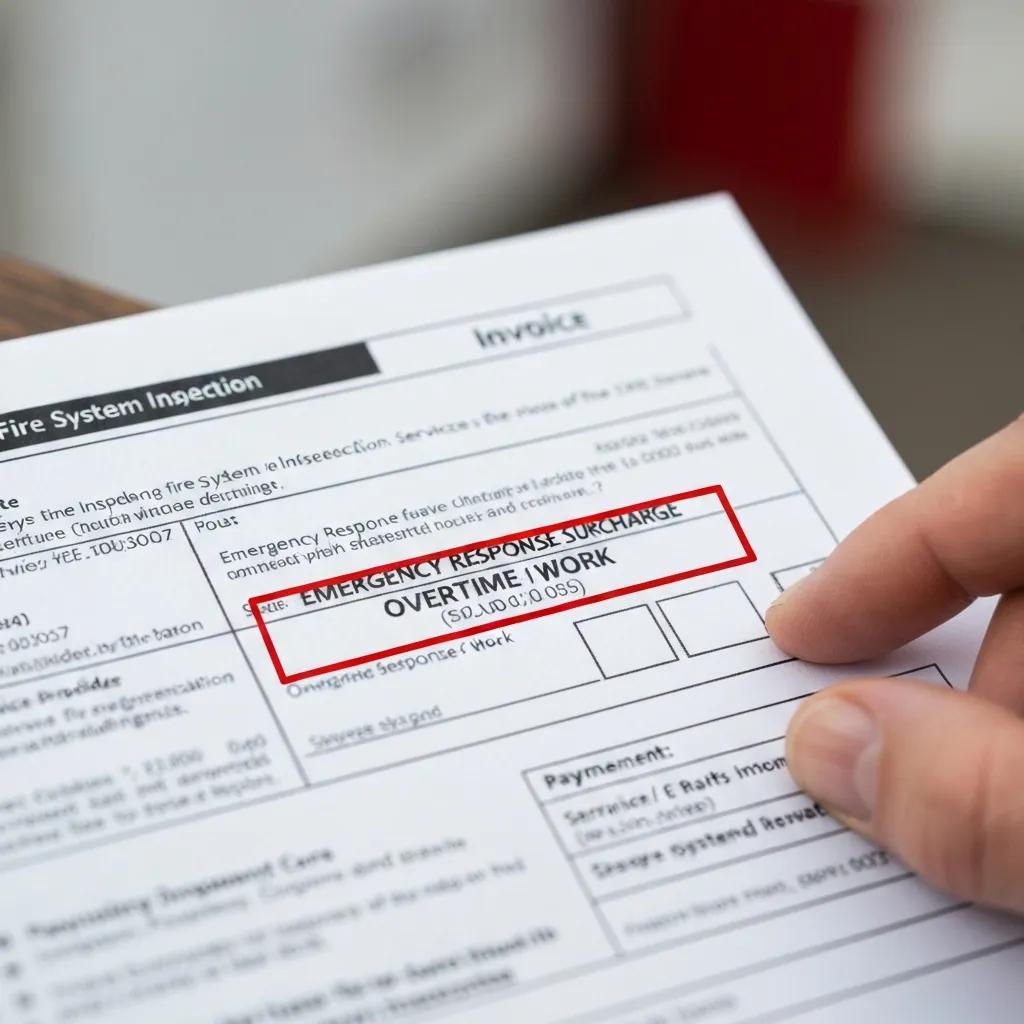
Yes — hidden fees are common and usually stem from ambiguous quote language or excluded scope items. Typical triggers include parts and component replacements billed after inspection, emergency or weekend call‑out surcharges, access or safety surcharges for difficult sites, and administrative charges for certification or ADCD paperwork. Some providers list these as “as required” with no estimate; a transparent quote should list likely triggers and a rate or capped estimate. The table below shows common hidden fee types, what triggers them and their practical impact on a final invoice.
This table identifies common additional charge types and when they are usually applied.
| Charge Type | When Charged | Typical Impact on Invoice |
|---|---|---|
| Parts & Replacements | When components fail or are obsolete | Adds parts cost plus labour; can be significant for detectors or valves |
| Emergency Call‑outs | After hours, weekends or urgent fault rectification | Premium hourly rates and minimum call‑out fees |
| Access / Safety Surcharges | Sites needing special equipment or permits | Equipment hire or permit costs passed to the client |
| Administrative / Certification Fees | Preparation / submission of ADCD documentation | Flat admin fees or per‑certificate charges |
Knowing these triggers lets owners request a line‑item quote that clarifies whether items are included or billed separately. The list below shows the most common additional charges and the questions to ask when comparing quotes.
- Parts and component replacements: Ask if basic consumables (batteries, fuses) are included or billed separately and whether replaced parts carry a warranty.
- Emergency or weekend call‑outs: Confirm standard business hours and premium rates for after‑hours response to avoid surprise overtime charges.
- Access and equipment surcharges: Request advance disclosure of any MEWP, rope access or permit costs required for your site.
- Certification and administrative fees: Check whether the inspection fee includes ADCD paperwork or if submissions incur an additional charge.
These items are common negotiation points; some providers adopt transparent pricing and include priority response and in‑house technical teams to reduce repeat emergency calls. Next we explain provider practices that remove ambiguity and how owners can use those policies to evaluate quotes.
How can non‑compliance penalties impact overall fire safety costs?
Failing ADCD requirements or lacking maintenance records can trigger penalties and downstream costs that far exceed inspection charges. Non‑compliance may lead to formal notices, fines, forced remedial works and delays to occupancy approval or fitness certificates; insurers may reduce or deny cover when records are incomplete. Remediation after a failed audit often requires expedited parts, specialist contractors and emergency labour rates, which compound costs. Keeping clear inspection records, timely repairs and ADCD‑ready documentation — ideally under an AMC — typically reduces total lifecycle costs compared with reactive remediation following failures.
How does Amples Fire & Safety LLC ensure transparent fire system inspection pricing?
Amples structures its services to minimise hidden fees and to support regulatory compliance across Abu Dhabi and nearby areas. We prioritise clear pricing, 24/7 response, rapid fault rectification and in‑house technical capability so issues are resolved faster and with fewer surprises. Amples also helps clients with ADCD AMC approvals and fitness certificates, taking on administrative tasks within the maintenance relationship. This combination of transparent pricing and ADCD navigation lowers the chance of ad‑hoc emergency charges and unexpected paperwork fees compared with less transparent providers.
What are the benefits of choosing Amples’ Annual Maintenance Contracts?
Choosing an AMC with priority response and an in‑house technical team delivers operational and financial benefits. AMCs provide predictable scheduling, routine preventive maintenance and consolidated documentation that simplify ADCD audits and fitness certificate workflows. Our 24/7 response and immediate fault rectification reduce downtime and the need for costly emergency call‑outs; in‑house capability can also lower parts and labour markups compared with subcontracted models. Together, these features improve cost predictability and lifecycle management of fire safety assets, helping building managers budget more accurately and maintain continuous compliance.
How does Amples help with Abu Dhabi Civil Defence compliance and certification?
Amples supports clients at the key touchpoints for ADCD AMC approvals and fitness certificate preparation by supplying inspection reports, test records and remedial documentation aligned with ADCD expectations. We clarify which records ADCD inspectors expect, prepare documented test results and assist with submission processes to streamline approvals. Support during audits reduces the risk of incomplete submissions that trigger extra requests or penalties. Having routine inspection records under an AMC demonstrates ongoing compliance to both regulators and insurers and helps owners avoid administrative fees and avoidable delays.
Why is a comprehensive Annual Maintenance Contract valuable for fire safety?
An effective AMC moves fire safety from reactive, unpredictable spending to planned, risk‑managed maintenance that preserves asset value and compliance. Regular preventive maintenance identifies faults early, lowering the chance of catastrophic failures that require expensive replacements or emergency work. A documented service history under an AMC also builds regulator and insurer confidence, which can improve claim outcomes and simplify inspections. The next sections describe how AMCs extend equipment life and deliver practical peace of mind on ADCD compliance.
How does an AMC extend equipment life and prevent unexpected expenses?
An AMC extends equipment life through scheduled testing, cleaning, calibration and timely part replacement that prevent wear‑related failures from escalating. Early detection of detector drift or pump performance decline allows planned parts replacement and avoids emergency repairs at premium rates while preserving system reliability. Preventive servicing of components — valves, pumps, detectors, batteries — reduces cumulative stress and maintains operational margins. Over time, predictable maintenance cycles lower total cost of ownership compared with sporadic fixes and emergency replacements that carry higher labour and parts costs.
What peace of mind does compliance with ADCD regulations provide?
ADCD compliance delivers operational continuity, legal protection and improved occupant safety — all critical for owners and managers. Maintaining current inspection records and fitness certificates reduces regulatory risk, prevents business interruptions from enforcement actions and supports insurer requirements for routine maintenance. Documented compliance also signals diligence to tenants and stakeholders, reducing last‑minute remedial demands. The practical benefit is a lower probability of sudden fines or forced shutdowns, enabling stable budgeting and predictable facility management.
How can you request a transparent quote to avoid hidden fire system inspection costs?
To get a transparent, line‑item quote, prepare specific building and system information so providers can estimate labour, parts and access needs accurately. A clear quote should separate inspection fees from repair and parts, list triggers for emergency call‑outs and access surcharges, and specify whether ADCD documentation or certification is included. Use the checklist table below to collect the details technicians need to produce comparable, accurate quotes and to reduce ambiguity that often causes hidden fees. After the table you’ll find a step‑by‑step process to turn this information into a defensible line‑item quotation request.
Collecting standard property and system details improves quote accuracy and comparability.
| Item | Required Detail | Why It Matters |
|---|---|---|
| Building | Square metres, floor count, access constraints | Determines technician hours, need for multiple teams and access equipment |
| System Inventory | Device counts by system type (alarm, sprinkler, suppression) | Directly scales testing time and report detail |
| Site Access | Roof access, confined spaces, permit requirements | Affects safety planning, equipment hire and potential surcharges |
| Maintenance History | Recent reports, outstanding defects, ADCD records | Helps provider price corrective work versus routine inspection |
Gathering this information before you contact providers produces clearer line‑item estimates and reduces the chance of post‑inspection surprises; next is a practical step‑by‑step approach to requesting a transparent quote.
- Prepare the checklist items: Share system inventory, building plans, access notes and recent maintenance records with each provider so assumptions are consistent.
- Ask for a line‑item quote: Request separate entries for inspection labour, reporting, parts, emergency call‑outs, equipment hire and ADCD documentation fees.
- Clarify inclusions and caps: Where parts may be required, ask for typical unit rates or a capped estimate and whether warranties apply to replaced parts.
- Compare response and remediation policies: Confirm priority response times, how emergency call‑outs are billed and whether the provider uses in‑house technicians or subcontractors.
This process creates apples‑to‑apples comparisons and highlights red flags such as vague “as required” line items or absent warranty language; a transparent provider will supply clear definitions and pricing for each component.
What information is needed for an accurate fire system inspection quote?
To obtain an accurate quote, provide a compact but complete dataset so technicians can scope labour, safety and parts without inflating assumptions. Essential details include a system inventory with device counts, building plans showing vertical risers and access points, and a log of recent maintenance or outstanding defects that could alter the inspection scope. Also include operational constraints such as preferred working hours, tenant notifications and permit requirements so providers can price any coordination costs. This preparation reduces contingency line items and helps you compare proposals on consistent, documented assumptions.
How does transparent pricing protect your fire safety budget?
Transparent pricing lets you budget reliably by separating predictable inspection and maintenance costs from variable corrective works and emergency responses, which can be reserved in contingency planning. An AMC with clear inclusions, priority response and ADCD support spreads expenditure over the year and lowers the likelihood of premium emergency charges. Clear warranties and parts policies let you forecast replacement schedules instead of facing surprise invoices, while line‑item quotes enable direct comparison between providers on each cost component. Investing the time to request and compare transparent quotes protects your fire safety budget and reduces financial risk across the asset lifecycle.
Frequently Asked Questions
What should I do if I receive a quote with hidden fees?
If a quote contains hidden fees, ask the provider for a full breakdown of all charges and the conditions that trigger them. Request a revised, line‑item quote that lists likely surcharges and any caps or typical rates. If the provider won’t clarify, treat that as a warning sign and consider alternative suppliers who provide transparent pricing and warranty terms.
How often should fire system inspections be conducted?
Inspections are typically done at least once a year, but frequency varies by system type, building use and ADCD requirements. High‑occupancy buildings or critical facilities may require more frequent checks. Consult your fire safety provider to set an inspection schedule tailored to your systems and regulatory obligations.
What are the consequences of not complying with fire safety regulations?
Non‑compliance can lead to fines, legal liability, forced remedial work and delays in obtaining occupancy or fitness certificates. Insurers may reduce cover or reject claims if maintenance records are incomplete. Keeping up with inspections and documentation protects your finances, operations and occupants.
Can I perform my own fire system inspections?
Owners can perform basic visual checks, but certified technicians are required for compliance and safety testing. Professionals have the training and tools to identify faults, perform functional tests and issue ADCD‑acceptable reports. Relying solely on internal checks risks overlooked defects and potential non‑compliance.
What should I include in my request for a fire system inspection quote?
Include system types, device counts, building layout and any access constraints. Provide recent inspection or maintenance reports and list any outstanding defects. Note operational constraints such as working hours and permit needs so providers can quote accurately.
How can I ensure my fire safety provider is reputable?
Check licences and certifications relevant to Abu Dhabi, review client testimonials and ask for references. Confirm the provider’s ADCD experience and insist on clear, line‑item quotes with warranty terms. A reputable supplier will be transparent about pricing, response times and whether work is done by in‑house teams or subcontractors.
What are the benefits of having an Annual Maintenance Contract (AMC)?
An AMC delivers predictable inspection schedules, routine preventive maintenance and consolidated documentation to support ADCD compliance. It typically covers minor repairs, offers priority response and reduces the frequency of expensive emergency call‑outs — helping you control costs and maintain continuous compliance.
Conclusion
Understanding fire system inspection pricing in Abu Dhabi helps owners avoid surprises and stay compliant. By recognising key cost drivers and common hidden fees, you can ask the right questions and request transparent, line‑item quotes that protect your budget. Consider an AMC for predictable maintenance, faster fault response and simplified ADCD paperwork. Explore our services today to keep your fire systems compliant, reliable and cost‑effective.