
Fire System Inspection Certification in Abu Dhabi: How to Secure ADCD Compliance and Obtain Your Fire Safety Fitness Certificate
Fire system inspection certification in Abu Dhabi is the formal process buildings use to prove compliance with Abu Dhabi Civil Defence (ADCD) rules and the UAE Fire and Life Safety Code so they can receive a Fire Safety Fitness Certificate. This guide explains why certified inspections matter, how inspection, rectification and paperwork combine to gain ADCD approval, and what facilities teams should prepare to avoid disruption. You’ll find a clear summary of the regulatory framework, a step‑by‑step ADCD submission workflow, the annual maintenance tasks that support compliance, and the specialist requirements for monitored platforms such as Hassantuk. Practical checklists, comparison tables and decision criteria help teams allocate tasks, estimate timelines and understand expected outcomes — all framed around local ADCD practice and ties to relevant NFPA guidance. Where helpful, we note how to choose a certified provider in Abu Dhabi.
What Are the Key Fire Safety Regulations and Standards in Abu Dhabi?
Abu Dhabi’s regulatory framework is led by ADCD enforcement and the UAE Fire and Life Safety Code, with technical alignment to internationally recognised standards such as NFPA where applicable. These authorities set inspection triggers, acceptable test methods, and the documentation ADCD expects when reviewing fitness certificate applications. Understanding this framework explains why systems are tested at set intervals and how maintenance evidence maps to certificate issuance. The sections that follow unpack ADCD’s inspection role and the Code’s practical checkpoints so facilities teams can prepare schedules and paperwork in advance.
How Does the Abu Dhabi Civil Defence Regulate Fire System Inspections?
Abu Dhabi Civil Defence (ADCD) runs inspection programmes that include routine annual audits, pre‑occupancy checks and remedial inspections after major works or incidents. ADCD defines acceptance criteria for system performance, insists on test records and certificates from approved contractors, and usually requires corrective work to be completed before it will issue or renew a Fire Safety Fitness Certificate. Expect ADCD to request calibrated test results for fire pumps, full detector and alarm logs, and confirmation that monitored signals reach authorised control centres. Preparing complete documentation and working with an approved maintenance contractor reduces on‑site delays and smooths the ADCD review.
What Is the UAE Fire and Life Safety Code and Its Role in Certification?
The UAE Fire and Life Safety Code sets the technical baseline for building fire protection: detection and alarm systems, suppression systems, means of egress and passive fire protection measures all fall within its scope and are checked during certification. Compliance is shown through test reports, drawings, system logs and evidence that installed components—smoke detectors, control panels, sprinkler heads, pumps and emergency lighting—meet performance requirements. Inspectors compare on‑site conditions against the Code’s checkpoints and any relevant NFPA clauses (for example NFPA 72 or NFPA 25) to confirm conformance. Mapping Code clauses to inspection checklists helps managers prioritise remediation before ADCD visits.
Fire Safety Audit for Multistory Buildings in UAE
This study describes the design and application of a fire safety audit for a public‑sector multistorey building, inspecting all fire protection components against relevant NFPA standards and UAE fire and life safety codes. Conducting the audit identifies safety gaps in the existing management system and recommends remedial actions to strengthen fire controls.
MEASURING EFFECTIVENESS OF SAFETY MANAGEMENT SYSTEM OF MULTISTORY BUILDING: FIRE SAFETY AUDIT., K Ali, 2023
How Does the Fire System Inspection and Certification Process Work in Abu Dhabi?
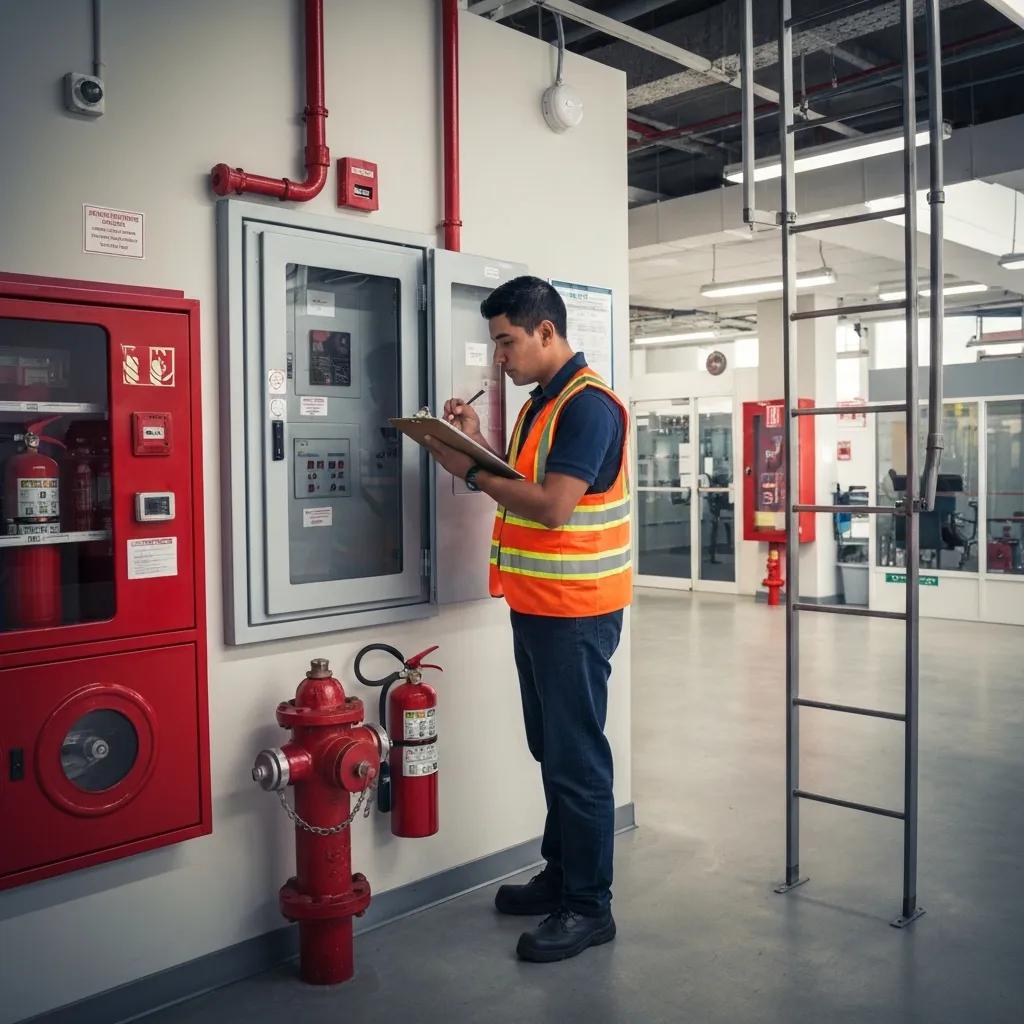
The inspection and certification process follows a standard sequence: an initial audit to define scope and note defects, targeted testing and rectification, assembly of documentation, and submission to ADCD for review and issuance of a fitness certificate. Responsibilities are split between owners (who supply records and approvals), approved contractors (who perform tests and repairs) and ADCD (which verifies results). A clear timeline and task ownership reduce approval time and lower the risk of fines or temporary closures. Below is a practical step list and a mapping table that links each stage to documents, responsible parties and typical durations to help teams plan an efficient certification drive.
- Initial audit and scope definition: review documents and perform an on‑site walkthrough to identify required tests.
- Testing and defects logging: carry out functional tests for alarms, sprinklers, pumps and emergency lighting and log all defects.
- Rectification and re‑testing: complete repairs, replace parts where needed and re‑record test results using calibrated instruments.
- Documentation assembly: compile certificates, test logs, contractor declarations and as‑built drawings for ADCD submission.
- Submission and ADCD review: lodge the package and respond to ADCD queries or follow‑up inspections until the file is closed.
These stages usually complete within 2–8 weeks depending on defect scope and contractor responsiveness; tight coordination and an approved contractor can shorten that window.
| Process Step | Required Documents | Responsible Party | Typical Timeline |
|---|---|---|---|
| Initial audit | System drawings, previous reports | Owner / Approved contractor | من يومين إلى خمسة أيام |
| Testing & logging | Test certificates, detector response logs | Approved contractor | من 3 إلى 10 أيام |
| Rectification | Repair reports, replacement part receipts | Approved contractor | 2–14 days |
| Documentation assembly | Consolidated dossier with sign‑offs | Owner / Contractor | من يوم إلى ثلاثة أيام |
| ADCD submission & review | Submission forms, site inspection records | Owner / ADCD | 7–21 days |
This mapping shows who supplies each item and where delays most commonly occur, allowing teams to assign responsibilities and plan for ADCD review cycles. When the submission satisfies all criteria, ADCD issues the Fire Safety Fitness Certificate.
Many facilities outsource inspection, testing and rectification under an Annual Maintenance Contract (AMC). A Firefighting AMC bundles periodic tests, emergency response and documentation support so maintenance cycles align with ADCD expectations and documentation is produced consistently.
What Does Annual Fire System Maintenance Include for Abu Dhabi Properties?
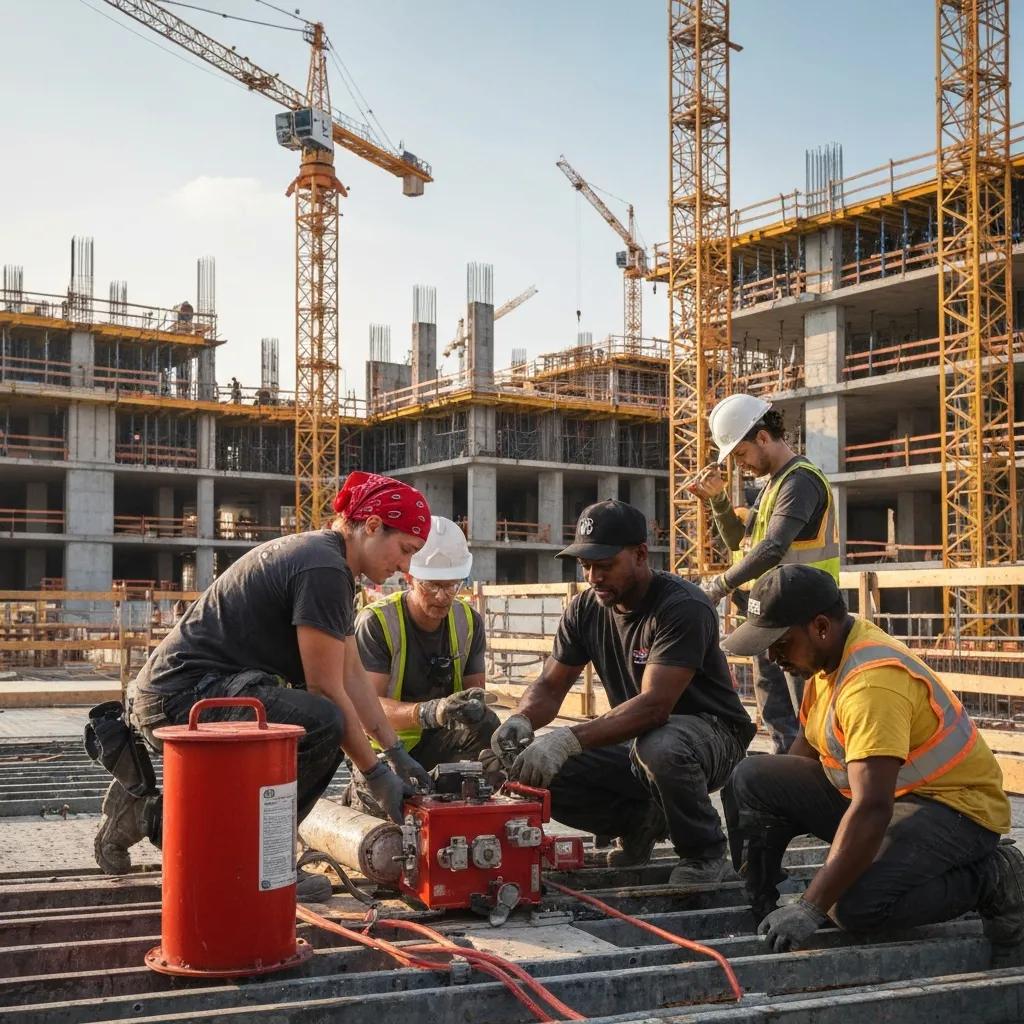
Annual maintenance covers the core fire protection systems—fire alarm systems, sprinklers, fire pumps, portable extinguishers and emergency lighting—with scheduled tests and inspections to preserve function and compliance. Routine work confirms that detectors, control panels and sprinkler components operate correctly and that pumps provide the rated flow and pressure. A structured maintenance programme reduces false alarms, improves detection and suppression reliability, and creates the records ADCD expects during fitness‑certificate renewals. The table below compares primary systems against typical maintenance checks and expected compliance outcomes to help teams prioritise.
Introductory list: common maintenance tasks included in an AMC
- Functional testing of fire alarm panels, detectors and notification devices.
- Flow and pressure testing for fire pumps and pump controllers.
- Inspection and servicing of sprinkler valves, heads and deluge systems.
The table compares systems, maintenance activities and compliance outcomes.
| نظام | Maintenance Attribute | Compliance Outcome |
|---|---|---|
| نظام إنذار الحريق | Detector sensitivity checks; panel diagnostics; battery and backup tests | Verified detection reliability and ADCD‑ready test evidence |
| نظام الرش | Visual inspections; head replacement where required; valve operation and leak checks | Confirmed water delivery and sprinkler integrity |
| Fire Pump | Performance run; pressure and flow verification; controller and starter checks | Rated pump performance validated for suppression |
| الإضاءة الطارئة | Illumination tests; battery discharge checks; signage and escape route verification | Egress illumination meets Code requirements and ADCD evidence |
| Portable Extinguishers | Pressure checks; agent and nozzle inspection; tagging and service records | Readiness of first‑attack fire suppression devices |
Regular maintenance also reduces lifecycle costs by catching wear early and enabling predictable replacement cycles. Partnering with an experienced provider turns technical checks into a managed compliance programme that supplies the test logs and contractor sign‑offs ADCD requires.
To illustrate how AMCs convert into operational benefit, Amples Fire & Safety LLC’s Annual Maintenance Contract / Firefighting AMC services deliver scheduled inspections, centralised test‑record management and rapid rectification support designed to meet ADCD documentation needs and map maintenance activities directly to compliance outcomes.
Which Fire Protection Systems Are Inspected and Maintained Annually?
Annual inspections target systems that most affect life safety and suppression performance: fire detection and alarm systems, automatic sprinkler and deluge systems, fire pump sets, emergency lighting and portable extinguishers. Typical tests include detector sensitivity verification, full panel walkthrough diagnostics, sprinkler head integrity checks, pump performance runs with measured flow and pressure, and battery discharge tests for emergency lighting. These checks confirm component condition and system interconnectivity so the whole protective function meets Code expectations. Proactive scheduling reduces ADCD findings and produces the continuous records ADCD looks for during certification.
Why Is Regular Maintenance Critical for Fire Safety and Compliance?
Regular maintenance reduces the risk of equipment failure, cuts false alarms, and extends the life of key components — delivering both safety and economic benefits. From a compliance standpoint, routine maintenance creates verifiable records and contractor sign‑offs that demonstrate ongoing conformance with the UAE Fire and Life Safety Code and ADCD requirements. Financially, planned maintenance limits emergency repair costs and downtime; operationally, it preserves occupant protection. Prioritising maintenance by risk and system criticality is the most effective way to meet regulatory obligations and avoid penalties.
What Are the Requirements and Benefits of the Hassantuk System Maintenance in Abu Dhabi?
Hassantuk is ADCD’s monitored alarm reporting platform that relays verified alarm signals to ADCD monitoring centres. It requires high uptime, approved connectivity and routine proof of system integrity. Maintenance includes testing signal paths, confirming alarm verification processes, and ensuring system components meet ADCD’s monitored‑reporting acceptance criteria. Proper Hassantuk maintenance improves coordinated emergency response, shortens verification times and reduces false dispatches. The table below outlines key Hassantuk components, maintenance checks and monitoring outcomes to guide technical planning.
| مكون حسانتوك | Maintenance Attribute | Monitoring/Compliance Outcome |
|---|---|---|
| Signal Gateway | Connectivity and latency tests; redundancy verification | Reliable real‑time reporting to ADCD |
| واجهة الإنذار | Alarm mapping validation; signal integrity checks | Correct alarm classification and verification |
| Local Control Panel | Firmware and configuration checks; battery and power redundancy tests | Continuous local and remote availability |
| Reporting Logs | Test records; verification timestamps and retention checks | Audit trail for ADCD monitoring and inspections |
Hassantuk maintenance delivers measurable benefits: verified alarm relay, fewer false verifications and documented uptime metrics that ADCD can review during compliance checks. Maintaining approved monitoring protocols and routine testing supports smoother ADCD acceptance of centralised monitoring.
To help with these obligations, Amples Fire & Safety LLC provides Hassantuk maintenance services including monitoring checks, connectivity verification and assistance with ADCD monitoring compliance, plus 24/7 response and on‑site immediate rectification to reduce downtime and keep monitored systems within ADCD acceptance criteria.
How Does the Hassantuk System Integrate with Abu Dhabi Civil Defence Monitoring?
Hassantuk integration depends on secure, authenticated signal paths that transmit verified alarm conditions and verification metadata to ADCD monitoring centres for assessment and dispatch. ADCD expects accurate alarm classification, timely verification timestamps and redundancy to avoid data loss during power or communications interruptions. Maintenance focuses on signal integrity, interface mapping and log accuracy so ADCD can rely on automated reports without repeat verification calls. Correct integration reduces verification delays and increases the chance of a fast emergency response.
What Are Amples’ Hassantuk System Maintenance Services and Advantages?
Amples Fire & Safety LLC offers Hassantuk maintenance tailored to keep connectivity and compliance with ADCD monitoring standards, with in‑house capability across multiple control panels and gateway brands. Their service includes monitoring checks, alarm mapping validation and rapid on‑site rectification for faults found during checks or live monitoring. Amples’ key advantages — 24/7 on‑site response, immediate rectification and experienced in‑house technical teams — maintain uptime and reduce administrative burden for owners preparing ADCD submissions.
What Are the Penalties and Risks of Non–Compliance with Fire Safety Regulations in Abu Dhabi?
Failing to meet ADCD requirements exposes organisations to fines, temporary closure, licence suspension and reputational harm that can interrupt operations and trigger costly remediation. ADCD enforcement typically escalates from warnings to fines and remedial orders, and repeated or serious breaches can lead to temporary closure until corrective work is finished. Beyond direct penalties, the operational cost of forced shutdowns, emergency repairs and uninsured losses after an incident often exceeds the cost of planned maintenance. Certified inspections, documented AMCs and timely rectification materially reduce enforcement risk and operational exposure.
Introductory list of typical enforcement consequences:
- Monetary fines for violations and failure to maintain required systems.
- Temporary business closure or suspension of occupancy certificates.
- Mandatory remedial works with enforced deadlines and follow‑up inspections.
Certified inspections and routine AMCs create an auditable maintenance history that ADCD values and can reduce the likelihood of escalated enforcement.
What Financial and Operational Penalties Does ADCD Impose for Non–Compliance?
ADCD commonly issues fines and can require mandatory corrective actions within fixed timeframes, escalating to temporary closure for unresolved or high‑risk findings. Penalties vary by severity and recurrence, and organisations also face indirect costs such as lost revenue during closures, higher contractor fees for emergency repairs and possible insurance consequences. Keeping records current and correcting defects promptly are the most effective measures to limit both direct fines and cascading operational impacts.
How Can Certified Fire System Inspections Prevent Compliance Issues?
Certified inspections identify defects early, create an auditable maintenance history and ensure repairs are completed by qualified technicians — all of which lower ADCD enforcement exposure. Inspections produce documented test results and contractor sign‑offs that ADCD reviews, while regular AMC cycles keep systems within Code thresholds through preventive maintenance and scheduled replacements. Matching inspection frequency to system criticality turns reactive repairs into predictable maintenance budgets and keeps continuous compliance evidence ready for ADCD audits.
How Can Businesses Choose the Right Fire System Inspection and Certification Provider in Abu Dhabi?
Choosing the right provider comes down to ADCD approval experience, cross‑brand technical capability, fast response and the ability to deliver ADCD‑ready documentation. Providers should be competent across fire alarm inspection, sprinkler testing, fire pump checks and Hassantuk maintenance so a single partner can manage all required elements. Evaluate response times, on‑site rectification capacity and case studies to select a partner that minimises downtime. The short checklist below helps structure procurement conversations.
- Confirm ADCD approval experience and a track record with fitness‑certificate submissions.
- Verify technical competence across the brands and system types in your facility.
- Assess guaranteed response times, emergency rectification options and documentation practices.
Providers that offer integrated AMCs including routine tests, emergency response and documentation support reduce administrative overhead and increase the chance of timely ADCD approvals.
To support procurement decisions, Amples Fire & Safety LLC highlights practical differentiators: 24/7 on‑site response, immediate on‑site rectification, experienced in‑house technical teams across brands, cost‑effective pricing and deep experience with Civil Defence (ADCD) approvals and AMC authorisations. These attributes help owners prioritise continuity, local ADCD knowledge and rapid remediation; to request a quote or inspection, contact Amples Fire & Safety LLC at +971 58 830 6283 or by email at wecare@amples.co for service enquiries.
What Unique Advantages Does Amples Fire & Safety LLC Offer for ADCD Compliance?
Amples’ differentiators focus on operational readiness and administrative support: a 24/7 on‑site response capability combined with immediate rectification reduces downtime after a defect is found. Their experienced in‑house teams service a wide range of brands without lengthy subcontracting, and their practical knowledge of Civil Defence approvals helps clients prepare documentation for fitness‑certificate applications. Together, these strengths shorten remediation timelines and raise the likelihood of first‑time ADCD acceptance.
How Do Client Testimonials and Case Studies Demonstrate Successful Fire Safety Certification?
Good testimonials and case studies show the initial challenge, the actions taken and the measurable outcome — for example ADCD approval, fitness certificate issuance or avoided downtime — and include timelines to build credibility. A concise case study that sets out the compliance gap, the maintenance or rectification programme executed, the documentation produced and the ADCD result helps prospective clients assess a provider’s capability. Even anonymised examples that show faster rectification times or successful Hassantuk integration reinforce confidence in a provider’s delivery.
الأسئلة الشائعة
What are the consequences of failing to comply with fire safety regulations in Abu Dhabi?
Non‑compliance can lead to serious consequences: fines, temporary business closure and possible suspension of occupancy licences. ADCD escalates enforcement from warnings to fines and mandatory remedial orders, and serious violations may result in a complete shutdown until corrective work is finished. The operational cost of emergency repairs and lost revenue during closures can quickly exceed the cost of regular maintenance, so staying compliant protects business continuity.
How often should fire safety inspections be conducted in Abu Dhabi?
ADCD requires annual fire safety inspections as a baseline. Additional inspections may be needed after major renovations, incidents or when new systems are installed. Regular inspections identify hazards, ensure conformity with the UAE Fire and Life Safety Code, and maintain the integrity of fire protection systems. Building managers should schedule inspections proactively to avoid delays in issuing or renewing the Fire Safety Fitness Certificate.
What documentation is required for fire system certification in Abu Dhabi?
Key documents for certification include test certificates, system drawings, maintenance logs and contractor statements confirming systems meet performance standards. Records of prior inspections and details of corrective actions taken should also be compiled. This documentation is essential for ADCD’s review and must accompany the application for the Fire Safety Fitness Certificate to demonstrate compliance.
What role does the Hassantuk system play in fire safety compliance?
Hassantuk is ADCD’s monitored reporting platform that relays verified alarm signals to ADCD monitoring centres. It requires regular maintenance to ensure reliable signal paths and correct alarm verification procedures. Proper Hassantuk upkeep improves emergency response times and helps systems meet ADCD’s monitoring criteria, supporting overall fire safety compliance in buildings.
How can businesses ensure continuous compliance with fire safety regulations?
Maintain a structured programme of inspections, testing and documentation for fire protection systems. Partnering with a certified provider under an Annual Maintenance Contract (AMC) simplifies the process by bundling periodic tests, emergency response and documentation support. Staying current with regulatory updates and addressing issues promptly will help avoid penalties from ADCD.
What should building managers consider when selecting a fire safety inspection provider?
When choosing a provider, consider their ADCD experience, technical expertise across systems, and ability to produce compliant documentation. Check response times for emergencies and their success rate in securing fitness certificates. An integrated provider offering routine inspections, maintenance and documentation support will reduce administrative burden and improve compliance resilience.
خاتمة
Securing fire system inspection certification in Abu Dhabi is essential for ADCD compliance and for protecting people and property. By understanding the certification process, running a disciplined maintenance programme and partnering with experienced providers, building managers can reduce risk, avoid penalties and streamline fitness‑certificate issuance. If you’re ready to simplify compliance and strengthen your fire safety programme, explore our full range of services and get in touch to discuss your next inspection or AMC.