
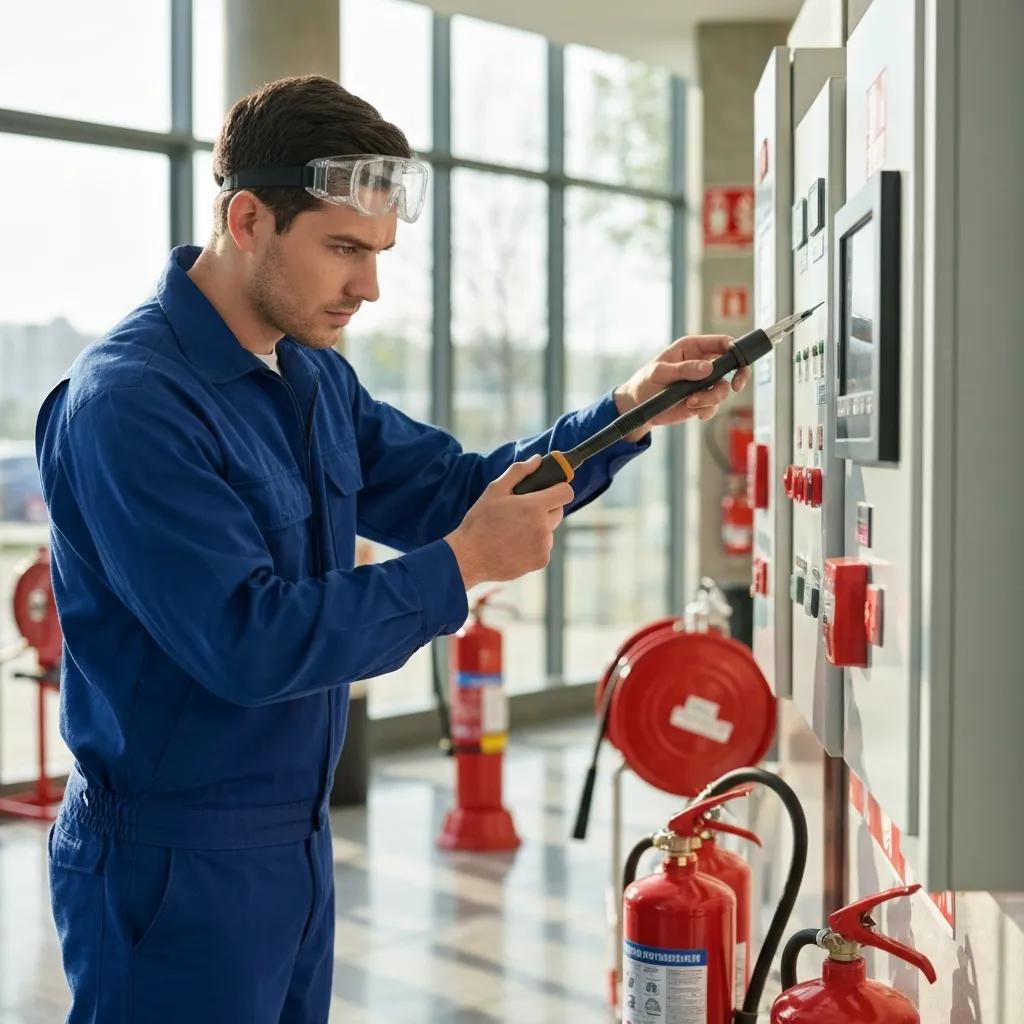
Fire system inspection services in Abu Dhabi — a practical guide to inspections, compliance and readiness
Fire system inspection services in Abu Dhabi are scheduled checks, tests and maintenance tasks that keep fire detection, suppression and evacuation systems reliable and aligned with Abu Dhabi Civil Defence (ADCD) requirements. This guide explains what inspections cover, why they matter for safety and business continuity, how Annual Maintenance Contracts (AMCs) are commonly organised, and the practical steps to obtain ADCD approvals and a fitness certificate. When systems are overlooked, organisations face operational disruption, fines and downtime; routine inspections reduce those risks by finding faults early, recording tests and applying corrective maintenance. Read on for clear guidance on core services (alarms, sprinklers, extinguishers, emergency lighting, pumps, fire doors), a typical AMC scope, the ADCD approval workflow, and checklists to get audit-ready.
Why fire safety inspections matter for Abu Dhabi businesses
Inspections confirm that a building’s life‑safety systems are ready to perform and meet regulatory standards — lowering the chance of loss, downtime and penalties. They verify that detection and suppression respond promptly, that power and backups function correctly, and that emergency lighting and signage work during an outage — all essential to protect people and assets. In Abu Dhabi, inspection records are the evidence you need to show compliance with the UAE Fire and Life Safety Code and ADCD requirements, reducing the risk of fines or temporary closure. Regular inspections also create a predictable maintenance cycle, helping asset teams plan repairs, budget for replacements and keep insurance and regulatory standing up to date. The main operational reasons to prioritise inspections are below.
- Ensure life‑safety systems work when they’re needed most.
- Keep ADCD compliance organised with clear records.
- Replace reactive fixes with planned maintenance to minimise disruption.
- Catch faults early to lower long‑term repair and replacement costs.
These operational drivers map to concrete protective actions and regulatory duties — we cover those next.
How inspections safeguard people and property in Abu Dhabi
Inspections make sure early‑warning detectors, suppression equipment and evacuation systems operate together when required. Technicians test sensors, control panels, water supplies and emergency power to prevent incidents from escalating. Routine checks — alarm circuit verification, detector sensitivity tests and manual call‑point activations — confirm detection integrity; sprinkler head inspections and flow tests verify suppression performance. Inspections also check that emergency lighting and exit signage run on backup power so occupants can evacuate safely during outages. By spotting weak batteries, corroded pipes, blocked valves or worn seals early, inspections enable targeted repairs that avoid larger failures and reduce repair costs. This preventative approach protects people and keeps operations running in busy facilities.
What ADCD fire safety regulations require

Abu Dhabi Civil Defence enforces standards based on the UAE Fire and Life Safety Code and recognised international practice, often referencing NFPA guidance for technical testing and maintenance. Key obligations include keeping detection and suppression systems fully operational, keeping clear inspection and maintenance records, and ensuring fire safety measures match the building’s occupancy. Non‑compliance can lead to fines, required remedial work or temporary closure until issues are resolved. For building managers, inspections are both a safety priority and a compliance task — well‑organised logs of tests, corrective actions and certificates are essential evidence during ADCD audits. Understanding these regulatory touchpoints helps organisations focus on high‑impact inspection tasks and plan remedial work ahead of audits.
What an Annual Fire System Maintenance Contract includes in Abu Dhabi
An Annual Maintenance Contract (AMC) for fire systems is a formal agreement that schedules regular inspections, functional tests, corrective repairs and reporting to keep systems reliable and compliant. AMCs normally include monthly or quarterly visual checks, periodic functional tests, battery and pressure verification, corrective maintenance and consolidated compliance reports suitable for ADCD submissions. A well‑designed AMC reduces unplanned downtime, creates an auditable maintenance history and gives owners predictable budgeting. The table below maps common services to the checks performed and the reports clients should expect from an AMC.
AMCs typically cover several system types and deliverables such as service reports, defect lists and maintenance certificates.
| Service | Typical Checks | Typical Deliverable / Frequency |
|---|---|---|
| Fire Alarm System Maintenance | Panel diagnostics; detector and call‑point functional tests; battery and cabling checks | Functional test report; quarterly or annual service log |
| Sprinkler & Suppression Maintenance | Sprinkler head inspection; valve operation checks; pressure/gauge readings; flow/trip tests | Valve and flow test certificates; annual inspection report |
| Fire Extinguisher Servicing | Visual checks; pressure verification; recharge after use; tagging | Service tags; annual recharge/service record |
| Emergency Lighting Testing | Battery runtime tests; fixture inspection; charging circuit checks | Runtime test sheet; annual compliance report |
| Fire Pump Testing | Auto‑start tests; flow and pressure verification; motor and controller inspections | Pump test certificate; maintenance log |
This table summarises the preventive tasks and documentation AMCs provide. Below we list the systems commonly included and how providers maintain responsiveness.
Which fire protection systems are covered by AMCs?
AMCs commonly cover fire alarm systems, sprinkler and suppression systems, portable extinguishers, emergency lighting and exit signage, fire pumps and fire doors — each with specific inspection protocols to confirm operational readiness. For example: alarm systems need panel diagnostics, detector sensitivity checks and battery verification; sprinkler systems require head inspections, riser and valve checks and flow testing; extinguishers need pressure and cylinder integrity checks; emergency lighting requires runtime discharge testing; and pumps undergo auto‑start and flow verification. Clients should expect monthly visual checks, quarterly functional tests and annual comprehensive inspections, with corrective maintenance scheduled as required. This mix ensures daily readiness and an auditable trail for regulatory reviews.
How Amples Fire & Safety LLC delivers 24/7 support and expert maintenance
Amples Fire & Safety LLC provides annual maintenance and inspection services across Abu Dhabi and Al Ain. We offer Fire System AMCs and inspection services that include fire alarm testing, sprinkler inspections, extinguisher servicing, emergency lighting tests, fire pump checks and fire door inspections. What sets Amples apart is our 24/7 response and on‑site rectification, experienced technicians with proven technical skills, competitive pricing, and hands‑on help with ADCD approvals and fitness certificates. Our service model is designed for owners who need continuous readiness and clear documentation — fast repairs and ADCD paperwork support included.
How to obtain Abu Dhabi Civil Defence approvals and a fitness certificate
Getting ADCD approval and a fitness certificate is a document‑driven process that starts with preparation, moves through formal inspection and rectification, and finishes with submission of compliance evidence. Prepare as‑built drawings, previous inspection reports and maintenance logs, and make sure systems pass their functional tests. Professional maintenance providers can supply consolidated test reports and corrective action records ADCD expects. The checklist below outlines practical steps building managers should follow to navigate approvals.
- Gather system documentation and your maintenance history for review.
- Complete a pre‑inspection self‑audit and fix high‑priority defects.
- Book the ADCD inspection and provide full access for testing.
- Address any ADCD observations with corrective maintenance and re‑tests.
- Submit final compliance reports and request the fitness certificate.
This stepwise approach clarifies responsibilities and builds the records ADCD uses to assess fitness. Below is a concise checklist for quick reference.
Step‑by‑step ADCD fire system approval process
The ADCD approval path begins with documentation and system readiness checks, continues through formal inspection and rectification, and ends with submitting compliance evidence for certification. First, compile maintenance records, as‑built drawings and past test reports, then perform a thorough self‑check to identify and fix obvious issues. During the ADCD inspection, allow full functional testing of alarms, sprinklers, emergency lighting and pumps and record any observations. Next, complete rectifications, produce updated test reports and assemble a submission package. Finally, submit the corrected documentation to ADCD and request the fitness certificate — keep copies of all reports for audit readiness. Following this sequence makes approvals more predictable for facility teams.
Which types of inspections does ADCD require?
ADCD commonly expects several inspection categories: annual full‑system inspections to confirm ongoing compliance, pre‑occupancy inspections before initial fitness to occupy is granted, and interim or complaint‑driven audits when issues arise. Annual inspections check that scheduled maintenance has been completed and systems meet code requirements; pre‑occupancy inspections focus on installation integrity and commissioning; interim inspections follow major refurbishments, equipment replacement or reported failures. Knowing the inspection type helps property managers present the right reports and records during ADCD reviews.
After these formal steps, many owners use professional maintenance partners to streamline documentation and rectification; Amples Fire & Safety LLC supports clients through ADCD approvals and fitness certificate submissions to simplify the process.
Key fire system inspection services offered in Abu Dhabi
Inspection services in Abu Dhabi cover planned testing and verification of fire alarm systems, sprinkler and suppression systems, portable extinguishers, emergency lighting and exit signage, fire pumps and fire doors. Each service inspects specific components — for example, alarm inspections test control panels, detectors and zone integrity; sprinkler inspections examine heads, valves and risers; extinguisher servicing checks pressure and labels; emergency lighting measures battery runtime; and pump testing verifies auto‑start, flow and pressure. These inspections tie directly to regulatory outcomes such as fitness certificate readiness and operational reliability. The table below links each system to its primary checkpoints and the expected regulatory or operational outcome.
The following table shows how inspection tasks map to compliance and operational outcomes.
| نظام | Key Inspection Points | Regulatory / Operational Outcome |
|---|---|---|
| نظام إنذار الحريق | Panel diagnostics; detector and call‑point tests; backup battery checks | Confirmed detection readiness; audit‑ready reports |
| الرشاشات / القمع | Sprinkler head condition; valve operation; pressure and flow tests | Verified suppression capacity; flow test certificates |
| طفايات الحريق | Visual checks; pressure and hose/nozzle condition; tagging | Servicing records; immediate operational readiness |
| الإضاءة الطارئة | Battery runtime; fixture tests; charging circuit checks | Assured egress lighting; runtime test logs |
| Fire Pumps | Auto‑start tests; flow and pressure checks; motor performance | Confirmed water delivery; pump test certificates |
How fire alarm inspection and testing is carried out
Fire alarm inspection combines automated diagnostics with hands‑on functional checks to confirm coverage, notification and control responses. Technicians begin with control panel diagnostics and event log reviews, then verify each detector and manual call‑point by simulating activations while monitoring zone responses and supervisory signals. Battery backup and power failover are tested by simulating mains loss and measuring backup runtime. Finally, a full system functional test confirms alarms, strobes and interface devices operate together, and a service report records passes and defects. These records support compliance and speed up remediation of any zone issues.
When alarm inspection is included in an AMC, providers supply detailed test sheets and recommended corrective actions so gaps are closed before ADCD audits.
What sprinkler and suppression maintenance involves
Sprinkler and suppression maintenance inspects physical components — sprinkler heads, risers, valves and gauges — and runs flow/trip tests to verify hydraulic performance. Technicians visually check heads for corrosion or obstruction, confirm valve positions and tamper switch status, and read pressure gauges to ensure readiness. For wet systems, flow and trip tests simulate activation to confirm water availability and valve operation; for dry systems or special‑agent installations, checks focus on agent levels and actuator function. Routine corrosion checks and pipework inspections prevent leaks and pressure loss, and all findings are recorded in the maintenance report for regulatory review and lifecycle planning.
How fire extinguishers are serviced and recharged
Portable extinguisher servicing includes monthly visual inspections, annual functional servicing, pressure verification and recharging or replacement after use, together with tagging to record service history. Visual checks confirm seals, pins and labels and look for corrosion; gauges are checked to ensure pressure is in range. Annual servicing may include discharge tests, internal inspection and recharging depending on extinguisher type and local standards. Hydrostatic testing is scheduled by cylinder type and age as required, and service tags and records are kept to meet audit requirements. Proper extinguisher maintenance ensures immediate readiness and a verifiable compliance trail.
Extinguisher servicing is commonly included in AMCs so facilities keep a complete history of portable suppression readiness.
What emergency lighting and fire pump testing includes
Emergency lighting testing verifies battery charging, lamp operation and runtime so escape routes remain illuminated during power loss, while fire pump testing confirms auto‑start capability, flow rates and delivery pressure under load. Emergency lighting checks begin with charging circuit verification and simulated mains failure to measure battery runtime and fixture illumination across escape routes. Fire pump tests exercise auto‑start using simulated panel signals, measure flow and pressure against design targets, and inspect the pump motor and controller for faults. Both activities produce test certificates and runtime logs used in ADCD reviews and maintenance planning.
Regular testing of lighting and pumps is essential for safe evacuation and reliable water delivery during incidents.
Benefits of regular fire system inspections and maintenance
Regular inspections and maintenance increase system reliability, extend equipment life, reduce the chance of major failures and keep you audit‑ready — together these benefits lower organisational risk and operating costs. Preventive checks catch component wear (like ageing batteries or corroded pipes) before they trigger emergency repairs, while scheduled replacement of consumables preserves system performance. Inspections also create documentation that reduces regulatory and insurance risk by demonstrating a proactive maintenance programme. For continuity‑focused organisations, the outcome is fewer false alarms, reduced downtime and clearer capital replacement planning.
| فائدة | الآلية | Business Impact |
|---|---|---|
| Increased Reliability | Early fault detection and scheduled repairs | Fewer failures during incidents; safer operations |
| Extended Equipment Life | Preventive replacement of consumables | Lower capital expenditure over time |
| Reduced Regulatory Risk | Documented inspections and corrective actions | Avoids fines and operational interruptions |
| Cost Predictability | AMC scheduling and budgeting | Improved financial planning and lower emergency costs |
How regular inspections maximise reliability and lifespan
Regular inspections reveal early signs of degradation — battery wear, seal failures, corrosion — and allow targeted interventions before a major failure. Replacing consumables on schedule preserves design performance, and routine calibration keeps detectors and control systems within tolerance. Documented repair histories reveal lifecycle trends that inform replacement timing, preventing premature failures and extending useful life. Combining condition‑based maintenance with scheduled checks keeps systems ready while avoiding costly reactive repairs.
Cost savings and risk reductions organisations gain
Inspections and AMCs turn unpredictable emergency repairs into planned maintenance, lowering premiums on urgent parts and labour. Risk reductions include fewer false alarms (and the disruption and penalties that follow) and stronger documentation to support insurance claims and reduce liability. Predictable replacement cycles also extend asset life and improve budgeting accuracy. Together, these effects build measurable business resilience and make maintenance a practical operational investment.
- Lower emergency repair costs through preventive maintenance.
- Reduced risk of fines and operational interruptions thanks to documented compliance.
- Potential insurance advantages from a demonstrable maintenance programme.
الأسئلة الشائعة
What happens if a business fails to comply with ADCD regulations?
Non‑compliance with Abu Dhabi Civil Defence (ADCD) rules can result in fines, mandatory remedial work or temporary closure until issues are fixed. Beyond penalties, non‑compliance raises legal exposure and can increase insurance premiums. Regular inspections and proper maintenance are the best way to avoid these problems and keep systems both safe and compliant.
How should a business prepare for a fire safety inspection?
Run a thorough self‑audit: check alarms, extinguishers and emergency lighting, and gather organised documentation of previous inspections, maintenance logs and corrective actions. Working with a qualified maintenance provider helps ensure repairs are completed and reports consolidated before the ADCD inspection.
What does a fire safety officer do in a business?
A fire safety officer ensures the organisation meets fire safety obligations and maintains a safe environment. They carry out regular inspections, coordinate fire drills, ensure equipment is serviced and operational, and lead training. They also act as the internal contact for safety matters and help embed a culture of practical safety across the organisation.
What should employee fire safety training cover?
Training should cover likely workplace fire hazards, the correct use of extinguishers, evacuation procedures and how to raise an alarm. Practical elements — activating alarms, locating exits and assembly points, and participating in drills — reinforce readiness. Regular refreshers keep everyone confident and prepared.
How often should fire safety equipment be inspected?
Follow a consistent schedule: extinguishers typically need monthly visual checks and annual servicing, while fire alarms and emergency lighting should be tested at least annually. Sprinkler systems may require more frequent checks depending on system type and occupancy risk. Regular inspections help spot problems early so equipment is ready when needed.
لماذا تستعين بخدمة احترافية في مجال السلامة من الحرائق؟
Professional services bring technical expertise and experience to maintain compliance with local regulations. Technicians perform detailed inspections, carry out repairs and supply the documentation ADCD expects. Outsourcing fire safety lets businesses focus on core operations while ensuring systems are managed correctly, reducing risk and improving overall safety.
What annual fire safety inspections include
Annual inspections usually include full functional tests of fire alarm panels, detectors and manual call‑points; sprinkler and suppression flow and valve checks; fire pump performance tests; emergency lighting runtime verification; and portable extinguisher servicing and tagging. The annual package delivers a compliance report summarising pass/fail items, recommended corrective works and a follow‑up schedule. These deliverables form the core evidence used in ADCD fitness assessments.
How often should annual maintenance be performed?
A full annual maintenance visit should occur at least once a year, supported by monthly or quarterly visual checks and functional tests as required by system type and occupancy risk. High‑risk or critical facilities may need more frequent functional testing and preventive replacements. Additional inspections are advisable after major building works, system upgrades or any event that could affect performance. Aligning cadence with manufacturer guidance and ADCD requirements keeps systems consistently ready.
How can businesses ensure ADCD compliance?
Ensure compliance by appointing responsible staff, keeping detailed inspection and maintenance logs, arranging an AMC with qualified technicians, and maintaining up‑to‑date documentation for ADCD review. Practical steps include pre‑inspection self‑audits, promptly fixing defects found during testing and retaining service reports and certificates. Engaging experienced providers ensures technical work is done correctly and submissions to ADCD meet evidentiary expectations. For hands‑on support, Amples Fire & Safety LLC assists clients with ADCD approvals and fitness certificates to streamline submissions and rectifications.
- Record Keeping: Keep organised maintenance and inspection logs.
- Qualified Providers: Use certified technicians for tests and repairs.
- Pre‑inspection Checks: Run internal audits and fix major defects before ADCD visits.
Final notes on partnering and next steps
Working with a maintenance partner that handles technical testing, rapid rectification and ADCD support reduces the administrative burden on building teams while improving readiness. Amples Fire & Safety LLC offers AMCs, 24/7 response and immediate on‑site rectification, experienced technicians, competitive pricing and assistance with ADCD approvals and fitness certificates — a practical choice for organisations that need continuous compliance and reliable systems.
خاتمة
Regular fire system inspections in Abu Dhabi are essential to maintain compliance, protect people and safeguard property. Prioritising inspections reduces operational risk and the chance of costly fines while keeping systems reliable. Partnering with a professional provider like Amples Fire & Safety LLC streamlines inspections and helps ensure alignment with Abu Dhabi Civil Defence requirements. Take a proactive step now to protect your business and explore our complete fire safety solutions.