

Fire Safety Maintenance Checklist for Abu Dhabi: Practical Annual Inspections and ADCD Compliance
Effective fire safety maintenance in Abu Dhabi relies on scheduled inspections, proven functionality and complete documentation for life‑safety systems in both commercial and residential buildings. This guide explains a practical maintenance programme, shows how to run annual checks for alarms, extinguishers, sprinklers, pumps and emergency lighting, and maps those tasks to ADCD requirements and Hassantuk monitoring. Building owners and facilities teams will find step‑by‑step checklists, quick‑reference EAV tables and the records needed to secure or renew an ADCD fire safety fitness certificate. We also highlight common failure modes, immediate rectification priorities and the operational benefits of a professional Annual Maintenance Contract (AMC). Read on for focused sections on definitions and regulation, a fire alarm how‑to, firefighting equipment checks, emergency lighting and exit‑route protocols, ADCD compliance steps and the value of qualified maintenance partners.
What Is Fire Safety System Maintenance and Why Is It Essential in Abu Dhabi?
Fire safety maintenance is the planned programme of inspection, testing, servicing and record‑keeping that keeps life‑safety equipment reliable when it matters most. Effective maintenance combines preventive checks (visual and functional), corrective repairs or parts replacement, and clear documentation that proves operational readiness. Routine servicing lowers fire risk, limits property damage, supports insurance requirements and preserves business continuity by keeping detection, suppression and egress systems available. In Abu Dhabi this is more than best practice: the Abu Dhabi Civil Defence (ADCD) ties fitness certificates and enforcement to approved maintenance programmes, documented tests and timely rectifications. In short, routine maintenance is both a safety imperative and a regulatory requirement.
What Does Annual Fire Safety Maintenance Include?
Annual maintenance covers a core set of systems and repeatable tasks that preserve fire readiness across a building. Typical systems include fire alarm panels, portable extinguishers, sprinkler and deluge networks, fire pumps and hydrants, emergency lighting and exit signage, plus any integrated monitoring such as Hassantuk. Common tasks are visual inspections, functional tests, detector sensitivity checks, battery and backup power verification, flow and pressure checks for suppression systems, and recharging or replacing extinguishers when needed. Each inspection produces records that form a clear maintenance history — essential for ADCD audits and fitness certificate applications. Knowing the annual scope helps facility managers budget, schedule and act before small faults become major problems.
Why Is Compliance with Abu Dhabi Civil Defence Regulations Crucial?
ADCD compliance matters because it affects a facility’s legal standing and occupancy permissions. ADCD requires documented evidence of approved maintenance contracts and satisfactory inspection results to issue or renew fitness certificates; failing to present these records can lead to fines, restricted operations or temporary closure until defects are fixed. Beyond enforcement, compliance protects occupants, limits liability after an incident and aligns your maintenance with recognised standards such as NFPA where applicable. Keeping detailed logs and responding quickly to findings reduces the chance of repeat violations and makes the renewal process smoother during ADCD inspections.
How to Conduct a Fire Alarm System Maintenance Checklist in Abu Dhabi?
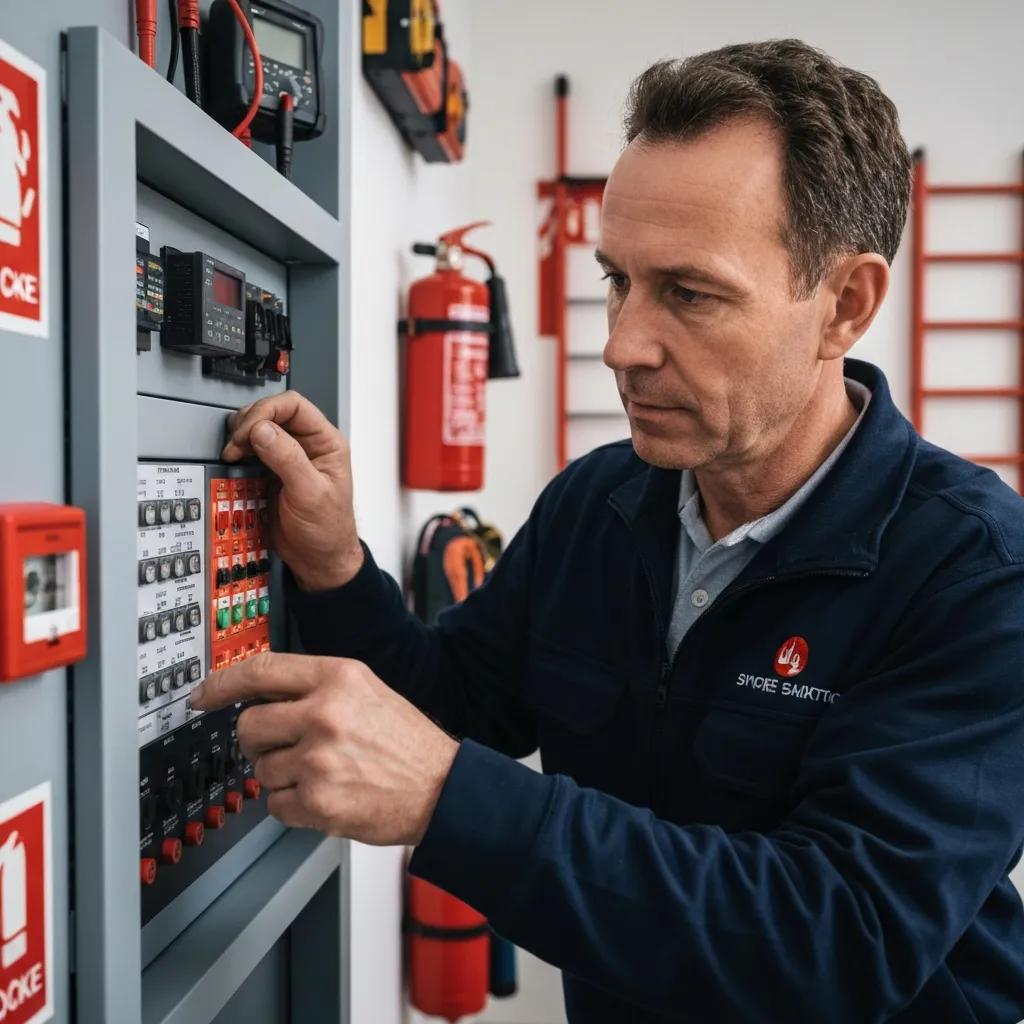
A structured fire alarm maintenance checklist begins with clear definitions, then moves through inspection, functional testing, communication checks and documentation to confirm end‑to‑end operability. The goal is to verify every component — detectors, manual call points, sounders, control panels and backup power — visually and with tests that simulate alarm conditions. Done properly, this ensures reliable alarm transmission, timely occupant alerting and confirmed reporting to monitoring systems such as Hassantuk where applicable. The process reduces false alarms, uncovers hidden failures and generates the test logs ADCD expects during inspections.
What Are the Key Inspection Steps for Fire Alarm Systems?
Key steps pair visual checks with scheduled functional tests to confirm readiness. Technicians should inspect detector housings for contamination, check wiring and terminal tightness at control panels, test manual call points for correct operation, activate sounders and strobes to verify audibility and visibility, and simulate detector activation to validate panel response. Backup power must be load‑tested so batteries and chargers meet autonomy requirements, and communication links to central monitoring or Hassantuk should be verified for signal integrity. Typical faults include corroded connections, weak batteries, dirty detectors and misconfigured panel zones — addressing these quickly usually restores reliable detection and reporting.
Note: the EAV‑style table below lists common alarm components, the inspection attribute to check, and recommended actions/frequencies for Abu Dhabi maintenance programmes.
| عنصر | Inspection Attribute | Action / Frequency |
|---|---|---|
| أجهزة كشف الدخان | Sensitivity & contamination | Clean and test sensitivity; functional test quarterly, full clean annually |
| Manual call points | Mechanical operation & indicator | Operate and reset; functional test quarterly |
| لوحة التحكم | Event log, wiring, firmware | Review logs, tighten terminals, verify firmware; inspect monthly, service annually |
| Sounders & strobes | Output level & visibility | Check decibel output and visual range; test quarterly |
| Backup batteries | Voltage, load capacity | Perform discharge test; replace per manufacturer guidance or every 2–3 years |
Using this table helps teams prioritise recurring work and keep the documentation ADCD requires. At the end of each check, technicians should log component IDs, test dates, pass/fail status and any corrective actions taken.
Those logs form the basis of ADCD inspections and support Hassantuk reporting for monitored sites. For organisations that prefer professional support, Amples Fire & Safety LLC provides Fire & Safety System الصيانة السنوية (Firefighting AMC). Our service uses experienced in‑house technicians, offers 24/7 on‑site response and provides immediate rectification when faults are found. The AMC also helps clients with ADCD approvals and fitness certificate submissions while keeping pricing competitive.
What Are the Requirements for Firefighting Equipment Inspection and Maintenance in Abu Dhabi?
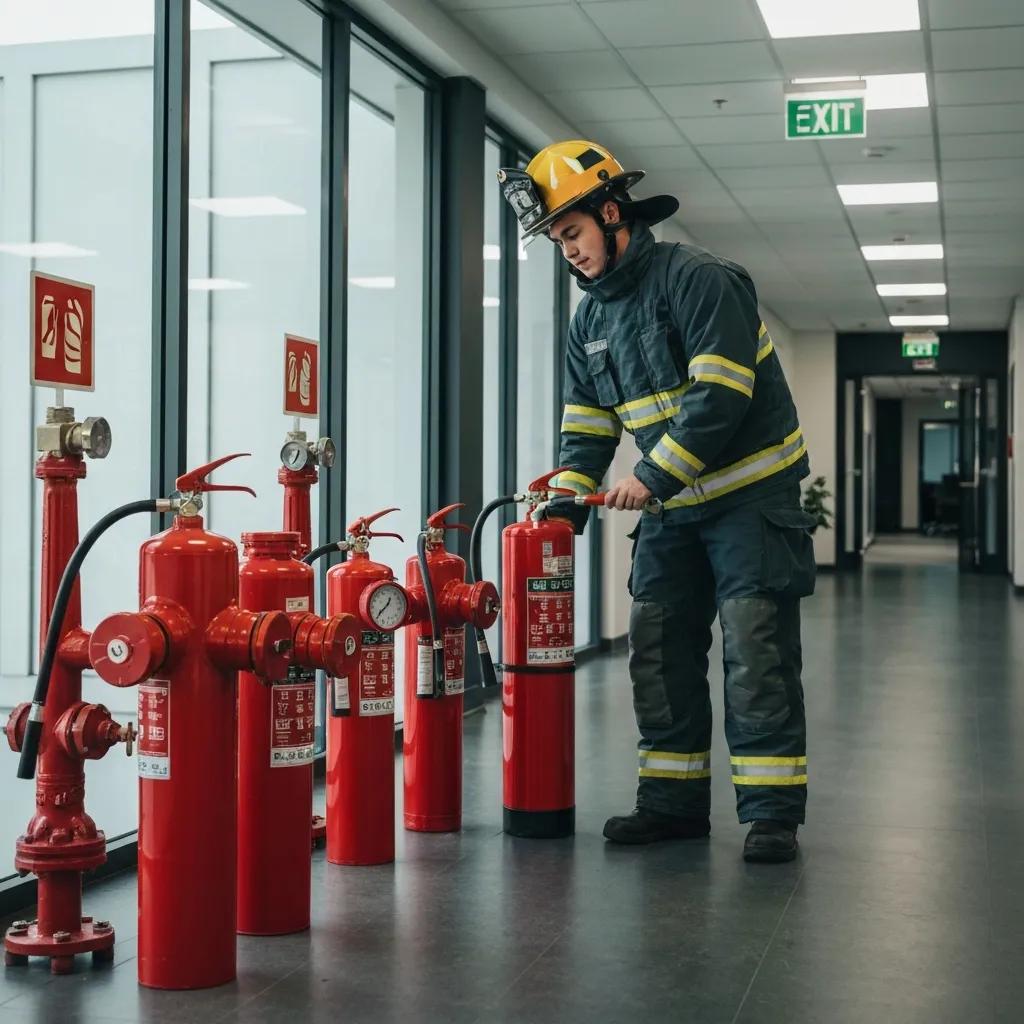
Maintaining firefighting equipment ensures both portable and fixed suppression assets are serviceable, correctly tagged and fully documented to meet ADCD expectations. Compliance depends on routine visual checks, pressure and flow testing, recharges or replacements as required, and accurate tagging and record‑keeping to show lifecycle status. ADCD inspects condition, accessibility and maintenance history; regular servicing reduces the risk of non‑compliance and ensures suppression systems will operate during an incident. The lists and table below outline typical checks and recommended service intervals used by AMCs in Abu Dhabi.
Routine checks should cover accessibility, visible damage, signage and service tags or serial numbers. Use this short task list to guide field crews during AMC visits.
- Visual check of extinguisher body, tamper seal and pressure gauge.
- Hydrant, hose reel and nozzle inspection for leaks, obstructions and mechanical function.
- Fire pump and valve checks for pressure stability, alarm switch operation and lubrication.
Summary: these routine actions confirm readiness and create a verifiable maintenance history for ADCD audits, reducing operational risk and the chance of enforcement actions.
Below is a table mapping common firefighting equipment to ADCD inspection points and a typical AMC service cadence.
| Equipment Type | ADCD Requirement | Recommended Service Frequency |
|---|---|---|
| Portable extinguishers | Visible tag, pressure gauge, tamper seal | Monthly visual; annual full service; hydrostatic testing per manufacturer |
| Fire pumps & controllers | Pressure, run test, alarm operation | Monthly operation test; annual performance test |
| Hydrants & hose reels | Flow, nozzle condition, accessibility | Quarterly visual; annual flow test |
| Sprinkler alarm valves | Valve position, waterflow switch | Monthly visual; annual inspection and functional test |
This mapping helps maintenance teams plan AMC workflows and meet ADCD criteria consistently. Keeping tags and records current speeds verification during inspections.
How to Inspect and Service Fire Extinguishers According to ADCD Standards?
Inspecting portable extinguishers follows a focused checklist covering condition, content and certification. Perform monthly visual checks for dents, corrosion, tamper seals and gauge readings, and record the date and inspector’s initials. Annual servicing may include discharge tests where applicable, replacing expired extinguishing agents, pressure or hydrostatic testing per manufacturer intervals, and re‑tagging with service details. Extinguishers that are discharged, badly corroded or that fail pressure tests must be removed from service and replaced. Proper extinguisher maintenance directly supports occupant safety and ADCD audit readiness.
What Are the Maintenance Guidelines for Fire Sprinkler Systems?
Sprinkler maintenance focuses on valve condition, pipe integrity and the reliability of waterflow and alarm devices — the components that deliver suppression when needed. Inspect control valves for correct position and tamper indicators, test waterflow switches and alarm interfaces, and run pressure tests to detect leaks or blockages. Schedule pipe flushing or corrosion inspections to prevent obstructions and keep a record of valve checks and corrective actions. Leaking fittings or stuck valves typically require immediate rectification to restore system reliability and avoid ADCD non‑conformance.
How to Ensure Emergency Lighting and Exit Route Systems Meet Abu Dhabi Fire Safety Regulations?
Emergency lighting and exit route checks ensure safe occupant egress during power loss or smoke by testing illuminance, battery backup and route clearance. The process includes duration and illuminance tests for luminaires, verifying batteries meet runtime requirements, and auditing exit paths for clear signage and physical obstructions. Proper maintenance shows ADCD that egress will remain safe during emergencies and that you have records to prove periodic testing. The checklist and table below set out the tests and pass criteria commonly used in maintenance programmes.
What Is Included in an Emergency Lighting System Inspection Checklist?
An emergency lighting inspection combines short functional activation, extended duration testing and illuminance measurements to confirm compliance with minimum exit lighting levels. Perform a short simulated mains‑failure test monthly and a full runtime (duration) test annually to confirm battery health and system endurance. Inspect battery terminals and chargers, replace batteries that fail to hold the required runtime, and measure illuminance at key points along escape routes to ensure signage and paths meet thresholds. Record all results with dates and luminaire IDs so ADCD inspectors can quickly verify compliance.
Before the table below, here is a focused compliance table outlining test types and pass criteria for emergency lighting and exit routes.
| عنصر | Test Type | Pass Criteria / Compliance Note |
|---|---|---|
| Emergency luminaires | Functional and duration test | Lights operate on mains fail; full runtime meets specification |
| Battery backup | Discharge & charge test | Battery holds required runtime (e.g., 90 minutes) and recharges correctly |
| Exit signage | Visibility & illuminance test | Signs readable from the required distance; illuminance above threshold |
| Exit routes | Obstruction and door function | Routes clear, doors open toward egress and operate correctly under fire conditions |
This table helps teams match tests to compliance outcomes and prioritise corrective work when pass criteria aren’t met. Regular testing keeps evacuation systems dependable and verifiable to ADCD.
How to Verify Compliance of Emergency Exit Routes with ADCD Requirements?
Verifying exit route compliance requires a systematic audit of clearance, signage, door hardware and emergency access points, with photographic and written evidence for each item. Walk every route to ensure no storage or obstructions reduce clear width, check that illuminated signage remains visible under smoke or low light, and test emergency doors for correct swing direction, panic hardware and unobstructed operation. Produce a route inspection report with photos, measurements and required corrective actions so ADCD auditors can clearly see remedial work and the maintenance record. Keeping these records and acting quickly on issues reduces risk and supports fitness certificate renewals.
How to Achieve and Maintain Abu Dhabi Civil Defence Fire Safety Compliance?
Maintaining ADCD compliance follows a simple cycle of audit, rectification, documented maintenance and renewal that keeps your building aligned with regulatory expectations. The process starts with an initial audit to identify defects, proceeds with corrective works under an approved AMC, includes submission of test logs and supporting documents to ADCD, and continues with periodic renewal inspections. Facilities that keep accurate, dated logs and use ADCD‑approved service providers simplify the workflow and reduce re‑inspection cycles. The stepwise process below summarises the actions and documents needed to secure and retain a fitness certificate.
- Carry out an initial audit to identify deficiencies and create a remediation plan with timelines.
- Engage an ADCD‑approved AMC to complete corrective works, testing and record generation.
- Submit test logs and supporting documents to ADCD, respond to queries, and arrange follow‑up inspections until the fitness certificate is issued.
Summary: following these steps and keeping thorough records streamlines the fitness certification process with ADCD and minimises operational disruption during inspections.
What Is the Process for Obtaining ADCD Fire Safety Fitness Certificates?
The ADCD fitness certificate process begins with an audit to verify the presence and functionality of required systems and requires submission of test logs, AMC agreements and equipment records. When the audit highlights defects, you must complete and document rectifications; the maintenance provider or building representative then submits proof of repairs and retests to ADCD. After a successful re‑inspection, ADCD issues the fitness certificate for the premises. Renewals similarly depend on continued documentation of annual and periodic tests. Timely remediation and use of approved providers reduce the chance of fines and repeat inspections.
Which Fire Safety Companies Are Approved by ADCD in Abu Dhabi?
ADCD approval shows a provider meets the technical and procedural standards needed to sign off on maintenance and issue documentation for fitness certificates. To confirm a company’s approval status, request evidence of their ADCD approvals and sample documentation they provide to clients. Approved status allows providers to deliver AMCs aligned with ADCD expectations and to support clients through audits and certificate submission.
Amples Fire & Safety LLC supports clients through the ADCD fitness certificate workflow by offering guidance on approved services, help preparing test logs and documentation, and operational support for Hassantuk integration and testing on monitored sites. Our in‑house team coordinates tests, rectifications and submission materials to simplify the certification process for clients in Abu Dhabi, Al Ain and the Western Region.
What Are the Benefits of Professional Fire Safety Annual Maintenance Services in Abu Dhabi?
Professional annual maintenance delivers measurable safety, compliance and operational benefits through consistent inspections, prompt rectification and complete documentation. The value comes from preventive maintenance plus rapid corrective action that keeps downtime low and prevents cascading failures. Owners and facilities teams gain reduced fire risk, easier interactions with insurers and smoother ADCD inspections that help keep operations running. AMCs also provide predictable budgeting and a single point of accountability across multiple systems, reducing administrative burden for in‑house teams.
How Does 24/7 Emergency Response and Immediate Rectification Improve Safety?
24/7 emergency response shortens the time between fault detection and repair, directly lowering exposure to system downtime and related hazards. Immediate on‑site rectification avoids temporary workarounds that could weaken protection, restores detection and suppression elements quickly and maintains continuous protection during high‑risk periods. Fast mobilisation by skilled technicians reduces repeat faults and increases confidence among occupants and insurers — delivering immediate risk reduction and stronger long‑term reliability.
Why Choose Experienced Providers for Cost-Effective Fire Safety Maintenance?
Experienced providers combine multi‑brand technical capability, familiarity with ADCD procedures and efficient workflows to cut repeat visits and limit costly downtime. Brand‑agnostic teams can service varied equipment, run root‑cause analysis on recurring issues and keep records that satisfy regulatory audits. Cost savings come from preventive servicing that avoids emergency repairs, accurate diagnostics that shorten fix times, and consolidated AMC plans that focus effort where it prevents the greatest risk. When outsourcing maintenance, ask providers about ADCD support, on‑site rectification capacity and 24/7 response so you understand expected value and outcomes.
Amples Fire & Safety LLC highlights several client benefits: 24/7 on‑site response, immediate rectification, broad in‑house technical capability across multiple brands, competitive pricing models, and assistance with ADCD approvals and fitness certificates across Abu Dhabi, Al Ain and the Western Region. These services are designed to keep systems compliant, reduce downtime and simplify ADCD inspections for our clients.
- Reduced downtime: Fast repairs keep systems operational.
- Simplified compliance: Documentation support eases ADCD processes.
- Cost control: Preventive servicing reduces expensive emergency fixes.
These outcomes show how a professional AMC turns maintenance from a regulatory task into an operational advantage that protects people and assets.
الأسئلة الشائعة
What are the consequences of failing to comply with ADCD regulations?
Failing to comply with ADCD regulations can lead to fines, operational restrictions or temporary closure until compliance is achieved. Non‑compliance also raises liability for property owners and can complicate insurance claims or increase premiums. Regular maintenance and clear records are essential to avoid penalties and to demonstrate that safety systems are operational and legally compliant.
How often should fire safety systems be inspected in Abu Dhabi?
Inspection frequency depends on the system. Fire alarms typically need monthly visual checks and annual comprehensive testing, while portable extinguishers require monthly inspections and annual servicing. Sprinkler systems, fire pumps and other fixed equipment each have recommended schedules. Adhering to these timelines is critical for ADCD compliance and emergency readiness.
What documentation is required for ADCD inspections?
ADCD inspections require records of all maintenance activities, detailed test logs and service agreements with approved contractors. Documentation should include inspection dates, pass/fail results and any corrective actions taken. A clear history of compliance and documented rectifications makes audits faster and smoother.
Can I perform fire safety maintenance myself, or should I hire a professional?
Basic visual checks can be performed by facility staff, but comprehensive inspections and servicing should be carried out by qualified professionals. Approved maintenance providers bring the expertise, tools and regulatory knowledge needed for full compliance. Using an ADCD‑approved contractor also simplifies documentation and strengthens the reliability of your safety systems.
What should I do if a fire safety system fails during an inspection?
If a system fails during inspection, document the failure with relevant details and engage a qualified maintenance provider immediately. Record the issue, the corrective actions taken and the retest results — this evidence is important for ADCD compliance. Prompt repair limits safety exposure and helps avoid extended operational disruption.
How can I ensure my fire safety systems are up to date with the latest regulations?
Keep informed via the Abu Dhabi Civil Defence (ADCD) website and industry updates, and work with a maintenance provider that follows current regulations. Experienced contractors can advise on necessary upgrades or modifications and help implement changes quickly. Regular training for in‑house teams also helps maintain compliance.
What are the benefits of using a professional maintenance service for fire safety systems?
Professional maintenance provides expert knowledge of ADCD rules, timely inspections and documented repairs that simplify audits. Providers spot issues early, reduce the risk of failures during emergencies and deliver cost savings through preventive care. Comprehensive AMCs also offer a single accountable partner for multi‑system servicing and ADCD support.
خاتمة
Regular fire safety maintenance in Abu Dhabi is essential for regulatory compliance and for protecting people and property. A structured maintenance programme reduces fire risk, improves system reliability and makes ADCD inspections straightforward. Working with an experienced provider simplifies documentation, speeds rectification and gives you confidence that systems will perform when it matters. If you’re ready to strengthen your fire safety programme, explore our Annual Maintenance solutions and let us help keep your premises compliant and protected.